Pro Painter USA
MILWAUKEE WI, USA,
November 15, 2026


A paint touch up service in Milwaukee can keep a small blemish from drawing attention, but no single lifespan applies to every repair. How long a touch-up lasts depends on the surface, its condition, the preparation, and how closely the new paint matches the existing finish. Timing matters too, especially for exterior work.
It makes sense to want a repair that blends in and holds up, rather than a quick fix that soon stands out again. This article explains what affects touch-up longevity, how Milwaukee’s seasonal weather can shape exterior painting schedules, and when touch-ups make sense alongside full interior or exterior painting. You’ll also learn what a professional considers when assessing the surface and planning the work, so you can choose a practical next step for your property.
• Touch-up longevity depends on the surface, preparation, paint match, and exposure, so a professional assessment can help set realistic expectations.
• Milwaukee’s seasonal weather can affect when exterior painting is practical; timing and conditions matter for a lasting finish.
• Small repairs may be handled on their own or planned alongside full interior or exterior painting, depending on the condition and scope of the surfaces.
• Learn what to look for in a painter for small repairs, including how they assess the surface and plan the work.
For a paint touch-up service in Milwaukee, start by describing the property and damaged surfaces. Include the neighborhood or suburb, whether the work is indoors or outdoors, and which rooms, doors, trim, or exterior areas need attention. “Chipped paint on a living-room wall” is more useful than “small repair.”
Photos can show the damage’s size and location. Include a close-up of each blemish and a wider view of its place in the room or on the building. Note whether the paint is peeling, cracked, stained, or scuffed. These details help distinguish a simple touch-up from work that needs more preparation.
For licensing and coverage, Milwaukee homeowners should confirm Wisconsin licensing, liability insurance, and workers’ compensation coverage. For permit questions, explain whether the project involves painting alone or broader renovation work, since requirements depend on the work involved.
Age matters when painted surfaces may be disturbed. In homes built before 1978, paid workers disturbing painted surfaces must be certified under EPA’s RRP Rule, according to the U.S. Environmental Protection Agency. Mention the home’s construction year early, especially if the work includes sanding, scraping, or other surface preparation.
Give the Milwaukee neighborhood or nearby suburb and note whether the property is residential or commercial.
Explain whether the affected area is a wall, ceiling, door, window, trim, or exterior surface.
Note visible peeling, cracking, stains, or scuffs, and provide clear photos when available.
State the construction year if known, particularly for homes built before 1978.
These details make an initial project discussion more focused. They also help distinguish a few isolated marks from connected areas that may benefit from a broader painting plan.
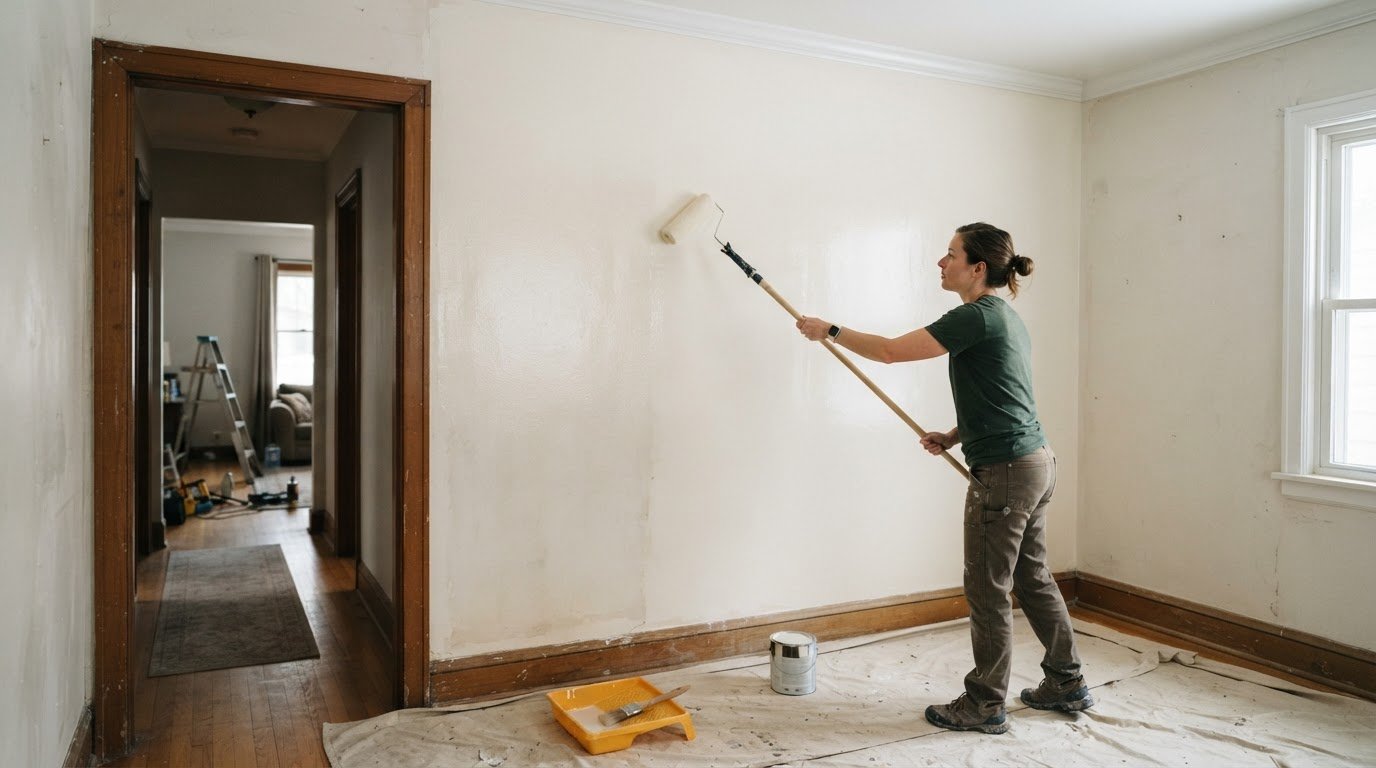
Touch-up work can address isolated chips, scuffs, scratches, and small areas of worn paint. For interior walls, a painter assesses the damaged spot and surrounding finish before preparing the surface and applying paint. For exterior siding or trim, the assessment also considers exposure to moisture and changing temperatures. The scope depends on the surface’s condition, not just the mark’s size.
Common areas include walls, ceilings, doors, window frames, and trim. A dent or damaged patch may need repair before repainting; otherwise, the uneven area can remain visible under the new finish. Door and window painting can also refresh worn surfaces in targeted areas. If damage spans connected surfaces, extending the work may create a more consistent appearance.
Address marks on walls, ceilings, doors, and trim, with preparation suited to the affected surface.
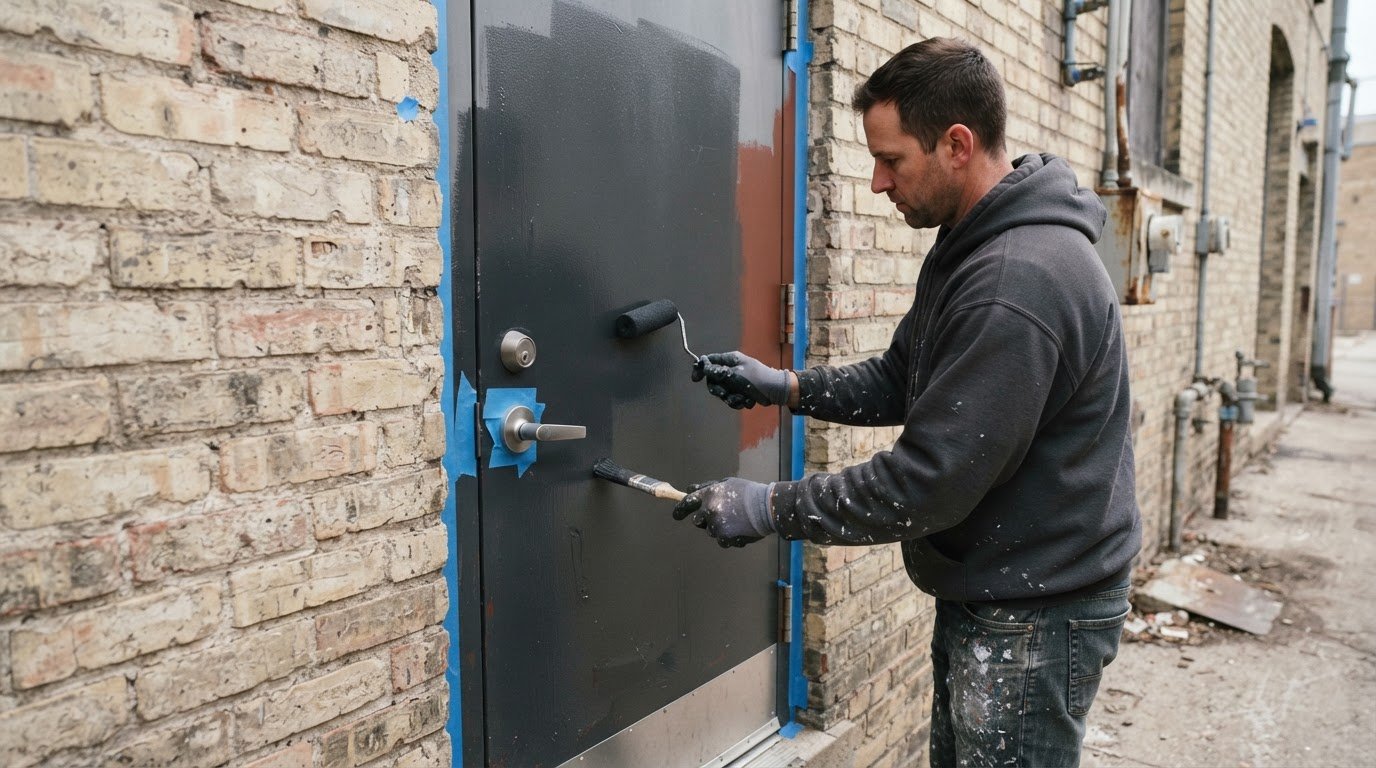
Repair worn or chipped painted areas on siding, trim, doors, or windows, while accounting for weather exposure.
Prepare damaged spots before painting when dents or surface imperfections need attention.
Pair small repairs with full interior or exterior painting when wear extends beyond isolated spots.
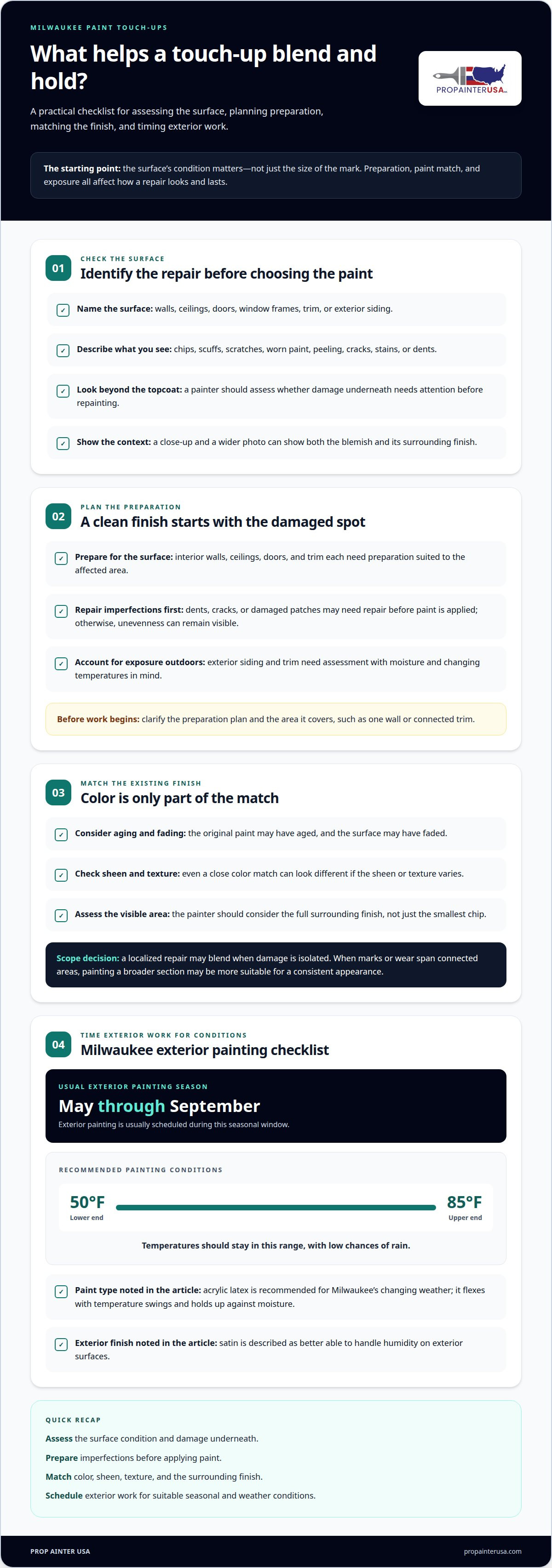
Milwaukee’s exterior painting season is usually May through September. Exterior work is recommended when temperatures stay between 50 and 85 degrees and rain chances are low. Acrylic latex paint is recommended for Milwaukee’s changing weather because it flexes with temperature swings and holds up against moisture. A satin finish is described as better able to handle humidity on exterior surfaces.
Touch-ups can also be planned alongside a full room or exterior repaint. That approach makes sense when multiple marks, patches, or worn areas interrupt the existing finish. For a closer look at how repairs can fit into a broader project, explore interior and exterior painting options.
In Milwaukee, look for a painting contractor who handles both interior and exterior surfaces. A company experienced in residential and commercial painting can assess touch-ups in a home, storefront, or office. The key is not company size, but whether its process addresses the damaged surface, preparation, paint match, and surrounding finish.
A scuff on an indoor hallway wall, for example, calls for a different assessment than peeling paint on exterior trim. A painter should determine whether the issue is limited to the topcoat or involves damage underneath. If a patch, crack, or peeling area needs repair first, the work plan should include that preparation before repainting.
Choose a company that can assess the actual surface, from a bedroom wall to exterior siding or trim.
Look for a clear plan for addressing chips, cracks, or damaged patches before applying paint.
Ask how the painter will account for differences in sheen, fading, and the existing paint layer.
Discuss whether isolated marks can be treated on their own or make more sense alongside a larger repaint.
Matching paint can be difficult when the original has aged or the surface has faded. Even a close color match may look different if the sheen or texture varies. An assessment should consider the full visible area, not just the smallest chip. This helps determine whether a localized repair will blend or painting a broader section is more suitable.
Before work begins, outline the affected rooms or exterior areas and describe the damage. Close-up and wider photos can show both the blemish and surrounding surface. Then review the proposed preparation and coverage, including whether the work covers one wall or connected trim. This clarifies the scope and helps you choose a painter whose services fit the surfaces involved.
Start by defining the repair clearly. One Milwaukee homeowner might need a hallway scuff addressed, while another property has several chipped door frames. Note each affected surface and its location, and whether the damage is cosmetic or includes a dent, crack, or peeling paint. This helps establish whether touch-ups are enough or surface repair is needed first.
Next, gather useful project details before discussing the work. A close photo shows the paint damage; a wider one shows the surrounding wall, trim, or exterior area. Include the property type and the rooms or surfaces involved. If the same wear appears in several places, list each location instead of grouping everything as one small repair.
During the assessment, the painter should consider how to prepare the surface and achieve a consistent finish. A scratch on a smooth wall, for example, differs from chipped paint on textured trim. Existing paint can fade over time, so matching a small area may require attention to sheen and the adjacent surface. The plan should explain whether the repair covers only the mark or a broader section.
Identify scuffs, chips, cracks, peeling paint, or dents, and note the surfaces affected.
Provide photos, the property type, and a list of rooms or exterior areas needing attention.
Understand what preparation is included and how the painter plans to blend the repair.
If wear spans connected walls or trim, discuss whether a larger repaint may look more consistent.
Once the scope is clear, have a focused project conversation. Share the affected areas and the result you want, such as blending a living-room wall repair or refreshing worn exterior trim. This gives the painting professional a practical basis for discussing preparation, coverage, and finish.
Discuss your Milwaukee paint repair and the surfaces you’d like assessed.
Pro Painter USA helps Milwaukee property owners assess paint damage and plan suitable painting work. If worn areas accompany broader fading or surface damage, discussing the full scope can help determine whether touch-ups fit into a larger project.
For homes, Pro Painter USA provides residential interior and exterior painting for rooms and outdoor surfaces. For businesses, commercial interior and exterior painting can create a coordinated finish across workspaces or building exteriors. The right approach depends on the affected surfaces, their condition, and whether repairs extend beyond isolated marks.
Share which areas need attention, describe the visible wear, and explain whether the property is residential or commercial. Pro Painter USA can discuss how its painting services fit your project. Contact Pro Painter USA to discuss your paint touch-up needs.
A touch-up is an opportunity to consider the whole space, not just one visible mark. Decide whether you want a discreet repair or a more consistent finish across a room or exterior area. That distinction shapes the project scope and helps the painter understand your priorities from the start.
For a paint touch-up service in Milwaukee, identify the areas that concern you and the result you hope to achieve. Pro Painter USA provides residential interior and exterior painting, along with commercial interior painting. These services can help when small repairs are part of a broader painting project.
Whether you’re addressing a few blemishes or planning a larger refresh, a clear conversation about the surfaces and desired finish is a useful next step. Contact Pro Painter USA to discuss your painting project and move forward with a plan that suits your property.
A touch-up can last until new wear, fading, or surface damage makes another repair necessary. A hallway wall exposed to frequent contact may need attention sooner than a protected area, while exterior paint faces Milwaukee’s changing weather. Preparation and how well the new finish blends with the existing paint also affect how long the repair looks consistent.
Paint and tools should suit the surface and the repair. A Milwaukee interior wall may need different preparation and application than exterior trim exposed to moisture. Pro Painter USA provides painting and patching services, allowing damaged surfaces to be repaired before painting. The finish, existing coating, and condition of the area guide the approach.
A touch-up addresses isolated marks such as chips or scuffs. Spot painting is a localized repair, while repainting a wall covers a broader area. Repainting may be more suitable when wear spans connected surfaces or a small repair would not blend consistently.
Confirm Wisconsin licensing, liability insurance, and workers’ compensation coverage. Compare how contractors assess surface damage, plan preparation, and account for paint match, sheen, fading, and the surrounding finish. The material provides no specific criteria for reviews or warranties.
You might find these helpful:
We are a team of interior and exterior painters and we are not limited to house painting only. We can paint different businesses like retail shops, commercial buildings, and apartments.
We also provide restaurant painting services. We can give you more information about these services if you give us a call.