Pro Painter USA
MILWAUKEE WI, USA,
November 13, 2026


The most durable paint isn’t automatically the right choice for every business surface. Choosing high-durability paint for business spaces starts with matching the coating to the material and conditions: metal needs corrosion resistance, while busy interior walls benefit from finishes that withstand scuffs and cleaning. For exterior work, clean, repair, and prime the surface to support adhesion and durability.
Commercial paint should handle frequent use without looking worn too soon. But the right choice depends on more than the word “durable” on a label. Washability, scuff resistance, and low-VOC features serve different purposes, while the finish affects both appearance and how easily a wall can be cleaned.
This guide explains how to choose paint by surface, compare practical performance features, and select finishes for common areas and corridors. Use these criteria to weigh each space’s demands and plan a durable result.
• Match coating performance to the work a surface faces: chemical exposure and abrasion call for different protection than everyday wall wear.
• For areas that need frequent cleaning, look for paint rated for at least 2,000 scrub cycles and consider how low-VOC features support indoor air quality.
• Satin is a practical finish for office corridors and shared spaces; scrubbable matte is another option when a softer look matters.
• Choose coatings according to the substrate, from flexible acrylic latex for wood to epoxy options for masonry, drywall, and concrete.
Commercial and industrial spaces need coatings suited to the surface, exposure, and cleaning routine. Choosing high-durability paint for business properties starts by identifying those demands. High-performance epoxy suits areas exposed to abrasion or chemicals. DTM acrylic coating resists moisture, corrosion, flash rust, stains, and most commercial cleaners. Before exterior application, clean, repair, and prime surfaces to support adhesion and reduce premature wear.
Epoxy is a strong choice for abrasion and chemical resistance. Acrylic offers moisture and cleaner resistance, depending on its formulation. Polyurethane products vary by intended use, so compare their performance data and application requirements. Costs depend on preparation, coating system, coverage, and application, not chemistry alone.
For abrasion, chemicals, moisture, or frequent cleaning, consider high-performance epoxy or DTM acrylic based on the exposure. Pre-Catalyzed Water Based Epoxy offers strong hide and coverage, while DTM acrylic resists moisture and most commercial cleaners. Choose a coating suited to both the substrate and cleaning demands.
Commercial paint life depends on the coating, surroundings, preparation, and wear. Commercial exterior paint is formulated to last 5–10 years or longer without major wear. Annual cleaning removes grime, pollution, and mildew. Routine inspections and timely touch-ups can address small issues before they spread.
No single certification or warranty alone proves a coating will suit every commercial job. Review written performance information, including scrub-cycle rating, intended substrate, and exposure limits. For high-traffic spaces, Class 5–6 paints are recommended at 2,000 or more scrub cycles.
Commercial options include Benjamin Moore Scuff-X and Ultra Spec 500, plus PPG Speedhide and Break-Through. Match each product to its intended interior or exterior use rather than treating brand name as a durability rating. Residential paint generally isn’t suited to commercial and industrial conditions, where traffic and harsh environments call for robust formulations. A high-durability paint for business spaces should match the building’s actual conditions.
In busy interiors, scuff-resistant paint uses advanced resins to resist scratches, marks, and everyday wear. Standard interior paint may show damage sooner with repeated contact. In hallways, classrooms, and shared work areas, added resistance can reduce visible scuffs between cleaning cycles. Choose a coating based on how often people touch or brush against the surface.
Washable paint is designed to withstand frequent scrubbing to remove fingerprints, spills, and stains without damaging its finish. In children’s rooms and play areas, washable, stain-resistant paint helps manage frequent messes. For commercial spaces, compare the product’s scrubbability rating and intended use, then match it to the cleaning routine.
Kitchens and bathrooms face moisture and frequent wipe-downs. Semi-gloss or pearl finishes are practical choices for these spaces because they handle humidity and cleaning. In a commercial kitchen, choose a coating for the specific surface and cleaning demands: walls and metal may need different protection.
Low-VOC paint is worth considering where indoor air quality matters, including schools and homes. Water Based Catalyzed Epoxy and DTM Acrylic Coating meet the most stringent VOC regulations, according to the product information summarized for these coatings. U.S. VOC requirements and safety directions can vary by coating category and location, so use product labeling and technical documentation to guide selection and application.
Metal needs protection from corrosion and rust, especially in damp or frequently cleaned environments. For commercial metal, apply an appropriate primer before an epoxy or oil-based coating. Water Based Catalyzed Epoxy provides corrosion resistance in direct-to-metal applications, while DTM Acrylic Coating is formulated to resist moisture and corrosion. Surface condition, exposure, and the coating system all affect performance.
For residential or commercial projects, consider stain resistance, washability, moisture protection, and VOC information together. A coating suited to an exterior metal door may not work for an interior play area. Matching each paint system to its surface and cleaning routine helps maintain a sound finish.
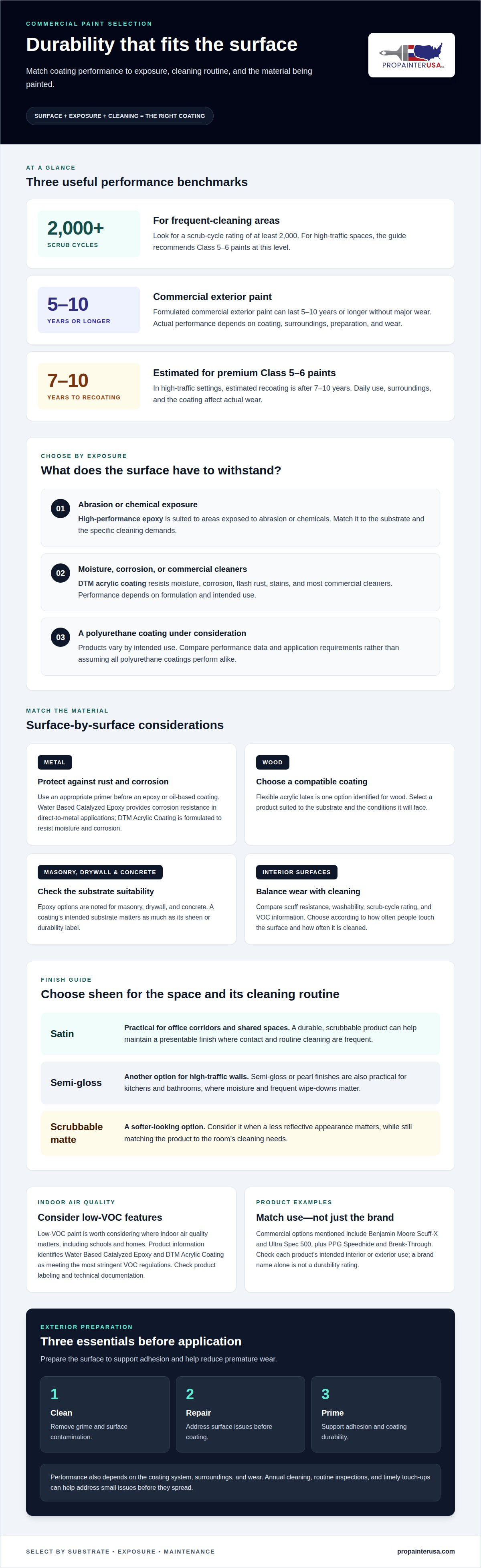
Office corridors, reception areas, and shared spaces see frequent contact from people, carts, and bags. Satin is a practical finish for common areas and corridors, while semi-gloss is another option for high-traffic walls. Scrubbable matte offers a softer appearance. Match the finish to the room’s cleaning needs and desired look.
Standard paint in high-traffic environments can look worn early and need frequent touch-ups. Corridors are especially prone to visible wear from repeated contact and routine cleaning. A durable coating helps keep the finish presentable longer, while regular inspections can catch small marks before they become larger repair areas.
For especially demanding traffic areas, consider a durable coating designed to resist abrasion, while checking that it suits the surface and cleaning routine. They may suit surfaces exposed to repeated impact or friction, though they aren’t automatically the right finish for every office wall. Consider the substrate, appearance, and cleaning routine together. A masonry wall, for example, needs a coating suited to masonry rather than a product selected only for sheen.
Premium Class 5–6 paints are estimated to need recoating after 7–10 years in high-traffic settings. Actual wear depends on the coating, surroundings, and daily use. Select a scrubbable product for corridors cleaned often, then follow its application directions. Proper preparation and even application help the coating perform as intended.
Low-cost or unsuitable commercial paint can wear early, leaving visible scuffs and requiring repeated touch-ups. A cheaper product may not suit the surface or cleaning demands, undermining a lasting result. When planning an office repaint, account for traffic, finish, and substrate, including masonry, before choosing coatings. This helps balance appearance, cleaning, and durability across shared spaces.
Start with the substrate, then consider exposure, cleaning, and appearance. Pre-Catalyzed Water Based Epoxy is designed for block, drywall, masonry, and concrete. Multi-Surface Acrylic suits a broad range of interior and exterior surfaces. These options show why a coating formulated for one material shouldn’t automatically be used on another.
Wood changes as temperature and humidity shift. Acrylic latex can move with commercial wood, reducing the risk of peeling or cracking. For a wood door or trim, match the product to the surface and its weather exposure. Proper preparation and application matter, too. Professional painting brings these surface-specific steps into one coordinated process.
Metal needs a different approach. DTM Acrylic Coating resists moisture, corrosion, flash rust, stains, and most commercial cleaners. Water Based Catalyzed Epoxy provides corrosion resistance in direct-to-metal applications. An epoxy or oil-based coating over a primed surface is another durable option for commercial metal. Consider chemical exposure and cleaning demands before selecting a system.
Exterior stucco benefits from elastomeric paint, which can stretch with the surface and help seal small cracks against water intrusion. In Milwaukee, cold-weather temperature fluctuations make flexibility an important consideration for exterior surfaces. Select coatings formulated for local conditions and follow the product’s application directions. Proper preparation supports adhesion and helps the finish withstand weather changes.
For concrete, block, or masonry exposed to demanding use, epoxy is a candidate; properly applied epoxy coatings can last 10–15 years in suitable applications. That lifespan depends on matching the system to the surface and applying it properly. The takeaway: identify the substrate first, then weigh moisture, chemical exposure, movement, and cleaning. Plan a surface-specific painting project around the needs of your building.
Pro Painter USA helps property owners plan painting projects around surface, exposure, and finish requirements. For businesses with busy corridors or shared spaces, Commercial Interior Painting refreshes walls with daily use in mind. Commercial Exterior Painting addresses outside surfaces exposed to changing weather.
The same surface-first approach works for homes, too. Residential Interior Painting and Residential Exterior Painting address different materials and conditions, while Door and Window Painting can refresh these features. Clear priorities, such as which areas need attention and which finish you prefer, help shape the project.
If you’re planning a painting project and weighing durable options for your property, request a complimentary estimate from Pro Painter USA.
Choosing high-durability paint for business spaces means planning beyond the next coat. Consider how each area is used, what kind of wear it faces, and how its finish should look over time. A clear priority, such as protecting a busy entrance or refreshing a shared workspace, helps guide the project from surface preparation through final application.
Before work begins, decide which areas matter most and what the result should support: easier upkeep, a consistent appearance, or protection suited to a particular surface. These priorities give the painting plan a practical purpose and connect material choices to the building’s needs. A considered approach helps your next project support the way the space is used every day.
For a professional perspective on your property’s painting needs, contact Pro Painter USA. A thoughtful next step can make it easier to move from choosing a coating to planning a finish that serves your space well.
Yes. For a Milwaukee business exterior, start by identifying the exposed materials and existing coating. A metal entrance canopy and a masonry wall may need different systems, even on the same building. Pro Painter USA can assess the surfaces, note areas affected by weather or cleaning, and plan an exterior painting project for the building’s different elevations.
Epoxy coatings suit surfaces exposed to substantial abrasion or chemicals, while DTM acrylic is designed for direct-to-metal use and resists moisture and corrosion. Multi-Surface Acrylic is a broad-substrate option for demanding facilities. Match the product to its intended surface and exposure, such as choosing a metal coating for equipment rather than assuming one wall paint fits every area.
For an office corridor, satin offers a practical balance of cleanability and appearance; semi-gloss suits walls that need frequent wipe-downs. Scrubbable matte works where a less reflective look is preferred. Consider room lighting and wall condition along with the cleaning routine, since a stronger sheen can make surface irregularities more noticeable in direct light.
Identify the existing coating and any areas where it’s loose, chalky, or damaged. Remove dirt and failing paint, repair defects, and let repairs dry before coating. On previously painted surfaces, consider compatibility between the old and new systems. Bare metal, masonry, and drywall each need preparation suited to the substrate. A sound surface helps the new coating adhere.
There’s no single coat count or cure time for every commercial paint. Both depend on the selected product’s instructions, surface condition, application thickness, temperature, and humidity. Distinguish between drying enough for another coat and fully curing; the label provides the relevant intervals. Scheduling access around those instructions helps prevent disturbing the finish before it’s ready.
Milwaukee’s cold winters and changing temperatures make exterior flexibility and weather exposure important considerations, while moisture can influence choices for damp or sheltered surfaces. Building-code requirements depend on the project and location, so general paint recommendations can’t address every requirement. Plan for the building’s surface, use, and applicable local requirements before application begins.
You might find these helpful:
We are a team of interior and exterior painters and we are not limited to house painting only. We can paint different businesses like retail shops, commercial buildings, and apartments.
We also provide restaurant painting services. We can give you more information about these services if you give us a call.