Pro Painter USA
MILWAUKEE WI, USA,
November 14, 2026


A 1,500-square-foot home doesn’t have one standard interior-painting price. If you’re asking how much it costs to paint a 1,500 sq ft house interior, the estimate depends on the surfaces included, their condition, ceiling height, preparation, number of coats, and paint choice. The price depends on the project and is provided after a quote request.
It’s reasonable to want a clear budget before deciding what to paint. This guide explains what shapes an interior painting estimate and how professionals calculate the paint needed by considering wall area, coats, and product coverage. You’ll also learn how walls-only painting differs from a more complete finish, which preparation needs can affect the scope, and what details help make an estimate specific to your home.
• Estimate paint needs from the home’s actual wall area, number of coats, and the product’s coverage.
• Understand how surface preparation, repairs, and room features can change the work involved.
• Compare walls-only painting with broader project scopes to see what each estimate includes.
• Use the cost factors in the article to understand why estimates differ from one home to another.
Interior painting estimates vary with home size, paintable surfaces, and the work included. Homeowners often ask, “How much does it cost to paint a 1,500 sq ft house interior?” The answer depends on scope, surface condition, preparation, and materials.
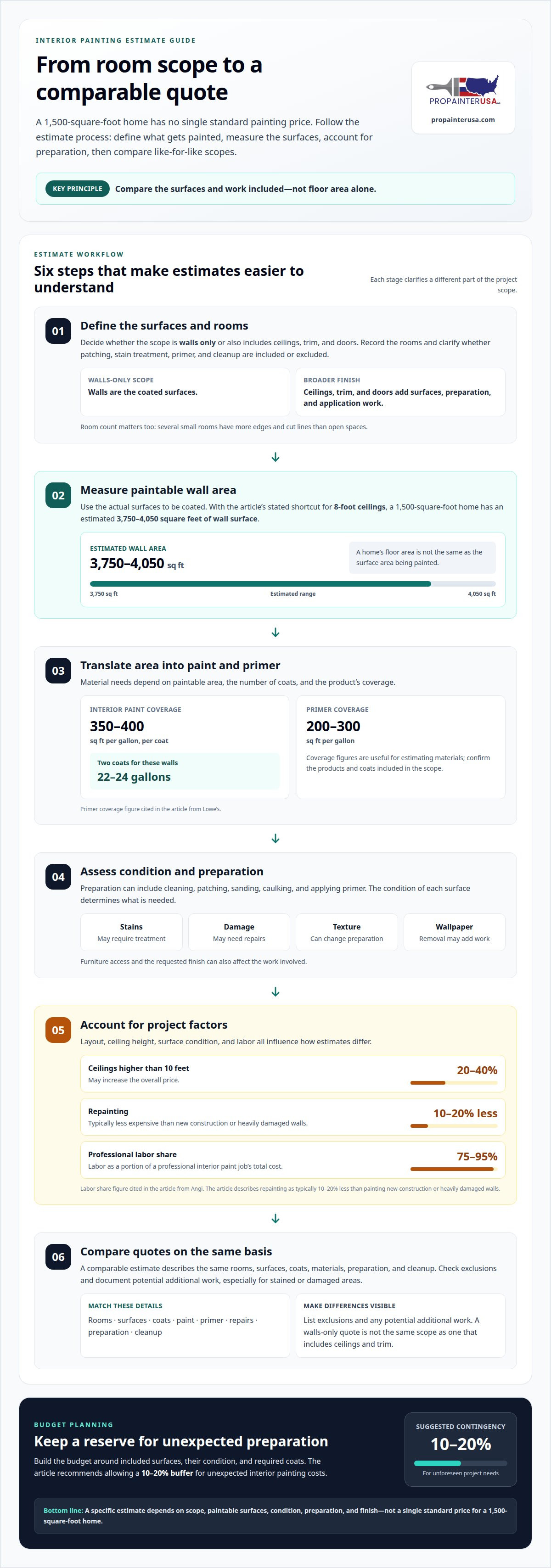
An estimate assumption defines which work and materials the project includes. For a 1,500-square-foot home, confirm whether the scope covers walls only or also ceilings, trim, and doors. Check whether patching, stain treatment, primer, and cleanup are included or excluded. Room count also affects the work: several small rooms have more edges and cut lines than open spaces. Clear exclusions help explain what could change the project scope.
A contingency is a reserve for needs identified during preparation. Build the budget around the included surfaces, their condition, and the required coats, then allow a 10-20% buffer for unexpected interior painting costs. Stains, drywall damage, textured walls, and wallpaper removal can change the preparation required. Estimating how much it costs to paint a 1,500 sq ft house interior also means accounting for the requested finish and any added surfaces. The project price is provided after a quote request.
A comparable quote describes the same work, materials, and preparation as another estimate. Compare rooms, surfaces, coats, paint, primer, repairs, preparation, and cleanup. Ask for exclusions and potential additional work to be documented, especially for stained or damaged areas. A walls-only quote differs from one that includes ceilings and trim, so compare the scope as well as the total. This makes differences between estimates easier to understand.
Paintable wall area measures the surfaces that need coating. Using the stated shortcut for 8-foot ceilings, a 1,500-square-foot home has an estimated 3,750-4,050 square feet of wall surface. Room count affects edges and doorways. Interior paint typically covers 350-400 square feet per gallon per coat; two coats are estimated to require 22-24 gallons for this home’s walls. Lowe’s says primer covers around 200-300 square feet per gallon.
An interior painting estimate reflects more than floor area. Scope, surface condition, preparation, and finish details all shape the project.
A per-square-foot estimate divides the project total by the measured area. For painting, that area usually means the surfaces being coated, not simply the home’s floor area. Walls-only work differs from a scope that includes ceilings, trim, and doors. Two homes with the same floor area can therefore have different estimates. Room layout, ceiling height, surface condition, and the requested number of coats also affect the work.
A DIY project shifts labor to the homeowner, while professional painting includes paid labor and organized preparation. That comparison involves more than paint purchases: the project also requires time for surface preparation, application, and cleanup. According to Angi, labor accounts for 75% to 95% of a professional interior paint job’s total cost. A professional estimate can clarify the work included, while a DIY budget must account for materials and the homeowner’s time.
Preparation is the work done before painting to create a clean, sound surface. Professional painters may clean, patch, sand, and caulk areas before applying primer or paint. The condition of the walls, existing stains, and the extent of any damage determine the preparation required. Clearing furniture from a room can reduce time spent moving items, while accessible surfaces help painters work efficiently. Make sure the estimate clearly describes the preparation included.
Ceilings, trim, and doors are separate surfaces that expand an interior painting scope. Their cost depends on each area’s size, condition, detail, and preparation needs. Trim and doors have edges that require careful coating, while ceiling height can affect access and application. Including these surfaces along with walls changes the labor and materials involved. A detailed estimate identifies each included area so the scope is clear.
Project scope means the surfaces, preparation, finish, and cleanup included in the painting work. For homeowners asking how much it costs to paint a 1,500 sq ft house interior, the estimate depends on the rooms selected and each surface’s condition.
Scope and finish: Painting walls alone differs from covering walls, ceilings, trim, and doors. Additional surfaces require more preparation, supplies, and application time. A full-finish plan may also involve repairs or different coatings for each surface. Repainting is typically 10-20% less expensive than painting new-construction or heavily damaged walls, because the surface condition changes the preparation needed.
Pricing factors: A contractor considers paintable area, room layout, surface condition, ceiling height, and finish. Ceilings higher than 10 feet may increase the overall price by 20-40%. Stains, damage, and textured walls can add preparation or application work. To understand how much it costs to paint a 1,500 sq ft house interior, compare estimates that cover the same rooms, surfaces, coats, and preparation, rather than relying on floor area alone.
Timeline: A project timeline is the expected period for preparation, painting, and completion. Professional painters can complete the interior of a typical 2,000-square-foot home in 3-5 days. That example doesn’t set the schedule for a 1,500-square-foot home: room count, repairs, drying between coats, and scope all matter. Furniture placement also affects access; cleared work areas help painters reach surfaces efficiently.
Timing: Project timing depends on household access and the work required. Before painting begins, define the rooms, furniture arrangements, finish choices, and access limits. For work across several rooms, discuss the sequence so occupants can plan around active areas. Include supplies, surface preparation, application, and cleanup in the written scope. This ties the schedule to the actual work and the finish you want.
An average cost is a reference point, not a fixed price for every home. For a 1,500-square-foot interior, the total depends on the surfaces included, their condition, and the preparation required. A walls-only scope differs from a project that includes ceilings, trim, and doors. The homeowner’s useful takeaway is to compare estimates with matching scopes, rather than treating one average as a guaranteed budget.
Labor is a major part of professional pricing. Angi reports that labor accounts for 75% to 95% of a professional interior paint job’s total cost. That share helps explain why estimates can vary even when homeowners choose similar paint: room layout, surface condition, access, and detail work affect the time involved. Patching and stain treatment also change preparation needs, while the selected finish affects products and application.
Hiring professionals affects more than the labor line. An estimate may include preparation, application, materials, and cleanup, while a homeowner managing the project takes on the coordination and time. The timeline depends on the work scope, room access, and surfaces needing repair, not just floor area. Ask for the planned work and exclusions to be described clearly, so the estimate reflects the project you expect to have completed.
For budgeting, use the estimate to understand what is included, then consider how added surfaces or repairs affect the scope. Price depends on the project and is provided after a quote request; the main factors are paintable area, surface condition, preparation, and finish. A single national average cannot capture those differences. To plan residential interior painting around your home’s actual needs, request an interior painting estimate.
Pro Painter USA helps homeowners plan professional interior painting around the surfaces, preparation, and finish their home needs. If you’re unsure what a painting estimate should cover, discussing the rooms and surfaces can clarify the work involved. The team provides Residential Interior Painting, along with Residential and Commercial Exterior Painting and Commercial Interior Painting.
For a home interior, an estimate should reflect the areas to be painted and their condition. Clear scope details make it easier to understand what the project includes and how the work fits your goals. Contact Pro Painter USA to discuss your interior painting project.
Knowing how much it costs to paint a 1,500 sq ft house interior is useful, but the next decision is defining the result you want from each room. Consider which surfaces need attention, what finish suits your home, and whether the project should include other areas of the property. A clear scope gives the estimate a practical purpose and helps align the planned work with your priorities.
Pro Painter USA provides residential interior and exterior painting, as well as commercial interior painting. For a home project, share the rooms and surfaces you’re considering, along with any visible repairs or stains. That gives the conversation a useful starting point without requiring you to settle every detail beforehand.
When you’re ready to discuss your plans, contact Pro Painter USA. A thoughtful painting plan can help you move forward with confidence and make your home feel refreshed.
Professional painters estimate paint by measuring the included surfaces and matching them to the selected product’s coverage. They account for separate rooms, doors, windows, different colors, and the number of coats. For example, a room with several openings has less wall area than its full dimensions suggest, but corners and cut-ins still need careful coverage. Measuring room by room helps refine the total.
A painting estimate usually identifies the surfaces, preparation, materials, and finishing work included. Check whether it names walls, ceilings, and trim, and whether priming, patching, and cleanup are included or handled separately. For example, an estimate covering bedroom walls alone differs from one that also includes hallway ceilings and door frames. Clear inclusions make the planned result easier to understand.
There isn’t one average that fits every 1,500-square-foot home, because the estimate changes with the selected surfaces and their condition. The price depends on the case and is given after a quote request; scope, preparation, and finish are key factors. Homeowners nationwide should base their budget on the actual rooms, labor rates, and work planned for their specific region.
There is no single per-square-foot labor charge that applies to every interior painting project. Labor depends on the surfaces being painted, access, room layout, and preparation needs. Detailed trim, tall ceilings, or rooms requiring extensive patching can take more work than open, ready-to-paint walls. A useful estimate from Pro Painter USA separates labor from materials and describes the tasks that affect the labor total.
Complex surfaces, difficult access, and additional preparation can increase the project scope. High ceilings may require extra setup, while ornate trim takes careful work around edges and details. Stains, damaged areas, or a major color change can also affect preparation and the number of coats. For example, a home needing repairs in several rooms requires different work from one with sound, uniform surfaces.
Separate costs depend on each surface’s size, condition, detail, and preparation, so no single amount applies to every home. Ceiling height and texture affect ceiling work; door design and existing finish influence door preparation; and trim length and detail shape trim labor. Ask for these areas to be itemized in the project scope so it’s clear which surfaces are included.
You might find these helpful:
We are a team of interior and exterior painters and we are not limited to house painting only. We can paint different businesses like retail shops, commercial buildings, and apartments.
We also provide restaurant painting services. We can give you more information about these services if you give us a call.