MILWAUKEE WI, USA,
September 29, 2026


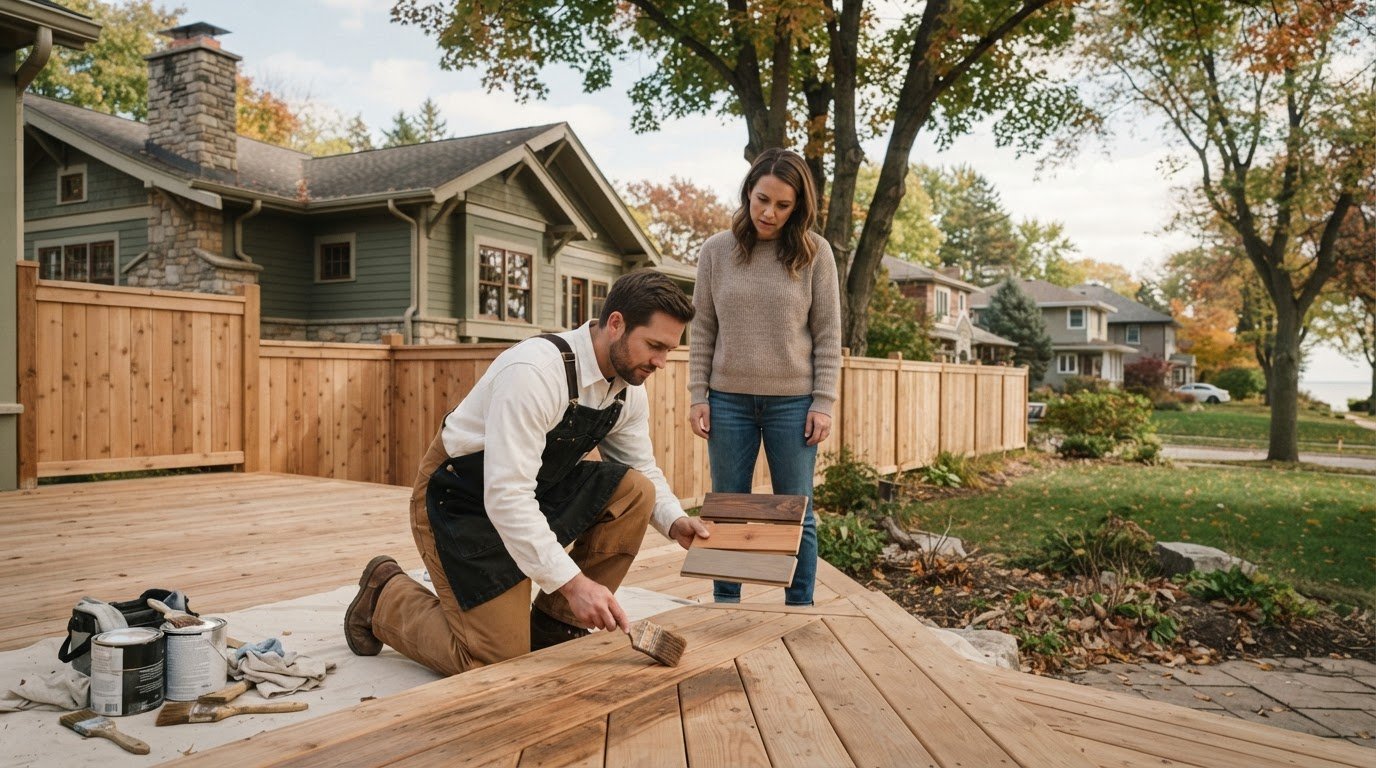
A fresh coat of paint can’t correct a flaw hiding beneath it. That’s why paint prep and repair services matter: small cracks, peeling edges, or uneven patches can remain visible if the surface isn’t properly assessed and prepared.
Which imperfections need fixing before painting, and which tasks can you handle yourself? It depends on the surface and the damage. Cleaning, light sanding, or filling a small hole may be manageable DIY work. Recurring cracks, soft or damaged drywall, and widespread peeling call for a closer look before paint goes on.
This article explains how inspection, patching, sanding, and priming support a smoother finish, and how to recognize when damage needs further assessment. You’ll also find questions to ask a local painting professional about the repair scope. For homes and businesses in Milwaukee and nearby Wisconsin communities, a clear assessment can help set practical expectations for the project.
• Learn how paint prep and repair services address different surface conditions, and why the right sequence depends on what an inspection reveals.
• Use a practical inspection process to identify defects and decide what to document before work begins.
• Compare straightforward DIY preparation with damage that may need a professional assessment before painting.
• Consider room use, surface type, access, and Wisconsin seasonal conditions when planning a painting project.
• Find out what to ask Pro Painter USA about patching, drywall repair, priming, and the scope of your painting project.
Paint preparation and repair services get surfaces ready for a new coating by addressing dirt, loose paint, dents, cracks, and other conditions that can affect the result. Paint doesn’t reliably conceal flaws. A new coat may highlight an uneven patch, a crack, or peeling edges, especially when light falls across the surface.
Good preparation helps create a more consistent finish by addressing defects before they’re covered.
Preparation is an important part of painting walls, trim, and other surfaces. The basic stages of painting begin with preparing the surface, a reminder that visible color is only one part of the process. Cleaning removes dust and residue; scraping clears loose material; patching fills appropriate holes and damaged areas; sanding smooths transitions; and primer prepares repaired or bare areas for paint.
A sound process starts with inspecting the surface, then choosing steps based on its material and condition. Routine preparation may include cleaning, removing loose paint, filling minor imperfections, sanding, and priming. Not every project needs every step, and the repair method or sequence can vary.
A small nail hole may need filling and smoothing. Widespread peeling, recurring cracks, or damaged drywall needs closer assessment before it’s covered. Identifying the condition first helps define the repair scope instead of treating every flaw as a simple cosmetic issue.
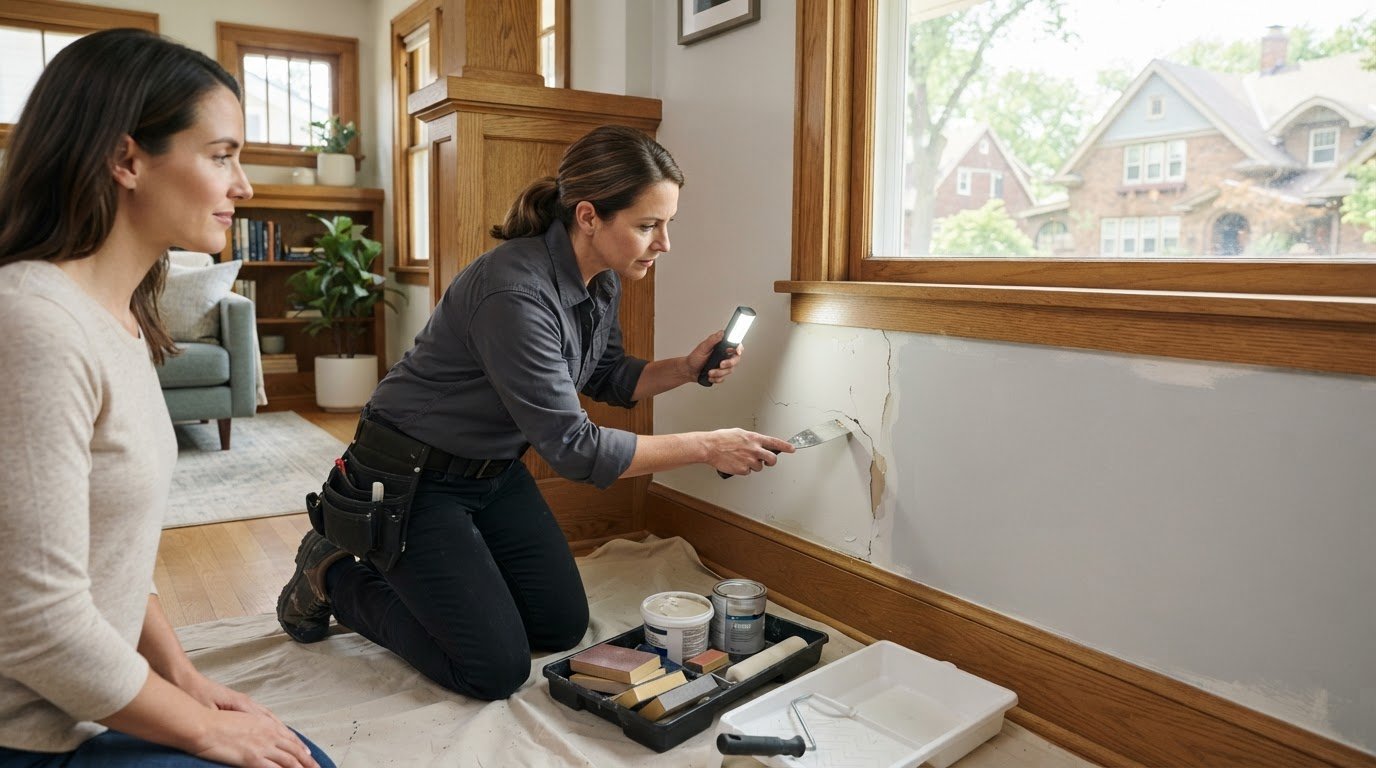
Look for small holes, drywall cracks, rough patches, and edges where paint is lifting. Note these defects during an inspection because they can remain visible under a new coat. A patch that sits above or below the surrounding wall may also show through after painting.
Stains, damp-looking areas, or paint that repeatedly peels need attention before routine preparation continues. Appearance alone can’t confirm the cause or whether there’s a deeper problem. Don’t simply cover the area. Document what you see and seek an appropriate assessment if the mark returns, spreads, or the surface feels damaged. For residential or commercial projects around Milwaukee, a painting professional can review visible conditions and help clarify which preparation and patching tasks belong in the project scope.
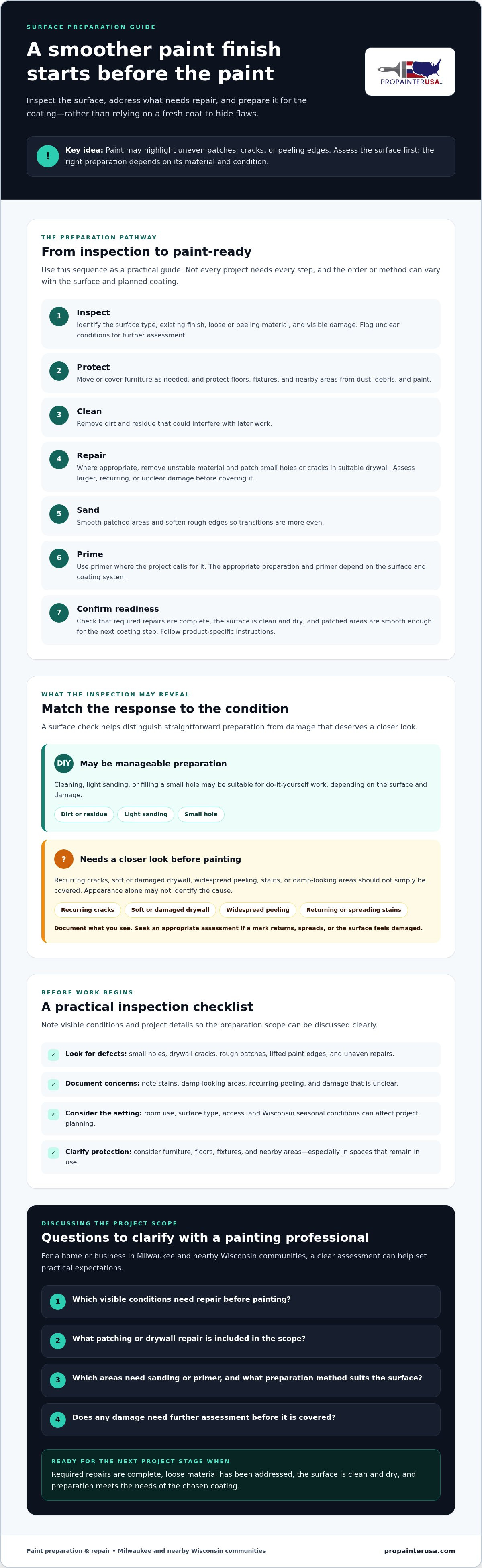
A practical preparation sequence is to inspect, protect, clean, repair, sand, prime, and confirm readiness. The specific steps depend on the surface, its condition, and the planned coating. Some areas may need only cleaning and light sanding, while damaged or peeling sections may need repair before primer or paint is applied.
The Painting Contractors Association outlines industry standards for paint prep, including guidance on surface preparation and spot repairs. The useful principle is straightforward: assess the surface first, then match the work to its needs.
Identify the surface type, visible damage, peeling or loose material, and the condition of the existing finish. Note areas that may need repair. If you’re unsure about a condition, flag it for further assessment rather than treating it as a routine cosmetic flaw.
Protect the space before cleaning or sanding begins. Furniture may need to be moved or covered, and floors, fixtures, and nearby areas need suitable protection from dust, debris, and paint. In a home or business that remains in use, careful masking and protection can help keep the work area orderly.
Cleaning removes dirt and residue that could interfere with later work. Where appropriate, remove loose paint or other unstable material. Small holes and cracks in suitable drywall can be patched, then sanded to smooth the repair and soften rough edges. Have larger, recurring, or unclear damage assessed before covering it.
Primer helps prepare a surface for the selected paint, but the right choice depends on the surface and coating system. Confirm the appropriate primer and preparation method for the project rather than assuming one product or process fits every material.
After repairs, check that the surface is clean and dry, loose material has been addressed, and patched areas are smooth enough for the next coating step. Apply primer where the project calls for it, and follow product-specific instructions before painting.
A surface is ready for the next project stage when required repairs are complete and it meets the preparation needs of the chosen coating. If you’re unsure what an inspection reveals, review the project scope with a painting professional to clarify which steps are needed. Milwaukee-area property owners can learn about Pro Painter USA painting services as they consider preparation options.
Some preparation is manageable for a careful homeowner; other conditions call for an assessment before anyone sands, patches, or paints. New paint won’t hide cracks, holes, or peeling, and uneven surfaces may become more noticeable. Let the surface condition, not the desire to finish quickly, guide your next step.
| Situation | A practical next step |
|---|---|
| Room needs clearing, or you’ve spotted a small, isolated cosmetic flaw on a familiar surface. | Move or cover belongings, document the defect, and consider simple preparation only if you understand the material and the appropriate product instructions. |
| Peeling is widespread, cracks keep returning, or a patch appears to need more than minor cosmetic work. | Pause and seek a professional assessment to clarify the repair scope before painting. |
| There are stains, moisture concerns, or damaged wood. | Don’t assume paint or filler is the solution. Investigate the condition before covering it. |
| You’re unsure whether old paint or a damaged area presents a safety concern. | Don’t try to identify a hazard by appearance alone. Seek an appropriately qualified assessment. |
Lower-risk tasks include clearing a room, protecting belongings, and making a list or taking photos of visible defects. For hands-on work, follow product labels and use suitable protection for the task. If you don’t know what the surface is made of, or the damage is unclear, don’t choose a repair method by guesswork.
A small patch on sound, familiar drywall may be ready for paint once it has been properly repaired and prepared. That’s different from a recurring crack or soft, deteriorated material, which may need closer review first.
Ask for an assessment if peeling covers a broad area, cracks return after repair, or the work goes beyond simple patching. Stains and signs of moisture also deserve investigation before painting. Their appearance alone can’t establish a cause, and covering them too soon may leave the underlying issue unresolved.
Don’t assume an older coating is lead-based or that a crack proves structural damage. If either concern is relevant, consult a qualified specialist before disturbing the surface. Paint prep and repair services can address painting-related preparation and patching, but they aren’t a substitute for every specialty investigation or remediation. Pro Painter USA provides painting, patching, and drywall repair. Confirm which repairs fit the project scope before work begins.
Documenting what you see can make a painting estimate more specific. Before contacting a painter, note where the work is needed, whether it’s inside or outside, and how the space is used. Wisconsin’s seasonal conditions can affect planning, so discuss suitable conditions for exterior work rather than relying on a fixed schedule.
Take close-ups and wider views so the affected area is easy to locate.
Note the room, wall, trim, door, window, or exterior area, along with the surface type if known.
Mention previous peeling, recurring cracks, stains, or repairs, and when you know they were addressed.
Flag furniture, high or hard-to-reach areas, and access limitations. For a commercial space, share operating hours or other scheduling constraints to discuss.
If drywall damage is part of the project, review this Milwaukee drywall repair and surface preparation guide as you prepare your notes.
Before approving a project, ask which preparation and repairs are included in the proposed scope. Confirm whether patching, sanding, and priming are included, and how the painter will protect nearby floors, fixtures, furniture, or business areas. Ask how the team will determine that surfaces are ready for painting.
For exterior work, discuss weather exposure and the conditions needed to complete the painting appropriately. If you’ve noticed deteriorated or suspect exterior wood, don’t assume paint alone will address it. Review the Milwaukee wood rot repair guide and ask what falls within the painting project’s confirmed repair scope.
Clear answers help distinguish routine paint preparation from concerns that may need further assessment. Use your photos and notes to discuss paint prep and repair services with a local professional, and ask for an estimate that clearly outlines the proposed work. To discuss a painting project, contact Pro Painter USA about an estimate.
Working with a painting professional can help clarify what a surface needs before paint is applied. Pro Painter USA provides residential and commercial painting in Wisconsin, including the Milwaukee area, with surface preparation and repairs addressed as part of the project scope. The locally owned business brings approximately 30 years of industry experience to painting and surface-repair work.
Depending on the surfaces and agreed scope, preparation may involve patching, drywall repair, or priming before painting. The right tasks vary by project, so discuss visible defects and ask which repairs are included in the estimate. A clear scope helps you understand the proposed work without assuming every surface needs the same treatment.
When describing the project, note whether it’s residential or commercial, which surfaces need attention, and the finish you’re planning. Point out cracks, holes, peeling, rough patches, or areas that have needed repeated repairs. Photos and a brief history can help explain what you’ve noticed, although the project details will determine the appropriate preparation.
An estimate can clarify proposed preparation and repair tasks, including whether patching, drywall repair, or priming is part of the scope. Ask what’s included and raise any uncertain damage before work begins. The methods and project details depend on the surfaces and conditions involved.
Interior and exterior painting each call for a discussion about the surfaces being painted and their condition. For an interior project, the Milwaukee interior painting guide offers additional context as you plan. For exterior work, share any peeling, rough areas, or visible damage so the preparation needs can be discussed before painting.
Whether you’re planning a home refresh or work in a commercial space, clear questions about scope can make the next steps easier to understand. Pro Painter USA offers free estimates online or by phone. When you’re ready to discuss your project, request a free painting estimate.
A lasting paint project begins with understanding the surface, not simply choosing a color. Inspecting defects, addressing appropriate repairs, and confirming preparation needs can help you decide what’s manageable yourself and where a professional assessment may be useful. Fresh paint won’t hide every crack, hole, or peeling edge.
With paint prep and repair services, the right steps depend on the surface and its condition. Document what you see, ask which repairs and preparation tasks are included in the proposed scope, and raise any damage that may need further assessment before painting begins.
Pro Painter USA is locally owned and operated in Wisconsin, with approximately 30 years of industry experience. The company provides residential and commercial painting alongside surface-repair services. If you’re ready to discuss your project and clarify its preparation needs, request a free painting estimate.
A thoughtful start can make the project easier to plan. With the surface and scope clearly understood, you can move forward with greater confidence.
Paint prep and repair services can include inspecting and cleaning a surface, removing loose paint, patching appropriate holes or cracks, sanding repairs, and applying primer when needed. The exact work depends on the surface and its condition. Pro Painter USA provides residential and commercial painting, as well as surface preparation, priming, patching, and drywall repair. Ask which specific preparation and repair tasks are included in your project estimate.
Yes. Preparation helps create a more even surface for paint and can make visible flaws less noticeable after repairs. Dust, loose paint, rough patches, or unfilled holes may affect the finished appearance if left untreated. Cleaning, sanding, patching, and priming each address different needs, so the right preparation depends on the surface and planned coating. An inspection helps determine which steps are relevant.
You can, but paint usually won’t conceal cracks or holes, so the defects may remain visible under the new finish. A small hole in sound drywall may be suitable for routine patching before painting. A crack that returns, spreads, or appears alongside other damage deserves further assessment rather than another quick cover-up. If you’re unsure about the surface or cause, ask a qualified professional before repairing or painting it.
Walls are generally ready for the next painting stage when required repairs are complete and the surface is clean, dry, and appropriately smooth for the chosen coating. Look for loose or peeling paint, visible dust, rough repairs, and unaddressed holes or cracks. Primer may be needed depending on the surface and paint system. If you see recurring stains or signs of moisture, investigate them before painting.
Consider a professional assessment if peeling is widespread, cracks keep returning, drywall damage goes beyond simple patching, or you’re uncertain about the surface condition. Clearing a room and documenting visible flaws are useful homeowner tasks, but unclear damage shouldn’t be treated as a routine cosmetic repair. Pro Painter USA provides painting and surface-repair services, including patching. Specialty concerns may require a qualified assessment beyond painting work.
Not necessarily. The proposed work and estimate depend on the project, so ask directly whether preparation, patching, drywall repair, sanding, or priming is included. Describe the surfaces and visible defects, and share any known repair history to help clarify the scope. Pro Painter USA offers free estimates online or by phone. Confirm which specific repair tasks are included before work begins.
Yes. Exterior painting projects can include surface preparation and repairs, depending on the surface condition and agreed scope. Discuss weather exposure and suitable work conditions with your painter as part of planning. Pro Painter USA serves Milwaukee and Wisconsin communities including Shorewood, Whitefish Bay, Fox Bay, Glendale, Fox Point, Bayview, Grafton, Cedarburg, Port Washington, Wauwatosa, Menomonee Falls, Richfield, West Bend, Hartford, Waukesha, New Berlin, Hales Corner, Oak Creek, and Cudahy.
You might find these helpful:
We are a team of interior and exterior painters and we are not limited to house painting only. We can paint different businesses like retail shops, commercial buildings, and apartments.
We also provide restaurant painting services. We can give you more information about these services if you give us a call.