MILWAUKEE WI, USA,
October 7, 2026


The most appealing exterior color on a screen may be a poor fit for your home, your neighborhood, or your HOA’s rules. Choosing HOA approved exterior paint colors means finding a palette that meets your community’s standards and works with your home’s existing materials, not simply following the latest trend.
If the requirements are scattered across governing documents, or an online color clashes with your roof or siding, it can be hard to know what to do next. A rejected application can also disrupt your painting plans. Reviewing the rules carefully and submitting a clear proposal can help you make a more informed choice.
This guide explains how to find and interpret your community’s exterior color requirements, build a coordinated palette around fixed features such as roofing, brick, and stone, and prepare an application with the details your review committee may request. You’ll also learn how to plan the painting work after approval. A step-by-step approach can take you from color inspiration to a well-documented proposal, while keeping in mind that no shade is guaranteed to pass.
• HOA approved exterior paint colors depend on your community’s current rules and review process, not simply on whether a shade is neutral or popular.
• Use your home’s brick, stone, roofing, and hardscape to guide a coordinated body, trim, and accent palette.
• Compare restrained neutral, earth-inspired, and higher-contrast approaches to see which suits your home and what details to verify in the HOA rules.
• Prepare a clear request by following your association’s form and instructions, including any required color samples or supporting details.
• After written approval, confirm the permitted colors and surfaces, then plan surface preparation and painting around the home’s condition.
Before saving inspiration photos or choosing a sample, find out what your association allows. HOA approved exterior paint colors are colors accepted under a specific community’s governing documents and review process. A shade shown in an online HOA palette, or one that looks neutral, is not proof that it meets your association’s requirements. Use inspiration as a starting point, then verify the exact color and its intended use against current rules. That is the first step toward finding HOA approved exterior paint colors that suit both your home and your community’s standards.
An Homeowner Association (HOA) can have its own governance and review procedures, so general descriptions of associations cannot replace your community’s documents. Don’t assume there is one regional paint rule for every association or neighborhood in Milwaukee and surrounding Wisconsin communities. A color accepted for one home may not meet another community’s requirements.
Start with the documents available through your association’s owner portal, management materials, or board communications. Review the covenants, architectural standards, paint schedules, application forms, and written amendments. If instructions appear in several places, compare them and look for the most current version instead of relying on an old color sheet or a neighbor’s past approval.
Check whether requirements differ by surface or feature. Body color, trim, doors, shutters, and siding materials may each have separate instructions. Before choosing colors, make a checklist of the submission details:
• Which form and submission method the association requires
• Whether samples, color codes, or other supporting details are requested
• Where to send the application and how the review process works
• Any stated submission deadlines or steps to follow after review
If a guideline is unclear or appears to conflict with another document, use the association’s listed review contact to clarify which instruction applies. Keep the answer with your project notes.
Association approval addresses whether a proposed change meets that community’s review requirements. It does not automatically settle every other consideration for the project. Municipal requirements, if applicable, are separate; verify them with the relevant local authority rather than assuming HOA approval covers them.
Once you have confirmed the rules, record the document or paint schedule that supports your selection. Make sure the colors you submit match the surfaces you plan to paint. This paper trail keeps the request clear and gives you a reliable reference when planning the work after approval.
Once you understand the association’s requirements, build your palette around features that will remain in place after painting. Brick, stone, roofing, and hardscape all influence how a new siding or trim color will look. Note the fixed materials and their undertones, then compare your ideas with the HOA’s written standards. This helps narrow the choices to colors that suit your home and meet the community’s requirements.
Think of the exterior as one composition. The body color covers the largest area, trim frames windows and rooflines, and accents draw attention to details such as a front door or shutters. Compare all three together instead of choosing each color separately. For example, a warm neutral body may complement red-toned brick, while a cooler gray could make the brick stand out more. These combinations are ideas to consider, not guaranteed approvals.
Let the association’s written limits guide contrast and placement. If the rules restrict accent colors or specify which features may be painted, keep those conditions in view as you develop the palette. A restrained trim shade can define windows without competing with masonry. A stronger accent may suit the entrance if the guidelines allow it. A neighbor’s color can provide context, but do not assume it is permitted for your home. Confirm each proposed shade and its use before including it in your application.
Color chips and online images cannot show exactly how paint will look on your house. In Milwaukee-area conditions, daylight and shade can affect the appearance of exterior colors. Place physical samples near relevant surfaces, especially where siding meets brick or trim meets roofing. View them in direct light and shade, and at different times of day, before deciding what to submit.
View paint samples on your home before submitting, because existing materials and changing light can shift how a color appears. Keep the body, trim, and accent samples together so you can assess the complete palette. Once the association approves the plan, Pro Painter USA can complete residential exterior painting and surface preparation. Milwaukee-area homeowners can learn more about exterior painting and preparation and plan the work around an approved color scheme.
Palette styles can help narrow your choices, but none is automatically compliant. Whether a combination works depends on your association’s written standards and how the colors relate to your home’s permanent features. Use this comparison to weigh visual effect and compatibility, then check each option against your community’s rules.
| Palette approach | Visual effect | Compatibility with fixed materials | Details to verify in HOA rules |
|---|---|---|---|
| Restrained neutral | Creates a quiet, cohesive appearance, with trim providing subtle definition. | Can complement varied brick, stone, roofing, and established streetscapes. Compare warm or cool undertones with nearby materials. | Check whether the body and trim colors must come from a listed palette, and whether doors or shutters have separate limits. |
| Earth-inspired | Brings a grounded look through muted green, brown, or other nature-influenced tones. | May relate well to stone, landscaping, and some roofing colors, but undertones can look different beside red or pale masonry. | Confirm that the proposed shade and its use are permitted. A subdued color still needs to follow the association’s review process. |
| Higher-contrast | Makes edges and architectural details more prominent across siding, trim, shutters, and doors. | Can define a home with simple materials, but may compete with patterned brick or visually prominent stone. | Look for rules about contrast, accent colors, and which features may use a distinct color. |
Restrained body colors can let masonry or roofing remain a strong part of the exterior, while a carefully chosen trim shade adds definition. Earth-inspired options can bring more color without dominating the home. In Milwaukee, use the property and its surroundings as your guide rather than treating a neighborhood’s common look as a required style. Familiar or muted does not mean pre-approved.
Contrast changes where the eye goes. Darker trim or shutters may outline windows and rooflines, while a distinct front-door shade draws attention to the entrance. If your guidelines treat accents separately, verify the permitted locations and choices before building the palette around them.
Compare combinations as complete sets, using physical samples or mockups that show the body, trim, and accents together. Keep the final option consistent across your samples and application. This makes it easier to assess how the palette works with existing materials and explain exactly what you are proposing. Treat every example as inspiration, not a promise of HOA approval.
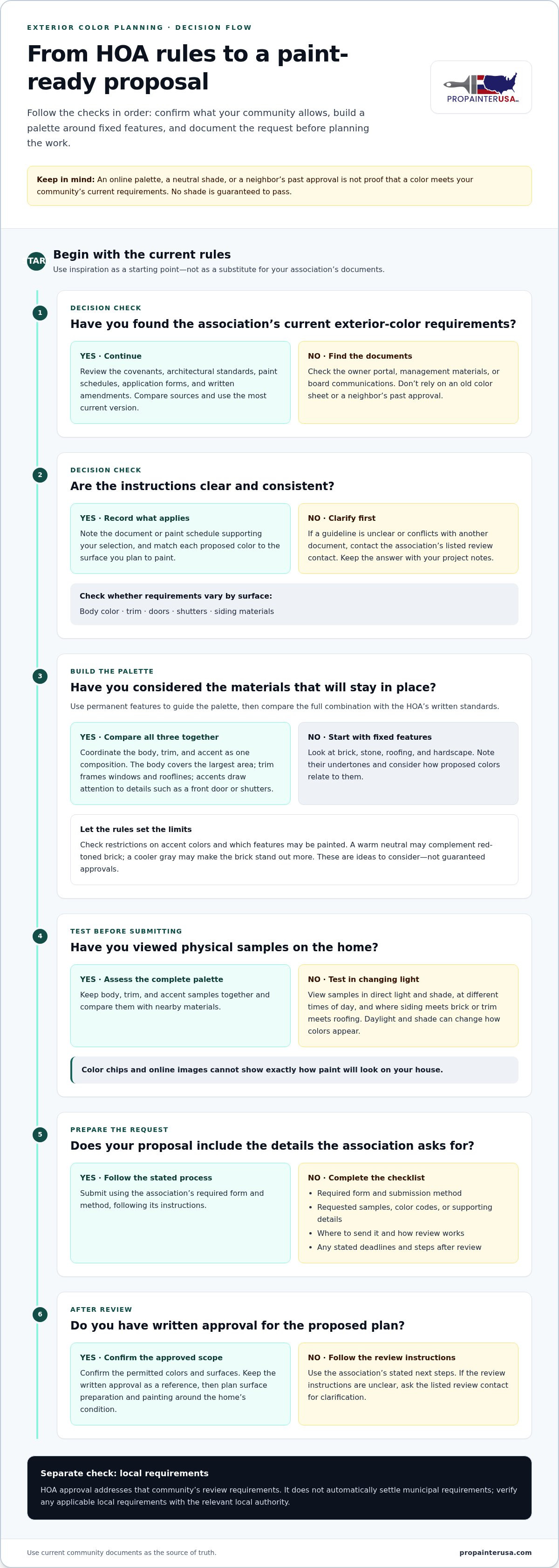
A clear application helps the association review the exact colors and surfaces you are proposing. Follow your community’s form, deadlines, and submission instructions, since requirements can differ between associations. Use this process to organize your request without assuming a particular palette will be approved.
Review the association’s architectural guidelines, application form, paint schedules, and amendments. Note the required submission method, samples, supporting information, and review steps.
Select the body, trim, and accent colors together. Check that each proposed color and its placement align with the written rules.
Use the association’s preferred sample format. If requested, include color names or codes, and clearly identify which color is intended for each surface.
Complete every required field and attach the requested materials. Label current exterior photos if the association permits or requests them, so reviewers can see where each color will go.
Follow the association’s stated decision process and keep its written response with your project records before scheduling painting.
Make the packet easy to review. Pair each sample or color reference with its surface, such as body siding, trim, shutters, or front door. Include the completed association form, requested paint details, and labeled exterior photos when allowed. Save a copy of everything you submit, along with the written decision and any conditions, so the approved plan is clear when you prepare for the work.
If the association requests a change, note the specific feedback and revise the palette or supporting materials as directed. Submit the updated information through the required process, then wait for the association’s written response. Do not schedule the project based on an assumed decision or begin with colors that have not received the required approval.
HOA approval addresses association requirements; any separate local project requirements must be verified with the relevant municipality. Requirements can depend on the project and location, so do not assume the association’s decision answers that separate question.
Once your colors and project plan are settled, Pro Painter USA can handle residential exterior painting and surface preparation in Milwaukee and surrounding Wisconsin communities. Request an exterior painting estimate to plan the next step after approval.
Before purchasing paint or starting work, compare the association’s written decision with your plan. Confirm the approved colors, the surfaces they apply to, and any conditions or limitations. Keep that record available as the project moves forward. A color approved for siding, for example, should not be assumed to apply to trim, shutters, or a door unless the decision says so.
Color is only part of the finished appearance. Peeling paint, damaged areas, and uneven surfaces can affect how the new coating looks, so assess the exterior before painting begins. Repairing surface damage and preparing the substrate helps create a more even finish. Priming may also be part of preparation, depending on the surface and project needs.
Pay close attention to wood that appears soft, deteriorated, or otherwise damaged. Painting over a problem will not address the underlying surface condition. For more local context, see this guide to exterior wood rot repair in Milwaukee. Good project planning also includes understanding the scope of work and the home’s condition. The resource on house painting estimates in Milwaukee can help you prepare for that step.
Keep the approved color record accessible during planning and painting. Share the decision and any stated conditions with the people involved in the project so the selected colors stay aligned with the association’s approval. This is especially useful when the palette includes separate colors for body, trim, and accents.
Once your HOA approved exterior paint colors are documented, Pro Painter USA can complete residential exterior painting and surface preparation. Careful preparation and experienced painters help the finish reflect the selected palette and the home’s surface needs.
Ready to plan the next step? Request a free exterior painting estimate for your Milwaukee-area home.
Choosing HOA approved exterior paint colors starts with your association’s current requirements, then turns to the home itself. A palette should work with fixed features such as masonry and roofing, and body, trim, and accent colors should be considered together. Samples and a complete application help communicate the plan clearly, while written approval gives you a reference for preparing the project.
Once the colors and surfaces are confirmed, careful preparation helps create a more even, polished finish. Pro Painter USA brings approximately 30 years of industry experience to residential exterior painting and surface preparation across Milwaukee and surrounding Wisconsin communities. With your color direction approved, request a free exterior painting estimate online or by phone and begin planning the work. Your home’s next chapter can start with a thoughtful palette and a well-prepared exterior.
HOAs often accept colors that fit their community’s written palette, which may include restrained neutrals or earth-inspired shades. But no color category is automatically approved. A beige, gray, or muted green still needs to meet your association’s current requirements, including any limits for trim, doors, or accents. Check your own documents before choosing a shade, and use online galleries as inspiration rather than proof of approval.
An HOA may review or restrict exterior colors if its governing documents give it that authority. The specific limits and review process depend on your community’s current rules, so read the covenants and architectural standards rather than relying on another homeowner’s experience. If the instructions are unclear or appear inconsistent, use the association’s stated review contact to clarify what applies to your property before selecting paint.
Start by locating the current guidelines and application form. Choose a coordinated palette that fits the home’s fixed materials and the association’s requirements, then provide the requested color names or codes, samples, and other supporting details. Submit everything using the association’s stated method and follow its review steps. Wait for written approval before purchasing paint or scheduling the work, and keep the decision with your project records.
It depends on your association’s rules. Some communities may distinguish maintenance or repainting in the existing color from a change in appearance, while others may require a request either way. Do not assume that matching the current shade exempts the project from review. Check the latest guidelines and application instructions, including whether the exact color or paint information must be resubmitted before work begins.
You may be able to propose different colors for siding, trim, and the front door, but the association’s rules determine which combinations and placements it will review. Some guidelines treat accent colors or specific features separately. Compare the complete palette together, label each color by surface, and check the requirements for each area. Submit the full combination rather than assuming approval of one color covers the others.
Follow the association’s form and include the materials it requests. This may mean color names or codes, samples, and a clear description of which shade is for the body, trim, shutters, or door. Add labeled exterior photos if permitted or requested. Check that the submission method and any deadlines match the current instructions, then keep copies of the application, supporting details, and written decision for planning the painting project.
No. HOA approval addresses your association’s review, while any municipal requirements are separate and depend on the project and location. Do not assume one decision replaces the other; verify locally with the relevant municipality. Pro Painter USA serves Milwaukee and surrounding communities, including Shorewood, Whitefish Bay, Fox Bay, Glendale, Fox Point, Bay View, Grafton, Cedarburg, Port Washington, Wauwatosa, Menomonee Falls, Richfield, West Bend, Hartford, Waukesha, New Berlin, Hales Corners, Oak Creek, and Cudahy.
You might find these helpful:
We are a team of interior and exterior painters and we are not limited to house painting only. We can paint different businesses like retail shops, commercial buildings, and apartments.
We also provide restaurant painting services. We can give you more information about these services if you give us a call.