MILWAUKEE WI, USA,
October 9, 2026


What if the right stain color is the least important decision for your fence? Before comparing shades or finishes, start with the condition of the wood. If you’re looking for a fence staining company Grafton homeowners can rely on, it helps to know whether your fence needs cleaning, repairs, or time to weather before staining.
A finish that looks even starts with suitable wood and careful preparation. It also helps to understand what an estimate includes before the work begins. Pro Painter USA provides residential staining and surface preparation for Grafton homeowners.
This guide explains how to assess your fence, compare transparent, semi-transparent, and more opaque stains, and understand the steps involved in professional staining. You’ll also learn which details shape the project scope so you can review an estimate with a clearer picture of the work ahead.
• Fading, uneven color, peeling remnants, rough spots, and moisture damage can help reveal what your fence needs before staining.
• A staining project typically moves through assessment, surface preparation, finish selection, application, and a final review.
• Transparent, semi-transparent, and more opaque stains create different looks. The right choice depends on the wood and the appearance you want.
• Plan ahead for access, nearby belongings, pets, and landscaping. Timing depends on the fence and application conditions.
• A clear estimate accounts for the fence’s condition, preparation, and included surfaces. Pro Painter USA provides tailored estimates based on the work involved.
A clean, sound surface gives stain a better chance of absorbing consistently, which helps the fence look more even from section to section. Before settling on a finish, walk the full fence and look beyond its overall color. Staining can refresh the appearance and help protect suitable wood, but it won’t restore structurally damaged boards or posts. Identify those conditions during the project assessment so the scope reflects the work the fence needs.
Look for fading, patchy color, peeling remnants of an old coating, rough areas, and signs of moisture damage such as darkened or visibly deteriorated wood. One panel may look weathered while another still appears sound. Note where each issue occurs and take photos from a few angles. That record helps show whether the work involves the whole fence or specific sections that need attention before staining.
Faded color and uneven weathering often affect appearance without indicating structural trouble. Wood that looks soft, cracked, swollen, or badly deteriorated may need more than a new finish. Peeling coating remnants can also mean the surface needs careful preparation before another coating is applied. An assessment helps distinguish ordinary surface wear from damage that staining alone won’t address.
Surface dirt can interfere with preparation, while old coatings may affect how a new stain absorbs and looks. Moisture matters too, so assess the wood in its actual condition rather than judging it by color alone. Sun, shade, and damp areas can vary along the same fence, causing adjoining sections to weather at different rates. For background on how stains vary, see Wood Stain Types and Composition.
Use this quick checklist as you inspect:
• Has the color faded or become uneven across panels?
• Are there peeling coating remnants or rough, exposed areas?
• Do any boards or posts look cracked, soft, or visibly deteriorated?
• Are some sections more affected by shade or moisture than others?
• Have you noted and photographed the affected areas?
These observations help make an estimate more specific because the scope depends on what the fence needs before stain is applied. A fence staining company Grafton homeowners work with should account for surface condition and preparation, not just the visible area. Pro Painter USA provides residential staining and surface preparation, tailoring the assessment to the wood and the work required.
Project timing should reflect the fence’s condition and suitable application conditions, not a fixed calendar assumption. A careful inspection is the practical first step toward choosing a finish and setting expectations for the result.
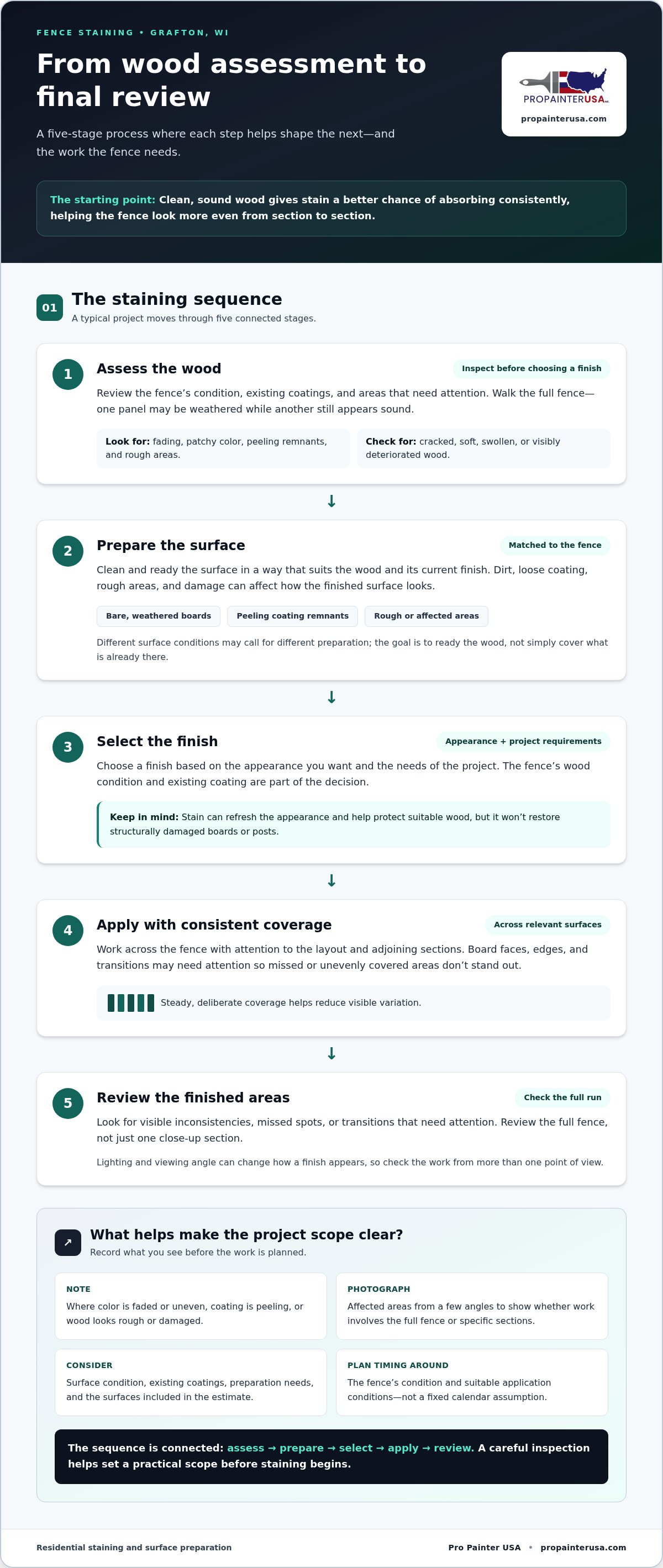
A professional staining project follows a clear sequence, but the details depend on the fence. The process begins with an assessment of the wood and existing coating, then moves through preparation, finish selection, application, and a final visual review. Each step informs the next. Bare, weathered boards may need different preparation from a fence with peeling remnants of an older finish.
Clean, sound wood helps stain absorb more consistently, supporting a more even-looking finish across the fence. Preparation isn’t a formality. It addresses surface conditions that could affect the completed appearance.
A typical project includes these stages:
Review the fence’s condition, existing coatings, and areas that need attention.
Clean and ready the surface in a way that suits the wood and its current finish.
Choose a finish based on the desired appearance and project requirements.
Work across the relevant surfaces with attention to consistent coverage.
Look over the finished areas for visible inconsistencies or spots needing attention.
Preparation starts with examining the boards and identifying dirt, loose coating, rough areas, or damage that may affect the finish. Cleaning and other preparation are matched to the fence rather than relying on one method for every surface. If a section is visibly deteriorated, it may need attention before stain is applied. This assessment helps establish a practical scope for the work.
Existing coatings matter too. Their condition can influence how the surface is prepared and how a new finish looks once applied. For example, a fence with peeling coating remnants may need a different approach from bare wood. The goal is to ready the surface appropriately, not simply cover what is already there.
Application should account for the fence’s layout so the appearance reads consistently across adjoining sections. Board faces, edges, and transitions may need attention because missed or unevenly covered areas can stand out. The approach depends on the fence and selected finish, but steady, deliberate coverage helps reduce visible variation.
After application, a visual review helps identify uneven areas, missed spots, or transitions that need attention. Lighting and viewing angle can change how a finish appears, so review the full run rather than a single close-up section. This check focuses on the visible result without assuming a particular performance period.
When comparing estimates, look for a clear description of the assessment and preparation included. Pro Painter USA provides residential staining and surface preparation in Grafton, with project scope shaped by the fence’s condition. To discuss the areas and preparation involved, you can request a fence staining estimate.
The right finish depends on the wood’s condition, the look you want, and the work needed to prepare the fence. Start by deciding what matters most: keeping the grain visible, creating a more uniform color, or changing the appearance of a fence with noticeable variation. A finish that suits one fence may not suit another, so consider the existing surface as well as your preferred look.
Transparent: Keeps the wood grain highly visible and adds a subtle shift in color. It may suit sound wood when preserving a natural appearance is the priority.
Semi-transparent: Shows some grain while adding more noticeable color. It offers a middle ground if you want to retain wood character while bringing more visual consistency to the fence.
More opaque: Covers more of the grain and creates a more uniform color impression. Consider it when a stronger color change is the goal.
These descriptions compare appearance, not guaranteed protection or maintenance needs. Those depend on the specific product and surface, so follow the product information and care instructions for the selected finish. No opacity level is universally best. The aim is to match the finish to the fence and the result you want.
Opacity describes how much of the wood’s natural pattern remains visible. A transparent look emphasizes grain and variation, while a more opaque finish makes color the stronger visual feature. Semi-transparent options fall between those effects. Consider how the existing fence looks in different light and whether you want to highlight its natural texture or create a more consistent appearance across boards.
A useful estimate describes the project scope, not just the fence’s general dimensions. Accessible surfaces, preparation needs, and finish goals all shape the work. Sharing which areas matter most and how you want the finished fence to look helps clarify the assessment and supports a tailored estimate.
Note variations between sections and existing coatings that may affect preparation.
Clarify which accessible sides and features are part of the requested work.
Account for the cleaning and surface work suited to the wood’s condition.
Fence dimensions and access to work areas can shape project scope.
Describe your preference for visible grain, color consistency, or a more opaque appearance.
For additional regional context, see Professional Fence Staining in Milwaukee: The 2026 Homeowner’s Guide. A fence staining company Grafton homeowners work with should make preparation and included surfaces clear in the estimate. Pro Painter USA bases residential staining estimates on the fence’s condition and the scope of work, helping you understand what the project involves before it begins.
Planning before staining begins makes the work area easier to access and helps the project team understand your priorities. You don’t need to decide every detail in advance. Clearing the fence line, noting areas of concern, and sharing what you know about the fence’s history are practical ways to prepare.
Start with the space around the fence. Move items that could block access, keep pets away from the work area, and point out landscaping or nearby features that need care. If you’ve noticed peeling, rough, or damaged sections, mark or photograph them. Knowing whether the fence has been stained or coated before can also help clarify what preparation may be needed.
Use this quick checklist before the project:
Clear gates and the areas beside the fence so the full work area is reachable.
Move outdoor furniture, toys, and other belongings away from the fence.
Plan to keep pets clear of the work area during the project.
Identify plants and garden areas close to the fence that need consideration.
Share what you know about earlier coatings, maintenance, or areas of concern.
Preparation should suit the fence’s condition and the work area. Pro Painter USA tailors surface preparation to those details when shaping the project scope.
Planning depends on more than the length of the fence. Surface condition, preparation needs, access, and overall scope all affect how the work is organized. Application also needs suitable conditions, so timing can’t be set responsibly by a calendar alone. Specific weather guidance should reflect conditions at the time, rather than a general assumption about Grafton or Wisconsin.
The finished color may vary across the fence. Natural differences in the wood, uneven weathering, and remnants of previous finishes can influence how stain appears from one section to another. Discussing those factors before work starts helps set expectations. Stain refreshes and helps protect suitable wood, but it won’t make different boards identical or conceal structural damage.
Before requesting an estimate, gather a few useful details: which fence areas you want included, which sides are accessible, any sections that concern you, and the look you’re aiming for. Photos can help communicate the layout and visible conditions. A fence staining company Grafton homeowners choose should account for those details when defining preparation and scope, rather than treating every fence as the same project.
Pro Painter USA offers free estimates for residential staining. Request a fence staining estimate to discuss your fence’s condition, access, and finish goals with the project scope in mind.
Choosing a fence staining company Grafton homeowners can feel confident about starts with a clear understanding of the work. Pro Painter USA is a locally owned painting business serving Grafton and communities across Wisconsin. Its residential staining and surface preparation services help homeowners plan a finish around the actual condition of their fence rather than treating every project as identical.
Pro Painter USA serves customers in Milwaukee, Shorewood, Whitefish Bay, Fox Bay, Glendale, Fox Point, Bayview, Grafton, Cedarburg, Port Washington, Wauwatosa, Menomonee Falls, Richfield, West Bend, Hartford, Waukesha, New Berlin, Hales Corners, Oak Creek, and Cudahy.
A thoughtful project connects your goals with what the surface needs. You may want to retain visible wood grain, create a more uniform look, or refresh weathered boards. The estimate gives you a chance to describe those priorities and understand how preparation and the fence’s condition shape the scope. That makes the proposed work easier to review before moving ahead.
Pro Painter USA serves Grafton as part of its Wisconsin service area, providing residential staining and surface preparation. Planning those services together allows finish goals and the wood’s condition to inform the project scope. For another regional perspective, homeowners can also explore the guide titled Professional Fence Staining Services in Menomonee Falls: The Complete 2026 Guide.
This project-focused approach applies whether the fence needs preparation across its full length or has specific sections that need attention. Sharing your preferred appearance, areas of concern, and any history you know about previous finishes helps frame a relevant discussion. The aim is to align the work with the property and your expectations, while keeping the estimate clear about the preparation and surfaces involved.
An estimate is a chance to discuss the fence and define what the project should address. Describe its condition, identify the areas and accessible surfaces you want included, and explain the finish you have in mind. Those details help Pro Painter USA shape the scope around your property rather than relying on a general description alone.
Before reaching out, gather a few notes or photos if helpful. Include sections that look different from the rest, mention previous coatings if you know about them, and note access considerations around the fence. You don’t need to settle every finish detail first. Start with your goals and the fence’s current state, then focus on the work those conditions call for.
Free estimates are available online or by phone. To discuss your fence, Request a free fence staining estimate from Pro Painter USA. Share the details you have to get a clearer picture of the preparation, finish goals, and project scope for your Grafton property.
Your fence is part of how your property feels from the yard, patio, and street. Choosing a finish that suits your home is a chance to refresh the outdoor space while keeping the wood’s condition in view. A considered plan turns uncertainty about the next step into a project you can approach with confidence.
As you decide what you want from the finished fence, focus on the outcome that matters most: a refreshed natural look, more consistent color, or a different visual character. Bring those priorities to a fence staining company Grafton homeowners can turn to for residential staining and surface preparation.
Pro Painter USA offers free estimates online or by phone, giving you a practical place to discuss your project. Request a free fence staining estimate from Pro Painter USA to take the next step toward a fence finish that feels right for your home.
There isn’t one reliable staining interval for every Wisconsin fence. Check the wood’s condition, sun and moisture exposure, and how the existing finish is holding up. A sheltered section may show wear differently from an exposed gate. Look for fading, water absorption, or a finish that no longer looks consistent, then follow the stain manufacturer’s care instructions. Don’t assume a fixed Wisconsin-specific schedule without guidance for your product and conditions.
Yes, an old fence may be suitable for staining if its wood is sound and the surface can be prepared for a new finish. Age alone isn’t decisive: faded boards may be weathered but stable, while soft, split, or crumbling areas can indicate deterioration. Stain won’t restore compromised wood. An assessment can distinguish cosmetic wear from more serious damage and clarify which parts of the fence can reasonably be included in the staining scope.
The right timing depends on whether the fence is new or already installed, its design, and which surfaces need coverage. Before installation, some faces may be easier to reach. After installation, the final layout makes it easier to assess the overall appearance. For an existing fence, consider access to both sides, the surface condition, and the result you want. The staining plan should reflect those details, not a universal rule.
A painted fence needs assessment before staining. Stain shouldn’t simply be applied over paint because a coating can prevent the wood from absorbing stain as intended, and its condition affects the preparation required. Identify what coating is present and whether it’s intact, peeling, or uneven. The appropriate preparation depends on the surface, so evaluate the fence before choosing a removal approach.
Stain generally allows more wood character to remain visible, while paint creates a more opaque, covered appearance. That difference affects how the fence’s grain and natural variations show through. Suitability also depends on the existing surface: a fence with an older coating may need a different preparation plan than bare wood. Compare the look you prefer with the condition of the boards rather than assuming one finish is always better.
Project duration varies with fence size, access, surface condition, preparation needs, and application conditions. A straightforward, accessible section may involve different work from a long fence with multiple areas needing preparation. An estimate can account for the specific fence and agreed scope, but a fixed timeline shouldn’t be assumed before those details are reviewed. Discussing access and unusual sections early helps set practical expectations for planning.
An appropriate exterior stain can help protect wood, but it won’t prevent every kind of weather-related wear or fix existing damage. The result depends on the product, preparation, exposure, and ongoing care. Follow the manufacturer’s instructions for the selected finish, and assess the fence periodically for fading or surface changes. Avoid relying on generalized claims about Wisconsin weather or a product’s performance unless they’re verified for the specific finish and conditions.
You might find these helpful:
We are a team of interior and exterior painters and we are not limited to house painting only. We can paint different businesses like retail shops, commercial buildings, and apartments.
We also provide restaurant painting services. We can give you more information about these services if you give us a call.