

Pro Painter USA
MILWAUKEE WI, USA,
October 31, 2026


The fastest painting method isn't always the best fit: spraying covers broad fence surfaces efficiently, while hand painting offers more control around detailed areas. For homeowners comparing fence painters near me, a combination of spraying and brushing can balance speed with precision. A professional fence painting project typically takes one to three days.
Before choosing an approach, weigh the finish, disruption to your yard, and overall cost. This guide explains when spraying or hand painting suits a fence, which project details affect the estimate, and why mild, dry weather is usually best. You’ll also learn what preparation involves and how long the work may take, making it easier to plan.
• Use the fence’s condition, size, and access to understand what can shape the project quote.
• Good preparation matters: cleaning away dirt, mildew, and loose paint helps the new coating bond.
• Plan for a professional project to take one to three days, with weather and preparation influencing the schedule.
• Keep the finish in view after painting with regular cleaning and yearly checks for chipping or peeling.
Late spring and early fall are generally the best seasons for fence painting. Mild, dry weather helps paint apply and cure properly. Choose a dry stretch, not a day when rain may arrive before the coating sets. In Wisconsin, check the local forecast and the fence itself before scheduling. A shaded section may stay damp longer than a sunny, exposed area.
Fence painting works best when the surface can dry fully and conditions remain suitable during application and curing. Winter painting may be possible during milder weather, particularly on sheltered sections, but cold or damp conditions can disrupt the process. Consider wind exposure, direct sun, and recent rain when planning the work.
When comparing fence painting contractors, review the proposed preparation, application method, work-area protection, and cleanup. Ask for a clear description of the fence sections and sides included. Reviews can provide useful context: look for specific comments about communication, surface preparation, and finished results. Ratings alone reveal less about the work process.
On wood, paint creates an opaque finish, while stain lets more of the wood’s appearance show through. For metal, choose a coating intended for metal surfaces. The fence material and the look you want help guide the choice.
Before choosing a color, review any homeowners’ association rules that apply to your property. Local requirements can vary, so use the rules relevant to your address. In Philadelphia, exterior color changes to homes in historic districts may require approval from the Philadelphia Historical Commission. According to the U.S. Environmental Protection Agency, EPA Lead-Safe Certification is required in Philadelphia when painted surfaces are disturbed in houses built before 1978. For any contractor, clarify the work scope and responsibilities before work begins; unclear terms can lead to disagreements about preparation or what the finished job includes.
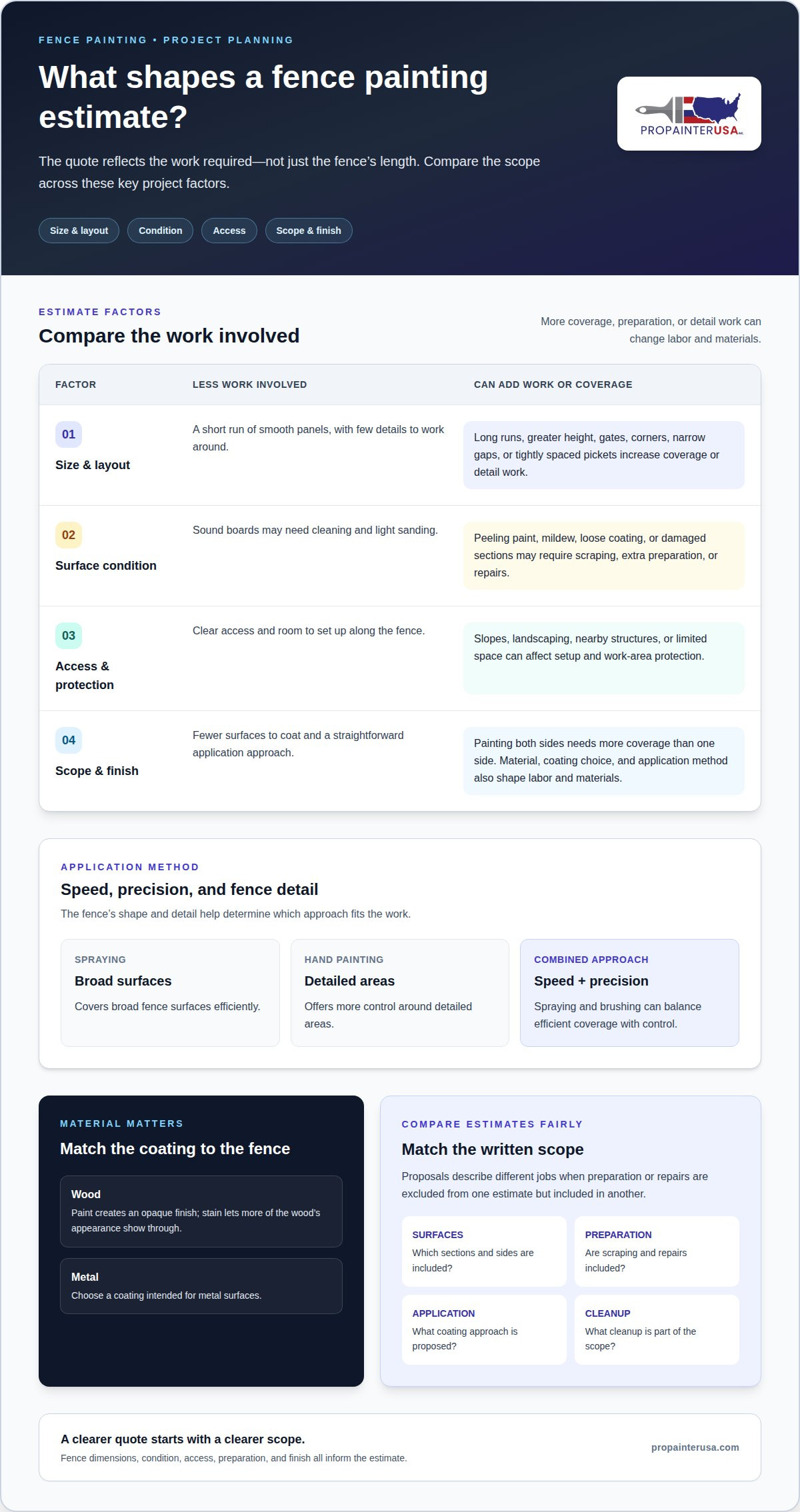
A fence estimate depends on the work required, not just the fence’s length. Height, total surface area, material, and access all affect labor and materials. A tall fence with tightly spaced pickets takes longer to coat than a short run of smooth panels. Painting both sides also requires more coverage than treating one side.
The fence’s condition determines how much preparation is needed. Sound boards may need cleaning and light sanding, while peeling paint, mildew, or damaged sections can require extra scraping or repairs. The existing coating and fence material help determine a suitable paint or stain. Spraying, brushing, or combining both methods can also affect labor, depending on the fence’s shape and detail.
Long runs, gates, corners, and narrow gaps increase coverage or detail work.
Loose coating and repairs require more preparation than a stable surface.
Slopes, landscaping, nearby structures, and limited space affect setup.
The number of sides, coating choice, and application method shape materials and labor.
Homeowners comparing fence painters near me should compare estimates with matching scopes. Each should identify the included surfaces and sides, preparation steps, coating approach, and cleanup. An estimate that excludes scraping or repairs describes a different job from one that includes them.
The price depends on the project and is provided after a quote request. Fence dimensions, condition, access, preparation, and finish are key cost factors. If you’re comparing fence painters near me, share clear photos and measurements, then review the written scope for exclusions. This makes differences between proposals easier to understand. For practical project planning, review painting project considerations.
Before work begins, Philadelphia homeowners should confirm that a painting contractor has active liability insurance and workers' compensation coverage. Most Philadelphia rowhouse exterior painting projects take about 4-7 days, though weather can affect the schedule.
Inspect each fence section before using a pressure cleaner. Look for dirt, mildew, peeling paint, loose boards, and exposed fasteners. These conditions require different preparation: washing removes surface grime, while loose coating needs scraping. Mark damaged areas so repairs aren’t overlooked once the fence is wet.
Pressure cleaning removes dirt, mildew, and peeling paint, helping the new coating bond properly. Use a controlled approach suited to the fence material and work evenly across each panel. Avoid concentrating the spray in one spot, which can leave the surface unevenly cleaned. Pay attention to corners, joints, and bottom edges where grime collects.
• Clear movable items and plants away from the fence line.
• Clean the fence, including rails, posts, and both sides if they’ll be coated.
• Let the surface dry, then inspect for remaining loose paint or rough areas.
• Scrape, sand, or repair the spots that still need attention before coating.
Drying is essential between washing and painting. Coating damp wood can interfere with application, so check the whole surface instead of judging only the sunniest panel. Shaded sections may stay wet longer. Once the fence is dry, feel for rough areas and remove leftover dust before applying paint or stain.
Preparation also means protecting nearby surfaces. Move furniture, cover items that could catch debris, and keep gates accessible during the work. If paint is peeling, cleaning alone won’t create a sound surface: remove loose material and address damaged areas first. After painting, regular cleaning and yearly inspections for chips or peeling can help identify maintenance needs early.
A professional fence painting project typically takes one to three days. The schedule involves more than applying paint. Fence length, height, gates, number of sides, and surface condition all affect working time. A short, sound fence with clear access needs less preparation than a long run with peeling coating and tightly spaced pickets. Weather can also shift the schedule, especially if rain interrupts the work.
The project moves through several stages. First, the fence is inspected and the work area prepared. Cleaning, repairs, and removal of loose coating follow as needed. The surface must dry before painting, and each coating needs time to dry between steps. Extensive repairs or slow-drying weather can extend the project.
Identify damaged boards, peeling areas, gates, and both sides included in the job.
Complete cleaning and surface repairs before applying paint or stain.
Coat broad panels and detailed sections using an approach suited to the fence.
Look for missed spots and confirm the work area is clean.
Plan for access, too. Keep gates clear and move items beside the fence before work begins. If the fence borders a shared path or garden, allow safe passage and protect nearby belongings. Agreeing on a work sequence helps everyone know which areas will be inaccessible at each stage.
Maintenance timing differs from the initial project schedule. Fence painting is recommended at least every three to five years, depending on the type of coat. A full repaint of a painted fence may be necessary every five to 10 years, depending on climate and the initial paint job. Track peeling or fading between these intervals, since condition helps indicate when attention is needed. To discuss a practical painting schedule for your property, plan your painting project.
Pro Painter USA helps homeowners plan residential interior and exterior painting projects with a clear, professional approach. If fence painting is part of a broader exterior refresh, its residential exterior painting service can address the home’s exterior surfaces alongside your property improvement plans. For a separate indoor project, residential interior painting can refresh rooms with careful surface preparation and a clean finish.
Consider reaching out when coordinating multiple painting needs or planning an exterior update alongside other work. Describe the areas you want painted to help establish the project scope and next steps.
Contact Pro Painter USA to discuss your painting project.
A freshly painted fence can prompt a broader look at your property: perhaps the exterior needs attention, or an interior room is ready for a refresh. If you’re comparing fence painters near me, consider how the fence fits into your priorities and what you’d like to improve next.
Pro Painter USA offers Residential and Commercial Interior Painting and Residential and Commercial Exterior Painting. Whether you’re planning a home update or work on a commercial property, a clear description of the surfaces and your goals is a useful starting point. Request a complimentary estimate to discuss the next step for your painting project.
Contact Pro Painter USA to discuss your painting plans. A considered plan can help you move forward with confidence.
Spraying suits broad, open fence panels, while hand painting offers closer control around narrow gaps and detailed trim. A mixed approach can work well: spray the wide faces, then brush edges, corners, and areas that need extra attention. For example, closely spaced pickets may need more brushing than a simple panel fence.
Consider professional help when the fence has widespread peeling, uneven coverage, or a finish that keeps deteriorating after touch-ups. A long run, multiple gates, or hard-to-reach sections can also make a consistent result difficult to achieve alone. If boards are soft, broken, or unstable, address those structural problems separately before treating paint as the solution.
Beyond the fence’s dimensions, details such as lattice tops, closely spaced pickets, and several gates can add careful work. The number of coating layers and whether old finishes need removal also affect the scope. To compare estimates fairly, make sure each describes the same fence sections, sides, repairs, coating approach, and cleanup expectations.
There isn’t one reliable per-linear-foot figure for every fence: a foot of low, smooth paneling requires different work from detailed pickets or a tall fence. The price depends on the project and is provided after a quote request. Fence height, sides to be coated, condition, access, preparation, and finish all affect the estimate.
A larger fence generally needs more coating and labor, but material and design affect how that area is handled. Smooth panels are more straightforward to cover than narrow pickets with many edges. Wood and metal also need coatings suited to their surfaces. Share the fence’s measurements, material, and photos to help define the estimate’s scope.
Preparation typically starts with assessing the fence and identifying areas that need cleaning, scraping, sanding, or repair. Before work begins, move patio furniture, planters, and other belongings away from the fence line. Clear access to gates and point out shared boundaries or delicate plants. These steps help define the work area and reduce interruptions during the project.
You might find these helpful:
We are a team of interior and exterior painters and we are not limited to house painting only. We can paint different businesses like retail shops, commercial buildings, and apartments.
We also provide restaurant painting services. We can give you more information about these services if you give us a call.


