MILWAUKEE WI, USA,
October 8, 2026


Fresh paint can hide failing trim for a while, but it won’t stop damage beneath the surface. For homeowners considering exterior trim repair and paint Milwaukee, the first decision isn’t color. It’s whether the trim needs patching, more extensive repair, or careful preparation before repainting.
A soft spot or peeling finish can look like a surface issue, but the visible symptom doesn’t always show how far deterioration extends. Milwaukee’s freeze-thaw cycles put exterior finishes to the test, so a lasting result starts with assessing the trim and addressing necessary repairs before new paint goes on.
This guide explains the signs of trim deterioration and how to think through the right repair scope for your home. You’ll learn what preparation should come before painting, how local conditions can affect finish choices, and what details make an estimate useful. With a considered plan, repair and paint work together to refresh your home’s exterior and leave the trim ready for its new finish.
• Learn which visible trim problems may call for more than a fresh coat of paint.
• See how assessment, preparation, repair, priming, and painting fit into a well-planned project.
• Compare repainting, localized patching, and more extensive repair to understand possible project scopes.
• Prepare useful details about affected areas, symptoms, access, and appearance for an estimate for exterior trim repair and paint Milwaukee.
• Learn how Pro Painter USA’s Milwaukee-area painting and surface repair services can support your exterior trim project.
Peeling or cracked trim paint can make a Milwaukee home look worn, but it may also signal that the surface needs attention before repainting. A fresh coat can improve appearance and protect a properly prepared surface; it can’t restore material that has deteriorated. For exterior trim repair and paint Milwaukee projects, start by noting what you can see, then have the trim’s condition assessed before deciding on a repair scope.
Look for these signs during a walk around your home:
Areas that seem less firm than the surrounding trim need a closer look.
Cracks or splits can expose the surface beneath the paint.
Flaking and lifting paint leave an uneven finish and may reveal worn material.
Gaps where trim pieces meet can expose edges to moisture.
Discoloration may point to recurring dampness around an edge or joint.
A single symptom doesn’t establish how far deterioration extends or what caused it. A stain, for example, is a visible clue, not a diagnosis. The condition of the surrounding trim and the amount of failing material help determine whether the work should focus on paint preparation, localized patching, or more extensive repair. For general background on materials and methods, see this overview of house painting techniques and materials.
Start with window and door trim, fascia, and other exposed painted details. Check where pieces meet, along worn edges, and around corners or openings where paint may be lifting. Look for separating joints, cracks, peeling, and visible surface deterioration. These observations help you describe the issue without assuming what repair is required.
Inspect from the ground, moving around the exterior for a clear view. Don’t climb or reach from an unsafe ladder position to examine high trim. Note anything out of view so it can be assessed safely.
Exterior trim faces seasonal moisture, temperature swings, and freeze-thaw conditions. Those changes don’t automatically mean trim is damaged, but recurring moisture around exposed edges or joints can contribute to paint failure or deterioration over time. If you see peeling near a joint, note any nearby staining or splitting as well.
Regular visual inspections help you spot paint failure and trim deterioration before planning the work becomes guesswork. Record where each symptom appears and whether it’s limited to one area or visible in several places. This gives an assessment a useful starting point while leaving the repair decision to the observed condition.
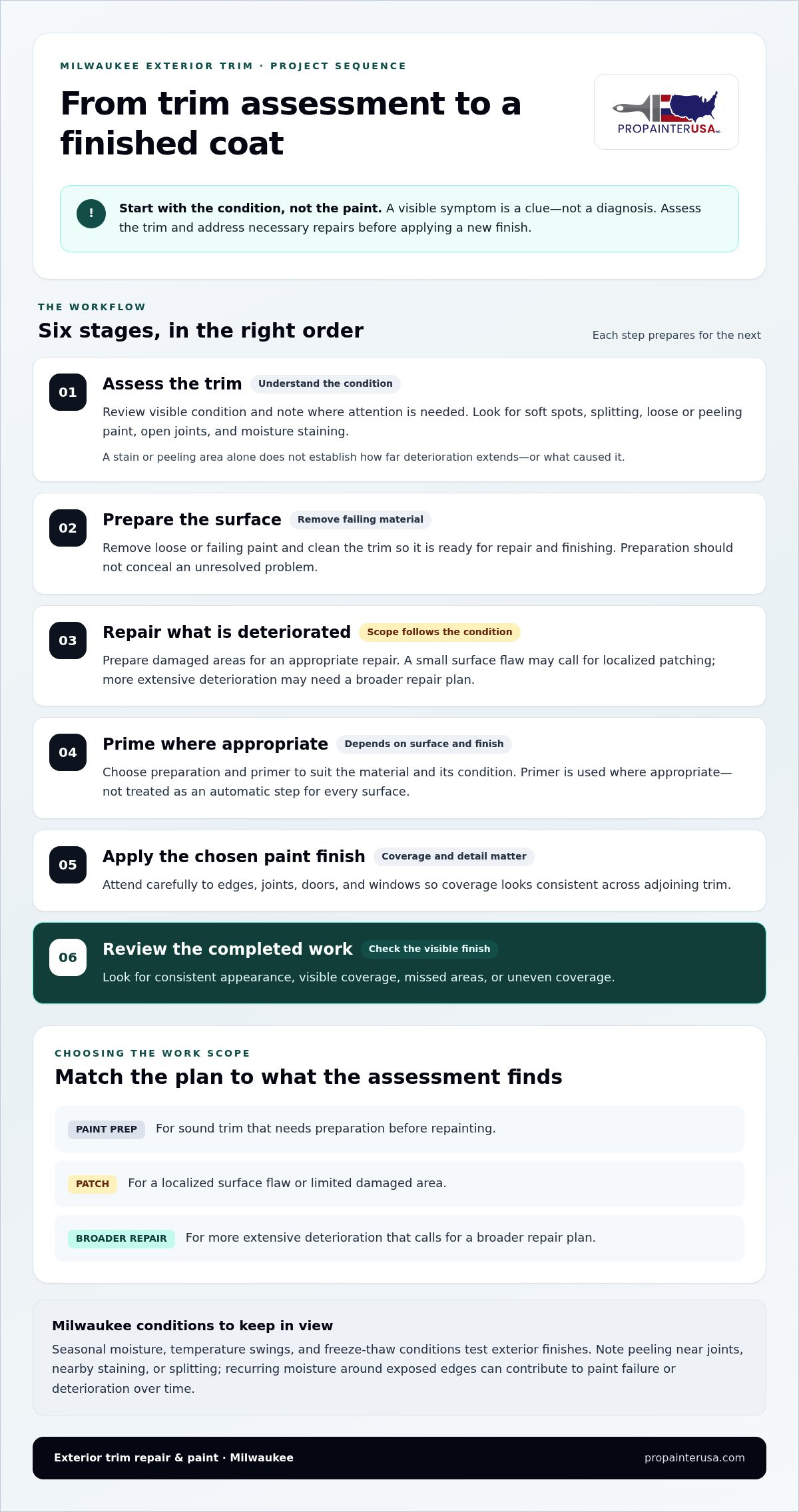
A well-planned trim project follows the surface’s condition, not a one-size-fits-all checklist. For exterior trim repair and paint Milwaukee, the sequence matters: painting over loose material or visible deterioration can leave the underlying issue unresolved. Each stage should prepare the surface for the next, with the repair scope based on what an assessment reveals.
A clear workflow generally moves through these steps:
Review the trim’s visible condition and identify areas that need attention.
Remove loose or failing paint and clean the surfaces so they’re ready for repair and finishing.
Patch or address deteriorated areas based on their type and extent.
Apply primer when it suits the prepared surface and selected finish.
Apply the chosen finish with attention to coverage and detail.
Check the completed work for consistent appearance and visible coverage.
Sound, clean, properly prepared trim provides the basis for a durable paint finish. If the project reveals a broader concern than expected, the scope should reflect the observed condition rather than simply cover it with paint.
Preparation starts with removing loose or failing paint and cleaning the surface. Damaged areas are then prepared for an appropriate repair. A small surface flaw may call for localized patching, while more extensive deterioration may require a broader repair plan. Preparation should leave the surface ready for the selected finish, not conceal an unresolved problem beneath it.
In older homes, take care around existing paint before disturbing it. HUD offers information about lead-based paint hazards and safe work practices through its Lead Hazard Control Programs. This is useful background when planning work on older painted surfaces.
Primer and paint choices should suit the prepared trim and the needs of the project. A patched surface may need different preparation from sound, existing paint. The right sequence depends on the material and condition, so primer is used where appropriate rather than treated as an automatic step for every surface.
Application details shape the finished look. Edges, joints, doors, and windows need careful attention so coverage looks consistent across adjoining trim. A final review checks the visible finish for missed areas or uneven coverage. It helps confirm the work is complete without implying a specific lifespan for the paint.
Understanding the sequence makes an estimate easier to discuss because it distinguishes preparation, patching, and painting as connected parts of the project. Pro Painter USA brings approximately 30 years of industry experience to residential painting and surface repair in Milwaukee and surrounding Wisconsin communities. Learn more about Pro Painter USA’s exterior painting services when planning a trim project for your home.
Peeling paint alone doesn’t tell you whether trim needs repainting or a more involved repair. The right scope depends on the material’s condition after it’s assessed and prepared. For exterior trim repair and paint Milwaukee homeowners are planning, think of paint as the finish, not a substitute for addressing deteriorated trim. Photos can show what you’ve noticed, but they can’t establish the full condition beneath failing paint.
Use this comparison to start a discussion about the project. It isn’t a diagnosis; an inspection informs the appropriate scope.
| Possible scope | What it may address | What to consider |
|---|---|---|
| Repainting | Trim that appears intact and stable but has a worn or peeling finish. | Loose paint and surface issues still need preparation before a new finish is applied. |
| Localized surface repair | Limited flaws or deterioration in a specific area that may be suitable for patching. | The affected area needs preparation, and the repair scope depends on the observed condition. |
| More extensive trim repair | Wider or deeper deterioration, or several areas that need attention. | Inspection helps determine how much material and surrounding trim are affected before painting. |
Repainting may be appropriate when the trim appears intact and stable but its finish is worn, cracked, or peeling. That doesn’t mean paint can simply go over the old surface. Failing material needs proper preparation, and the trim’s condition should inform the finish. Repainting alone also shouldn’t be expected to resolve an underlying moisture concern or deterioration that hasn’t been addressed.
Soft, split, loose, or visibly deteriorated areas are reasons to assess whether repair should come before painting. What looks like a small flaw from the ground may extend beyond the visible paint failure, so the repair extent depends on what an inspection reveals. Wood rot is one possible concern, but a surface clue alone doesn’t confirm its full extent. The dedicated guide on exterior wood rot repair in Milwaukee covers that topic in more detail.
Keep the decision practical: note which sections look stable, where paint is failing, and where trim appears damaged. Use those observations to guide an inspection and define the project scope. A close assessment can distinguish a finish problem from a repair need, helping ensure the plan addresses the trim’s condition rather than covering it with a fresh coat. This comparison helps you describe what you see; it isn’t a reason to decide on replacement based on appearance alone.
A useful estimate starts with a clear picture of the work you’ve noticed and the result you want. For exterior trim repair and paint Milwaukee homeowners are planning, scope depends on more than the amount of trim. Surface condition, preparation and repair needs, and access all affect the work. A short list of observations can help frame the project without requiring you to diagnose the damage yourself.
Identify the locations that need attention, such as window trim, door trim, fascia, or other exterior details. Note what you see and where: peeling paint on one window, a crack near a doorway, or an area that looks soft. Mention any previous repair concerns. Photos can help describe these observations, but they don’t replace an assessment of the surface and access.
Before requesting an estimate, organize the details this way:
List affected trim by location, and note whether the concern appears in one spot or across several sections.
Describe visible peeling, cracks, soft areas, open joints, or other changes without assuming their cause.
Mention high or difficult-to-reach trim so the project can account for where work is needed.
Share any known previous patching or recurring paint concerns in those areas.
Describe whether you want to refresh the existing look or coordinate trim with other exterior colors.
This context separates visible concerns from work an assessment may find necessary. The estimate can then reflect the property’s condition instead of assuming every section needs the same treatment.
Think about which areas draw your eye first and how you want the finished exterior to look. A consistent trim color can tie siding, doors, and windows together, while a contrast can make those details stand out. Color preferences are useful, but preparation and repair needs still shape the work that should come before the finish.
Discuss the sequence directly: which areas need repair, what preparation is included, and how painting follows once surfaces are ready. If some sections are more noticeable or need attention sooner, identify those priorities so the scope can be tailored to the property. For broader planning context, explore house painting estimates in Milwaukee as you consider how trim work fits into an exterior painting project.
Once you’ve gathered your notes and clarified your priorities, Pro Painter USA’s free painting estimate is a practical way to define the work. Estimates are available online or by phone.
Exterior trim work calls for a plan that connects the surface’s condition with the finish you want. Pro Painter USA is a locally owned painting business serving Milwaukee and surrounding Wisconsin communities, with approximately 30 years of industry experience. Residential exterior painting, door and window painting, and surface repairs can all play a part in a trim project tailored to your home.
For exterior trim repair and paint Milwaukee homeowners are considering, the process starts by identifying which areas need attention and determining the preparation and repair scope. Then the paint finish can be planned around those prepared surfaces. This lets you discuss the project in terms of your property’s condition and priorities instead of assuming every section of trim needs identical work.
Before painting begins, the trim’s condition helps define practical next steps. A sound area with a worn finish may need different preparation from a section with peeling paint or a surface flaw that needs patching. Assessing those conditions first connects surface repair to the painting work and keeps the planned finish grounded in what the trim needs.
Clear communication helps shape a useful project scope. Describe the affected locations, what you’ve observed, and which areas matter most to you. Share your preferences for the finished appearance, too. With those details in view, preparation, repair, and painting can be planned as related parts of the project, tailored to the property rather than treated as a standard package.
It’s also helpful to talk through sequence. Repair and preparation should be accounted for before paint is applied, so the finish follows surfaces that are ready for it. Whether the project focuses on window trim, doors, or several exterior details, a defined scope clarifies the planned work and how each step fits together.
A free estimate helps turn initial observations into a project plan. Pro Painter USA offers estimates online or by phone. Share the trim locations you’re concerned about, visible symptoms, access considerations, and your finish goals. The scope can then be tailored to the property and the trim condition observed during assessment.
You don’t need to arrive with a repair diagnosis. A clear description of what you see and what you’d like to improve gives the estimate discussion a useful starting point. The resulting scope can explain the proposed preparation, surface repairs, and painting work, helping you make the next decision with greater confidence.
When you’re ready to discuss your home’s exterior trim, request a free estimate from Pro Painter USA. A clear scope makes the next project decision easier and brings repair and painting together around your home’s needs.
Plan exterior trim work before a fresh finish makes it harder to see what needs attention. Use what you’ve observed to start a practical conversation about the areas you want to improve and the result you’re aiming for. A tailored scope can clarify how repair and painting fit together without assuming your home needs more work than it does.
If you’re considering exterior trim repair and paint Milwaukee, Pro Painter USA can shape a project plan around your property’s condition and priorities. A clear estimate gives you a useful basis for deciding what to address and how to move forward.
Start planning your exterior trim project with Pro Painter USA. The company serves homeowners in Milwaukee and nearby communities, including Shorewood, Whitefish Bay, Fox Bay, Glendale, Fox Point, Bayview, Grafton, Cedarburg, Port Washington, Wauwatosa, Menomonee Falls, Richfield, West Bend, Hartford, Waukesha, New Berlin, Hales Corners, Oak Creek, and Cudahy. Request a free estimate to discuss a clear scope for your home.
Exterior trim can sometimes be painted in cold weather, but only if conditions meet the paint’s temperature and moisture requirements. In Milwaukee, the reliable window for exterior painting is typically mid-May to mid-October. Outside that period, low temperatures, damp surfaces, or overnight changes may affect application and drying. A mild afternoon alone isn’t enough to judge whether conditions are suitable. Check the product directions and consider the surface and forecast before scheduling the work.
Drying time varies with the paint, temperature, humidity, airflow, and number of coats. Also distinguish between paint that feels dry to the touch and paint that’s ready for another coat or normal exposure. Follow the product instructions for recoat timing, and avoid leaning objects against freshly painted trim. In Milwaukee, cool or damp conditions can change the drying process, so a fixed time estimate may not fit every project.
There isn’t one set price for exterior trim repair and painting in Milwaukee because each home has a different scope. The estimate depends on how much trim is involved, its condition, the preparation and patching needed, and access to the work areas. For a clearer estimate, describe the affected locations and note any high or hard-to-reach sections. Pro Painter USA offers free estimates online or by phone, tailored to the project.
Matching trim to siding can create a quiet, unified look, while a contrasting color can highlight windows, doors, or architectural details. Consider the whole exterior, including brick, roofing, and the entry door, rather than choosing trim in isolation. On Milwaukee homes with Cream City brick, warmer earth-toned trim can complement the brick’s pale yellow tone. Viewing color samples beside the exterior in different daylight can help guide your choice.
Caulk may suit a small gap at a stable joint, but it isn’t a repair for split, soft, or deteriorated trim. The joint should be clean and dry, and the caulk should be appropriate for exterior use and compatible with the planned paint. If a gap keeps opening, appears alongside staining, or involves damaged material, filling it alone may not address the underlying issue. Assess the trim’s condition before sealing and painting.
It can be. Homes built before 1978 may have lead-based paint, so avoid scraping or sanding old trim until appropriate precautions are in place. Work that disturbs lead paint in pre-1978 homes must be performed by contractors with EPA Lead-Safe certification under the Renovation, Repair and Painting rule. The U.S. Department of Housing and Urban Development also provides information about lead hazards and safe work practices for homeowners planning repairs.
You might find these helpful:
We are a team of interior and exterior painters and we are not limited to house painting only. We can paint different businesses like retail shops, commercial buildings, and apartments.
We also provide restaurant painting services. We can give you more information about these services if you give us a call.