Pro Painter USA
MILWAUKEE WI, USA,
October 22, 2026


DIY is usually cheaper upfront, but the cost to hire a painter vs. DIY isn’t just a comparison of paint receipts. Whether the trade-off is worthwhile depends on the room’s condition, the finish you want, and the time you can set aside.
It’s reasonable to focus on the immediate cost, especially for a single room. But paint, tools, surface repairs, and your own hours all shape what a DIY project takes, while preparation and application affect the result. This guide compares the costs, quality, and preparation involved in both options, including when hiring a painter for one room can make sense. You’ll also learn what affects DIY material expenses and how to decide whether saving money upfront is worth doing the work yourself.
• Compare the full DIY supply list with the professional quote, not just the cost of paint, to understand the real trade-off for one room.
• Factor in the time required for preparation, painting, drying, and cleanup when deciding whether doing it yourself is worthwhile.
• Assess wall condition and the amount of patching, sanding, or priming needed before choosing your approach.
• Consider the finish you want and your comfort with detailed work when weighing DIY results against professional application.
• Take extra care with older painted surfaces, since the home’s age can affect how to approach preparation safely.
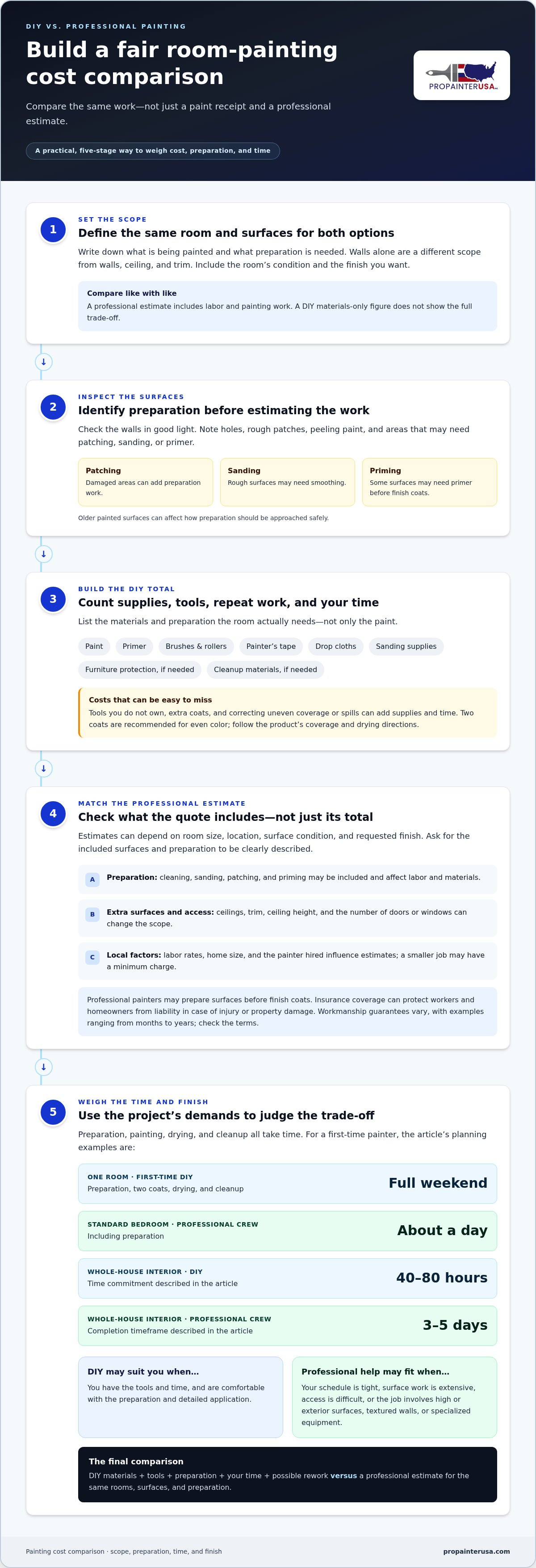
The cost to hire a painter versus DIY depends on more than the paint receipt. DIY spending covers supplies and your time; a professional estimate covers labor and painting work. Compare the same room, surfaces, and preparation before deciding which option fits.
A professional estimate includes labor as well as painting, so it isn’t directly comparable to a materials-only budget. For a fair comparison, list your DIY materials and preparation, then compare them with the same scope in a professional estimate.
Tools can raise the DIY total, especially if you need equipment for just one project. Extra coats add paint and time. If mistakes leave uneven coverage or spills, correcting them may require more supplies and repeat work.
Repairs, additional coats, and tools you don’t own can increase your budget. Professional painting includes labor, so compare estimates for the same rooms, surfaces, and preparation. A materials-only DIY figure doesn’t show the full trade-off for a home-wide project, especially if painting is part of a broader overhaul where comprehensive renovation specialists like FT2 Interior Design coordinate wall treatments with complete interior transformations.
How much can homeowners save by painting a room themselves? What tools and materials are needed for a DIY room painting project? Budget for paint, primer, brushes, rollers, painter’s tape, drop cloths, and sanding supplies. Add furniture protection and cleanup materials if needed.
| Option | Upfront expense | Time and effort | Comparison point |
|---|---|---|---|
| DIY | Materials and tools | Your preparation, painting, and cleanup | Supplies to buy |
| Professional | Estimate includes labor | Less work for the homeowner | Matching project scope |
Use this cost to hire a painter versus DIY comparison to weigh your available time against the project’s preparation and finish requirements. DIY may suit you if you have the tools and time; professional help may be a better fit for a tight schedule or extensive surface work.
Before starting, inspect the bedroom in good light and note holes, rough patches, or peeling paint. These conditions may call for patching, sanding, or primer before finish coats. Multiple coats may be needed for even coverage. Skipping these steps can leave visible flaws, while uneven coats, brush strokes, or spills may take extra materials and time to correct. Include these possibilities in your budget instead of relying on the lowest materials estimate.
A professional estimate reflects the room’s size, location, surface condition, and requested finish. Hiring can make particular sense when preparation is extensive, access is difficult, or avoiding mistakes matters more to you than doing the work yourself.
This gives homeowners a starting point, but it isn’t a fixed room price: the estimate depends on the area being painted and the work involved. A smaller job may also have a minimum charge.
Preparation, ceilings, and trim can all add work beyond painting walls. Patching damaged areas, sanding rough surfaces, and priming affect the labor and materials in an estimate. Ceiling height and the number of doors or windows also shape the scope. Ask for an estimate that clearly describes the surfaces and preparation included, so you can compare the same work rather than just the final totals.
Professional painters may clean, sand, patch, and prime before applying finish coats. That preparation addresses flaws that can show through fresh paint and helps create a more consistent result. Insurance coverage can protect workers and homeowners from liability in case of injury or property damage. Workmanship guarantees vary, with market examples ranging from months to years, so understand the terms attached to any estimate.
Location also affects professional painting costs across the United States. Local labor rates, the home’s size, and the painter hired all influence estimates; the same project can therefore cost different amounts in different places. A 12-by-12 room with walls, ceiling, and trim has a broader scope than walls alone, which is reflected in its estimate. These details help explain regional differences without treating one national figure as a guaranteed local price.
Time can tip the decision toward hiring. A first-time DIY painter should plan on a full weekend for one room, including preparation, two coats, drying, and cleanup. A professional crew usually completes a standard bedroom in about a day, including preparation. For a whole-house interior, DIY work can take 40-80 hours, while a professional crew may finish in 3-5 days. Choose professional help when your schedule, project scale, or difficult surfaces make that time commitment impractical.
Hiring is also worth considering for high or exterior surfaces, textured walls, or work requiring specialized equipment. DIY mistakes, such as uneven coats or paint spills, can mean extra materials and time. The price depends on the project’s size, surfaces, and preparation, and is provided after a quote request. For a professional painting estimate, describe the rooms and surfaces you want painted.
A smooth finish depends on more than the paint can. Even application, suitable supplies, and consistent technique help prevent lap marks, visible brush strokes, and uneven color. When comparing DIY and professional work, look closely at corners, trim edges, and areas beside windows. These details can reveal whether the painter maintained a steady method across the room.
Two coats are recommended for an even paint color. DIY painters should follow the product’s coverage directions and let each coat dry as directed before applying the next. Rushing the second coat can leave thin patches or inconsistent sheen. A professional painter’s experience can help maintain a wet edge and apply paint evenly, especially across broad walls where overlap marks stand out.
Room conditions matter, too. A bedroom with 8-foot ceilings, walls in good condition, and a new color close to the existing one can suit a capable DIY painter. A dramatic color change or textured surface takes more control and careful application. High-quality paint and tools can improve DIY results, but they can’t replace steady brushwork or attention to the edges.
Preparation and protection also affect the final appearance. Before painting, move furniture away from walls, cover floors with drop cloths, and mask trim carefully. Keep supplies organized, including brushes for edges and rollers for larger areas. Ladders help reach upper wall sections, but use them carefully. Reaching unevenly can make it harder to apply paint consistently near ceilings.
Durability depends partly on how well the surface is prepared and the paint is applied. Interior paintwork typically lasts 7-10 years when professionally prepared, compared with 3-5 years for DIY work before touch-ups. These ranges show why the comparison should consider upkeep, not just the first finished appearance. A missed patch or thin coat may become noticeable sooner than a carefully applied finish.
Finish selection can change how flaws appear. Eggshell is recommended for bedrooms and living areas, while semi-gloss is recommended for kitchens, bathrooms, and trim. A sheen that reflects more light can draw attention to uneven texture or roller marks. Test a small area first, then view it in the room’s lighting before painting every wall. This helps you assess the color and finish together.
For a fair assessment, inspect the finished room in daylight and under its usual evening lighting. Check corners, edges, and the wall behind furniture for missed spots or drips. If you find an uneven area, identify whether it needs another coat or a corrected application. A second pass may improve coverage, but repeating the same technique can reproduce the original marks.
DIY can deliver a pleasing finish on straightforward walls when you have the time and suitable supplies. Complex surfaces, high areas, or visible brush marks may make professional skill more valuable. Judge the result by consistency, clean edges, and how well the coating holds up, not just by your first impression.
Preparation shapes how evenly paint covers and how well it holds. For a DIY project, plan the surface work before opening the paint, especially when repairs or older coatings are involved.
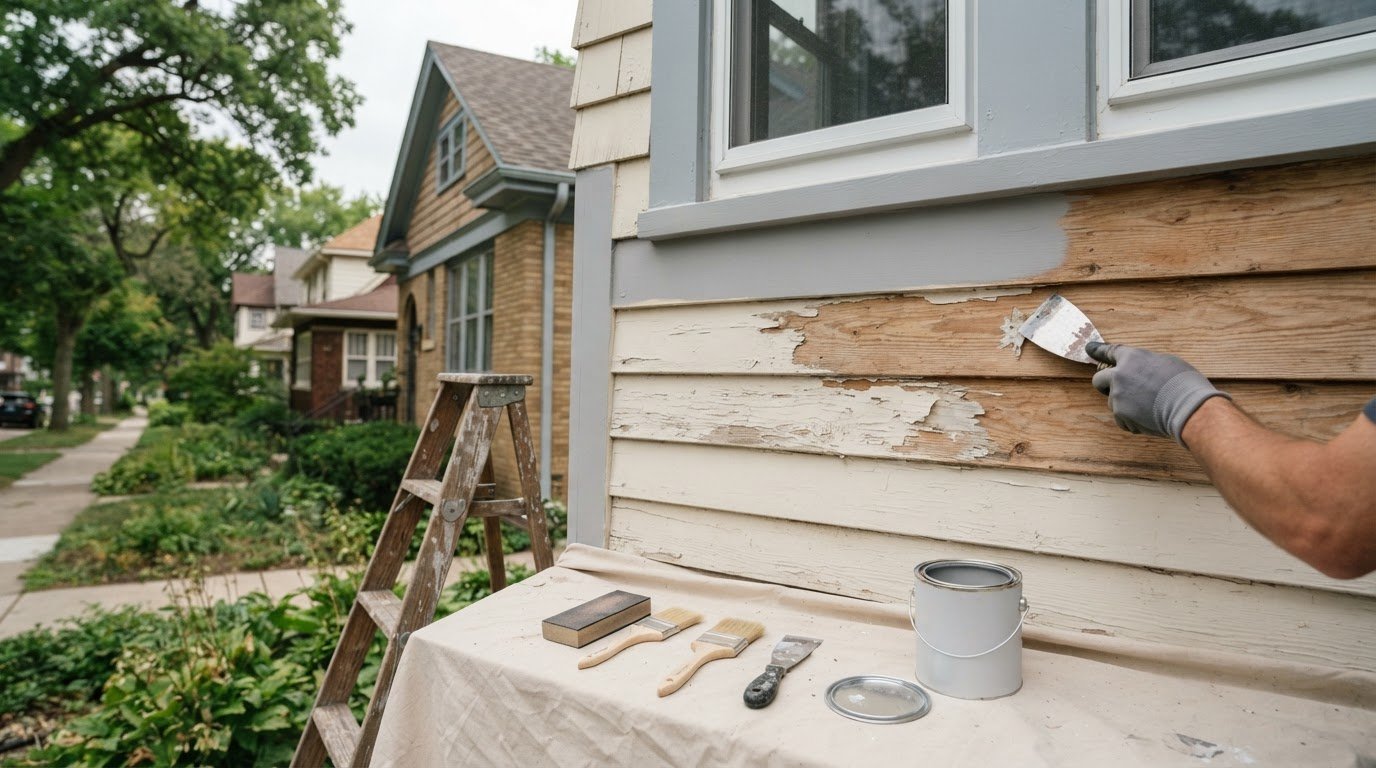
Start by moving furniture, covering floors, and cleaning the surfaces you’ll paint. Patch holes, sand rough repairs, and caulk gaps before applying primer where needed. These steps help reduce visible flaws beneath the finish. For exterior surfaces, check for peeling paint and damaged areas; paint won’t fix underlying surface problems.
Work in a clear sequence: protect the room, clean the walls, repair holes, sand patched areas, then remove dust. Apply primer to bare or repaired spots before painting. Skipping a step can leave bumps, peeling, or uneven coverage that may require another repair and coat. Keep drop cloths in place through painting and cleanup to catch drips and protect floors.
Older coatings need extra care. Homes built before 1978 may contain lead-based paint, according to the U.S. Environmental Protection Agency. Sanding or scraping lead-based paint can create lead dust. When working with possible lead paint, the EPA recommends hiring a lead-safe certified contractor or using lead-safe work practices. Avoid disturbing a questionable coating until you’ve chosen a safe approach.
Surface preparation adds effort before the first coat, and damaged walls take longer than clean, smooth ones. A first-time DIY painter should plan on a full weekend for one room, including preparation, two coats, drying, and cleanup. A whole-house interior can take 40-80 hours of DIY work, while a professional crew may complete the same job in 3-5 days.
Professionals use repeatable techniques to address repairs, sanding, and primer before applying finish coats. This method helps create consistent coverage across rooms, including corners and trim. On exterior projects, weather and exposed surfaces can affect the work sequence. Peeling areas or damaged wood need attention before painting, since painting over an unprepared surface can lead to premature failure.
To decide whether preparation is manageable, inspect each wall in good light and list repairs before estimating the painting work. A room with a few small holes needs a different plan from one with widespread peeling or rough patches. Count the surfaces involved, including ceilings and trim, and allow time for repairs and drying. Preparation may feel slow, but correcting missed repairs after painting can mean sanding, repainting, and additional cleanup.
A homeowner’s DIY budget depends on the area painted, paint quantity, surface condition, and supplies already owned.
Sherwin-Williams estimates one gallon covers about 350-400 square feet. To build a budget, estimate the paintable area, divide by the product’s coverage, then account for the coats and primer required. Windows and doors reduce wall area, while ceilings add surfaces and paint to the plan.
Tools can make a smaller job more expensive if the homeowner must buy everything. Brushes, rollers, tape, drop cloths, ladders, and sanding supplies all belong in the materials estimate. Add a 10-25% contingency above the DIY materials estimate for unexpected supplies or extra paint.
Separate paint from equipment in your budget. If you already own ladders and basic tools, your outlay may be lower than that of a first-time painter.
For a practical calculation, list each room, its walls and ceilings, and any repairs requiring primer. Estimate paint quantity using the coverage on the label, then multiply by the number of coats. Add supplies and a contingency, but keep labor separate: your time is real even when it doesn’t appear on a receipt. DIY savings shrink if mistakes require more paint, sanding, or another round of work.
The clearest takeaway is to budget by surface area and project scope, not by a single “average” figure. A few rooms with sound walls need a different materials plan from a full interior with ceilings, repairs, and newly purchased tools. Compare your complete DIY materials list with the professional scope, including preparation and cleanup, to judge the trade-off fairly.
For a homeowner weighing a whole-home project against DIY, request a painting estimate. The price depends on the home’s size, surfaces, and preparation involved.
Pro Painter USA provides Residential Interior Painting for homeowners who want professional help with one room or a wider interior project. The team also paints residential exteriors and commercial interiors and exteriors, giving property owners professional painting options for different spaces.
Hiring a painter can make sense when you want help with preparation, patching, and a consistent finish, or would rather not manage the project yourself. For a single room, consider the surface condition, the work involved, and the value of your time alongside the DIY materials budget. A clear project scope helps you understand the work before deciding.
Contact Pro Painter USA to discuss your painting project and next steps.
A useful way to judge the cost to hire a painter versus doing it yourself is to consider what you want the finished space to make possible. If doing the work yourself would delay using a room or leave repairs unfinished, professional help may better fit your priorities. If the surfaces are straightforward and you’re ready to manage each stage, DIY can give you control over the project.
Before deciding, write down the rooms or surfaces involved, the preparation they need, and how much time you can give the work. That scope makes your next step clearer. Pro Painter USA provides Residential Interior Painting, Residential Exterior Painting, and Commercial Interior Painting for projects where professional painting fits your plans.
Contact Pro Painter USA to discuss your painting project. With a clear scope and a considered choice, you can move forward with confidence in the result you want.
Hiring can be worthwhile when you want a polished result but lack time for the work. A simple room with sound walls may suit a confident DIY painter; extensive repairs, detailed trim, or a demanding finish can make professional help more appealing. Pro Painter USA provides Residential Interior Painting in Milwaukee and nearby communities, including Shorewood, Whitefish Bay, Fox Bay, Glendale, Fox Point, Bayview, Grafton, Cedarburg, Port Washington, Wauwatosa, Menomonee Falls, Richfield, West Bend, Hartford, Waukesha, New Berlin, Hales Corner, Oak Creek, and Cudahy.
Possibly, but compare the paint cost with the project’s full scope before buying. Market information describes contractor paint pricing as 30-50% below retail, while some painters mark up premium paint by 15% to 25%. Those figures show why retail purchases don’t automatically reduce the overall bill. Before selecting paint, identify the required finish, surface condition, and number of coats, then compare equivalent materials and project details.
The total depends on how many surfaces need paint, paint quality, repairs, and whether you already own tools. For example, ceilings add paint and work beyond a walls-only plan. Make a room-by-room list, estimate the paint and primer required, then include tools, protection materials, and a contingency to avoid underestimating your budget.
DIY usually costs less in direct labor because the homeowner does the work, but supplies, tools, and correction work affect the final comparison. That saving doesn’t account for the value of your time. Compare the same surfaces and preparation in both options, then decide whether the money saved is worth doing the work yourself.
Professional painters bring a repeatable work process to preparation, application, and cleanup. A professional crew usually completes a standard bedroom in about a day, including preparation, while a first-time DIY painter should plan on a full weekend. For larger interiors, coordinating the work across rooms can reduce how long the project disrupts the household. Efficiency also comes from organizing tasks so surface repairs and painting follow a logical sequence.
Professionals assess surfaces before painting and prepare them according to their condition. This may include cleaning, sanding, patching, caulking, and priming rather than applying paint over visible damage. For instance, a repaired wall section needs attention so its texture and coverage blend with the surrounding area. Consistent preparation across rooms helps avoid obvious differences between old surfaces, repaired spots, and newly painted sections.
Hiring a professional can reduce your direct involvement in work involving ladders, difficult-to-reach areas, or paint fumes. Professional painters use workplace safety protocols, and insurance coverage can protect workers and homeowners from liability related to injuries or property damage. For a DIY project, consider the room’s access, ventilation, and equipment needs before starting. Avoid reaching beyond a stable position on a ladder or working without suitable protective gear.
These are market ranges, not Pro Painter USA prices. Room size, location, surface condition, and project scope affect estimates, so compare equivalent work rather than relying on a walls-only figure for a complete room.
You might find these helpful:
We are a team of interior and exterior painters and we are not limited to house painting only. We can paint different businesses like retail shops, commercial buildings, and apartments.
We also provide restaurant painting services. We can give you more information about these services if you give us a call.