

MILWAUKEE WI, USA,
October 18, 2026


The stain color isn’t the first thing to consider when refreshing your cabinets. The surface underneath matters just as much. If you’re searching for cabinet staining services near me, start by finding out whether your existing cabinets have a suitable wood surface and whether their condition supports the finish you want.
A successful result begins with an assessment of the cabinet material and existing finish, followed by practical choices about color and preparation. Staining can show the character of suitable wood, while painted surfaces or visible damage may call for a different plan. This guide explains what affects the outcome, how to compare staining with painting or replacement, and what to consider before work begins. Pro Painter USA provides staining, painting, and surface-repair services in Milwaukee and surrounding Wisconsin communities. You’ll learn how cabinet condition, grain, and color choices shape the finished look, and how a project-specific estimate can help define the scope.
• Cabinet staining updates appearance without changing cabinet layout or repairing damaged components.
• Compare staining, painting, and replacement by considering the look you want, whether visible grain matters, and the cabinet surface.
• Document worn areas and gather examples of your preferred finish to make project planning more focused.
• Searching for cabinet staining services near me? Pro Painter USA provides staining and related surface-repair services in the Milwaukee area.
• Preparation and finish choices depend on each cabinet’s construction, existing coating, and condition.
Cabinet staining adds color to suitable wood while allowing some of its natural grain to show. The result depends on the cabinet surface, not just the color selected. Staining can refresh doors and drawer fronts, but it won’t change the kitchen layout, strengthen cabinet construction, or repair loose, warped, or damaged components.
That distinction matters in Milwaukee-area homes, where cabinet materials and conditions vary. A finish that suits one set of wood cabinets may look different on another species or may not be suitable for a coated surface. Before choosing a shade, identify what the cabinets are made of and check their condition. This assessment helps set realistic expectations before planning cabinet staining.
Stain adds color without covering the grain in the way opaque paint does. A lighter or more transparent stain may leave grain patterns and natural variation prominent, while a deeper color can make the wood appear richer and darken those details. Grain typically remains part of the look, but its visibility depends on the finish and the wood beneath it.
Wood species, grain pattern, and surface condition all influence the finished appearance. Even cabinets that seem similar can take color differently, and scratches, uneven wear, or previous repairs may remain visible after staining. Paint, by contrast, creates a more uniform, opaque surface that conceals much of the wood’s natural pattern. Neither approach is universally better: choose based on whether you want visible wood character or a more consistent color. For a broader overview of wood finishing techniques, consider how different finishes change and protect a wood surface.
Solid wood has a natural wood surface, while veneer has a thin layer of wood over a core material. These surfaces respond differently to preparation and finishing. Veneer may have less material available for sanding, so care is needed to avoid damaging it. Painted cabinets or cabinets sealed with an existing coating don’t present bare wood for stain to color directly. Preparing or removing that finish can affect the project scope.
Look closely at worn edges, peeling areas, old repairs, and places where the coating appears uneven. These details help determine how the surface should be prepared and whether the stained look you want is practical. A careful assessment considers the cabinet material, existing finish, and condition together. It also avoids assuming that a sample will predict the exact color or grain visibility across every surface. Staining changes the finish, not the cabinet itself, so damaged components and construction concerns remain separate issues.
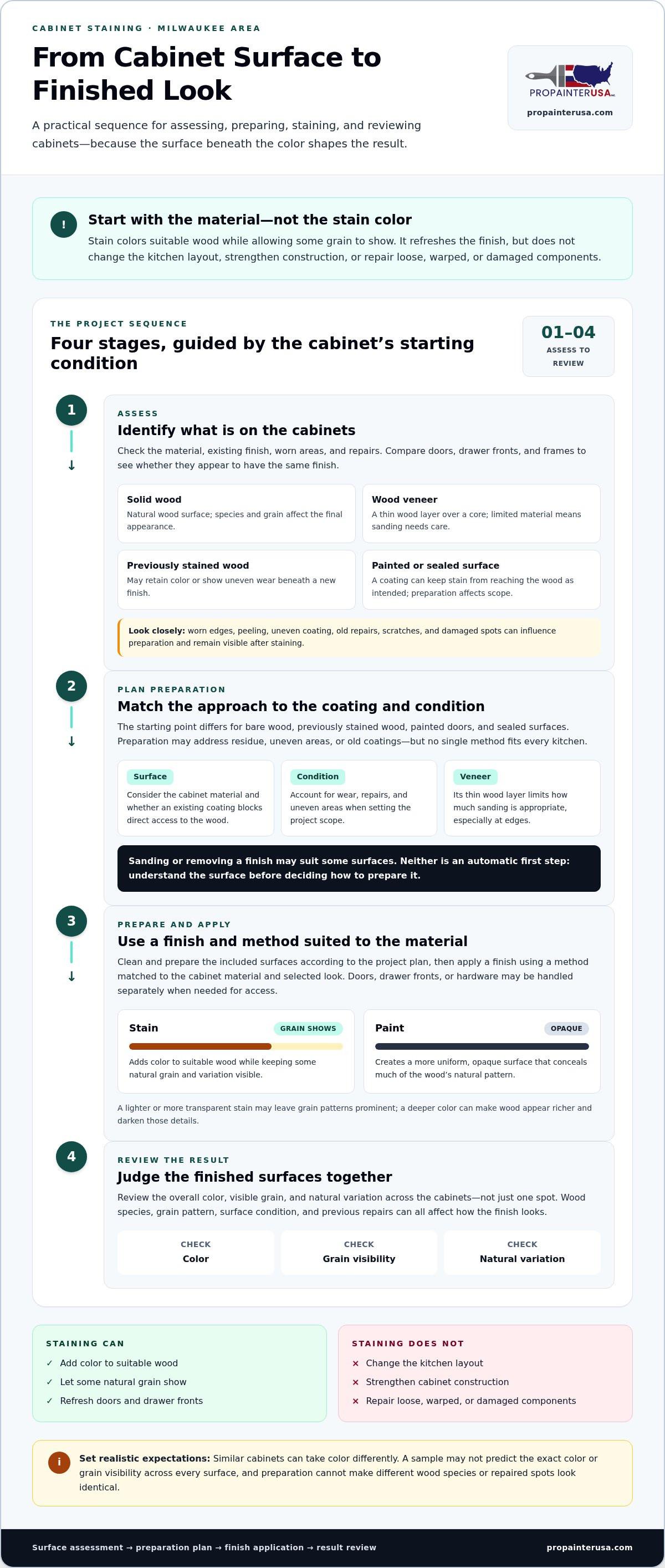
A well-planned staining project follows a clear sequence: assess the cabinet surface, prepare it for the selected finish, apply the finish, then review the result. The details vary. Bare wood, previously stained wood, painted doors, and sealed surfaces each start from a different point, so one preparation method won’t suit every kitchen. Cabinet construction, existing coatings, wear, and repairs all help shape the plan.
Surface preparation matters because the finish can only look as consistent as the surface beneath it allows. Depending on the material, preparation may address residue, uneven areas, and old coatings. It supports a more even appearance, but it can’t make different wood species or repaired spots look identical.
Identify the surface material, existing finish, worn areas, and repairs. Check whether doors, drawer fronts, and cabinet frames appear to have the same finish.
Choose an approach based on the coating and condition. Sanding or removing a finish may suit some surfaces, but neither is automatically right for every cabinet.
Clean and prepare the surfaces according to the project plan, then apply a finish and method suited to the material.
Look at the finished surfaces together, paying attention to color, visible grain, and natural variation in the wood.
Bare wood provides a different starting point from previously stained wood, which may retain color or show uneven wear. A clear sealer or another coating can prevent new stain from reaching the wood as intended. Painted surfaces call for a different preparation decision because paint covers the wood rather than simply coloring it. Veneer also needs care: its thin wood layer limits how much sanding is appropriate, especially around edges or damaged spots.
That’s why stripping or sanding shouldn’t be treated as universal first steps. Understand the surface before deciding how to prepare it.
Assessment and finish planning come first. The project scope identifies which surfaces are included and how their condition affects preparation. When needed, doors, drawer fronts, or hardware can be handled separately to provide access to the surfaces being finished. Preparation and application methods are matched to the cabinet material and selected finish.
During review, assess the overall appearance in context rather than judging a single spot in isolation. Grain and existing repairs can create variation, so understanding the cabinets’ starting condition helps set practical expectations. Pro Painter USA provides cabinet staining as part of its painting and surface-finishing work in Milwaukee and surrounding Wisconsin communities. Explore Pro Painter USA’s staining services to learn more about its local painting and surface-finishing work.
Choose an approach by matching the result you want to the cabinets you have. Staining can add color while keeping suitable wood character visible. Paint creates a more opaque look. Replacement changes the cabinetry itself, which may make sense if the cabinets’ condition or your plans go beyond a finish update.
| Option | Appearance | Visible grain | Existing surface | Project scope |
|---|---|---|---|---|
| Staining | Adds color with natural variation | Usually remains part of the look | Best considered for suitable wood; existing coatings affect preparation | Changes the finish, not cabinet layout or construction |
| Painting | Creates a more uniform, opaque appearance | Mostly covered | Can suit surfaces where a grain-forward look isn’t the goal | Changes the visible finish, not the cabinetry itself |
| Replacement | Allows a different cabinet appearance and configuration | Depends on the new cabinetry selected | Replaces existing cabinet components | Broader work that can change the cabinetry itself |
The best choice depends on the cabinet surface and the look you want, not on one finish being universally better. Kitchen styles and cabinet conditions vary across Milwaukee, so use this comparison as a starting point rather than assuming one approach fits every room.
Staining may suit you if you like the natural character of wood and want to shift its color without covering the grain. For example, you might prefer a warmer tone while retaining visible wood patterns. The actual appearance depends on the cabinet material, finish, and condition, so a sample shade alone can’t predict the result across every door and frame. An assessment helps clarify whether the existing surface suits the look you want.
If you’re searching for cabinet staining services near me, begin by describing the appearance you want: more visible grain, a darker overall tone, or a refreshed natural look. Those preferences help frame the project, while the cabinet condition determines what preparation may be involved.
Paint may be a better fit if you want an opaque, consistent color rather than a grain-forward finish. It can change a kitchen’s visual character, but it won’t fix loose parts, damaged construction, or other underlying issues. Those concerns need to be treated as repairs, not as problems a new finish will conceal.
If the cabinets have extensive damage or you want to alter the kitchen layout, consider the broader scope before choosing a surface finish. Replacement changes the cabinetry; staining and painting refresh its appearance. Pro Painter USA provides painting, staining, and surface repair, helping homeowners plan finish work separately from full kitchen remodeling.
Preparing a few details makes it easier to describe your goals and understand the work involved. Before discussing scope, note the cabinet condition, the look you prefer, and any household routines that could affect access to the kitchen. In Milwaukee-area homes, project requirements vary with the cabinets and the space, so an estimate should reflect the surfaces and preparation involved rather than assume a standard price or timeline.
Think beyond a color name. Do you want a subtle change or a deeper tone? Should the wood grain remain prominent, or would you prefer a more subdued appearance? If you have finish samples, compare them in the kitchen’s actual lighting. Daylight and evening light can make the same sample appear different, so viewing it in the room can help clarify your preference.
A sample is a useful guide, not a promise that every cabinet will look identical. Natural grain, surface wear, repairs, and differences between doors and frames can affect how color appears. Share reference images if they help explain the look you’re after, and note which features you want to preserve.
Walk through the kitchen and record what you see. Clear notes and photos can make the conversation more specific:
• Identify visible wear, peeling finish, scratches, or repaired areas.
• Note whether doors, drawer fronts, and cabinet frames appear to have different surfaces or conditions.
• Describe your preferred color depth and how much grain you’d like to see.
• List the cabinet sections you want included, along with any areas that need surface repair.
This information gives the project discussion a practical starting point. It also helps distinguish the finish work you want from repairs or other concerns that may affect scope.
Before work begins, clear cabinet contents and move items away from nearby work areas. Set aside everyday dishes or cooking essentials you’ll need during the project and keep them accessible elsewhere. Discuss kitchen access and work sequencing so you can plan household routines. Preparation needs and sequencing depend on the home, cabinet condition, and agreed project scope.
For broader estimate-planning context, the article House Painting Estimates in Milwaukee can help you think through what information makes a project discussion useful. Cabinet staining estimates should reflect the surfaces and preparation involved, not a one-size-fits-all assumption.
Ready to plan the next step? Request a free project estimate from Pro Painter USA, a locally owned painting business serving Milwaukee and surrounding Wisconsin communities.
Working with a local painting professional gives you an opportunity to discuss cabinet condition, finish goals, and project scope before work begins. Pro Painter USA is locally owned and provides painting, staining, and surface-repair services in Milwaukee and surrounding Wisconsin communities, including Shorewood, Whitefish Bay, Fox Bay, Glendale, Fox Point, Bayview, Grafton, Cedarburg, Port Washington, Wauwatosa, Menomonee Falls, Richfield, West Bend, Hartford, Waukesha, New Berlin, Hales Corner, Oak Creek, and Cudahy. The business brings approximately 30 years of industry experience to its work.
Cabinet staining focuses on the finish and related surface work, not a full kitchen remodel. A project-specific estimate helps define which cabinet surfaces are included, what condition they’re in, and what appearance you want. The work plan can then account for the surfaces and home rather than relying on a generic checklist.
An estimate is an opportunity to discuss the cabinet material, existing finish, visible wear, and preferred look together. For example, worn door edges or frames with a different coating may affect how the work is planned. Sharing those details helps define the project scope and identify surface-preparation needs. The estimate reflects the particular cabinets and requested work, rather than relying on a standard price or timeline.
Bring notes or photos of areas you’re concerned about, along with examples of the finish appearance you prefer. That context helps focus the discussion and align expectations about grain, color, and variation across surfaces.
To make the first conversation useful, describe what you know about your cabinets and what you hope will change. Note whether the surfaces are wood, veneer, painted, or coated, and point out areas with wear or past repairs. If you’re unsure about the material, describe what you see so the project assessment can account for it.
It also helps to explain whether you want a subtle color shift, a deeper tone, or a finish that keeps wood grain prominent. These preferences guide the discussion without assuming a sample will look identical on every cabinet.
For related interior painting context, see Expert Interior Painters in Milwaukee. Pro Painter USA offers free estimates online or by calling its Wauwatosa office. Homeowners searching for cabinet staining services near me can start with a clear, project-specific conversation about surfaces, finish goals, and scope. Request a free project estimate to discuss your cabinet-staining project with Pro Painter USA.
You don’t need every detail settled before starting a project conversation. A clear sense of what you want to preserve, what you’d like to change, and what concerns you about the current cabinets is a useful place to begin. This gives the discussion a practical focus and connects your preferred appearance with the surfaces in your kitchen.
If you’re searching for cabinet staining services near me, use your next step to turn ideas into a project-specific plan. Pro Painter USA is locally owned, serves Milwaukee and surrounding Wisconsin communities, and brings approximately 30 years of industry experience. Free estimates are available online or by calling the Wauwatosa office.
Share your cabinet goals and discuss the right scope for your home. Start planning your cabinet-staining project with Pro Painter USA and move forward with a clearer path to the finish you have in mind.
Painted cabinets generally need the paint removed before conventional stain can color the wood beneath. Stain applied over opaque paint won’t reveal the grain through that coating. Whether paint removal is practical depends on the cabinet material and condition, including whether the surface is wood or veneer. An assessment can help determine whether staining is appropriate or a painted finish better suits the cabinets.
Neither is automatically better; the right finish depends on your cabinets and the appearance you want. Staining may suit suitable wood if you want color with visible grain, while paint creates a more opaque, uniform look. A homeowner who likes natural wood variation may lean toward stain, while someone seeking a consistent color may prefer paint. The existing coating and cabinet condition also affect the decision.
There isn’t one reliable timeline for every cabinet-staining project. The scope depends on how many surfaces are included, the cabinets’ construction and condition, the finish already on them, and the preparation required. Access and work sequencing in the home can also affect the plan. A project-specific estimate helps clarify the work involved; avoid assuming a fixed duration before the cabinets are assessed.
Wood veneer cabinets may be candidates for staining, but the thin layer of real wood requires careful preparation. Aggressive sanding can damage veneer, and worn edges or areas where the veneer is lifting may affect the finish plan. The core beneath veneer isn’t necessarily wood, so the material and condition matter. A surface assessment can help determine whether staining suits the cabinets and the look you want.
Not every cabinet should be sanded in the same way, and sanding isn’t automatically the right first step. Bare wood, an old stain, a sealer, and paint each call for different preparation decisions. Veneer needs particular care because its wood layer is thin. The appropriate approach depends on the surface and finish, so don’t sand on assumption alone, especially if you’re unsure what the cabinet material is.
No. Stain changes color and appearance, but it doesn’t repair gouges, loose pieces, or damaged wood. Color may even draw attention to scratches or uneven areas by making surface variation more noticeable. Small surface issues and structural damage also require different attention. Identify affected areas before planning the finish so repairs can be considered separately and expectations for the stained appearance stay realistic.
Start by deciding whether you want a subtle shift or a deeper, more noticeable color, then consider how much grain you want visible. If you have samples, view them in the kitchen under daylight and evening lighting. Compare the sample with nearby counters and flooring to see how the tones work together. Remember that natural wood variation can make the same stain appear different across cabinet surfaces.
Yes. Pro Painter USA provides cabinet staining as part of its painting and surface-finishing work in Milwaukee and surrounding Wisconsin communities. Homeowners in areas such as Wauwatosa, Oak Creek, and Menomonee Falls can request a project-specific estimate to discuss cabinet condition, finish preferences, and scope. If you’re searching for cabinet staining services near me, share what you know about the cabinet material and existing coating to start a focused conversation.
You might find these helpful:
We are a team of interior and exterior painters and we are not limited to house painting only. We can paint different businesses like retail shops, commercial buildings, and apartments.
We also provide restaurant painting services. We can give you more information about these services if you give us a call.


