MILWAUKEE WI, USA,
September 20, 2026


What if the color you choose today makes your home look "dirty" the moment the first Wisconsin blizzard hits? It is a common frustration for homeowners in the Greater Milwaukee area who watch their vibrant siding turn dull or dingy against a backdrop of crisp white snow. Finding the best exterior paint colors for Wisconsin homes 2026 requires more than just following national fashion. It demands a palette that can withstand 90 plus annual freeze-thaw cycles and intense UV exposure while maintaining its aesthetic integrity. You deserve a home that feels like a sanctuary, not a maintenance burden.
We understand that your property is your most significant investment, and you want a finish that provides both peace of mind and modern curb appeal. In this guide, you will discover the 2026 biophilic shift, where nature-inspired tones like Sherwin-Williams Universal Khaki and Benjamin Moore Silhouette replace the sterile grays of the past. We will explore how these organic hues harmonize with our local landscapes while utilizing advanced protective coatings designed specifically for the Midwest. You will gain a clear roadmap for selecting a high-ROI color scheme that remains durable and beautiful through every season.
• Understand how the "Biophilic Resilience" trend uses nature-derived tones to combat the visual dulling effects of Wisconsin’s harsh winter snow.
• Identify the top 2026 color palettes, including mossy greens and warm clays, that offer a sophisticated update to traditional Milwaukee architecture.
• Learn how to select the best exterior paint colors for Wisconsin homes 2026 by balancing aesthetic trends with the technical requirements of high-flexibility resins.
• Discover why managing Light Reflectance Value (LRV) is critical for preventing heat absorption and protecting your siding during extreme temperature swings.
• Find out how to schedule your project within the ideal local painting window to ensure a professional, weather-resistant finish that lasts for years.
Wisconsin's weather doesn't just test your patience; it tests your home's exterior finish every single day. While national trends might suggest a certain aesthetic, the best exterior paint colors for Wisconsin homes 2026 are chosen with our specific local climate in mind. This season, we're seeing a move toward what we call Biophilic Resilience. This concept draws from biophilic design principles to create homes that feel connected to the natural world. Biophilic Resilience is the intersection of organic color and structural protection.
One of the most overlooked factors in Milwaukee is the Albedo effect. This occurs when our average 47 inches of annual snowfall reflects sunlight back onto your siding. In the bright white of a February afternoon, a color that looked clean in July can suddenly appear yellowed or dingy. Conversely, stark whites can become blinding and lose all architectural detail. This is why 2026 is moving away from clinical whites toward living neutrals that maintain their depth even when surrounded by snow. These shades include mushroom, sand, and muted olives that blend seamlessly with local landscaping during the summer and stay vibrant in winter.
Proximity to Lake Michigan adds another layer of complexity. The high humidity and dense morning dew common in coastal areas like Whitefish Bay can degrade paint sheen and impact color retention. Choosing the best exterior paint colors for Wisconsin homes 2026 means selecting high-performance formulas that handle this moisture without blistering or fading prematurely. It's about finding the balance between a beautiful visual and a coating that survives the damp, heavy air of spring.
Wisconsin winters are famously overcast. During these months, the light often has a flat, blue quality. If you choose a cool blue or a crisp gray, your home can feel icy and uninviting during the darkest parts of the year. We recommend earth-tethered shades with warm undertones. These colors provide a visual anchor when the sky is gray. Warm tans and baked clays create a sense of stability that cool tones simply cannot match in a Midwestern landscape.
A beautiful color is only as good as its longevity. In high-exposure areas like Wauwatosa, modern pigments must resist intense UV fading during our humid summers. We focus on surface preparation because it accounts for nearly 70% of a project's success. Without proper scraping and priming, even the most trend-forward color will fail against our 90 plus annual freeze-thaw cycles. The 2026 shift emphasizes high-flexibility resins that move with your siding, ensuring your biophilic palette remains vibrant for years.
The best exterior paint colors for Wisconsin homes 2026 represent a clean break from the cold, sterile grays that defined the last decade. Homeowners are now looking for palettes that feel grounded and permanent. These choices aren't just about fashion; they're about choosing pigments that can survive the physical stress of Great Lakes freeze-thaw cycles. When temperatures swing 40 degrees in a single day, your paint film needs to be as resilient as it is beautiful. We're seeing a shift toward three primary palettes: deep forest greens, muted clays, and complex "ink" tones.
Sage and olive have officially become the new "safe" neutrals for 2026. Unlike traditional white siding, which highlights every speck of environmental debris and localized algae, these mossy tones mask imperfections beautifully. In areas like Menomonee Falls, we've seen a surge in homeowners pairing deep green bodies with natural wood staining on porch ceilings and gables. Behr’s 2026 color, Hidden Gem, perfectly captures this trend. It's a smoky jade that feels organic enough for a wooded lot but sophisticated enough for a modern subdivision. These tones provide a lush, year-round vibrancy that doesn't disappear when the leaves fall.
We've moved past "Millennial Pink" and into the era of sophisticated, earthy ochres. These muted clays and baked earth tones, like Benjamin Moore’s Southwest Pottery, add a much-needed visual warmth to our local landscape. These colors are particularly effective because they complement the natural limestone and Cream City brick accents found throughout Milwaukee. In neighborhoods like Shorewood, these warm tones are stunning during the "Golden Hour." They catch the low-angled sun and provide a welcoming glow that persists even on the grayest February afternoons. They offer a high-ROI look that feels both modern and timeless.
The third major trend involves replacing stark jet black with midnight "ink" tones. Colors like Benjamin Moore’s Silhouette AF-655 use espresso and charcoal undertones to create a softer, more nature-aligned anchor for shutters and trim. These shades provide the high-contrast look people love without feeling too harsh against a standard suburban lot. If you're ready to see how these palettes look on your own siding, you can schedule a professional estimate to explore the 2026 options. Choosing the right shade today ensures your home remains a neighborhood standout for the next decade.
Milwaukee's architectural landscape is as varied as its seasons. Whether you own a historic Victorian in Brewer's Hill or a sprawling ranch in New Berlin, the best exterior paint colors for Wisconsin homes 2026 must be tailored to your home's specific silhouette. The biophilic shift is not just about choosing a pretty shade; it's about making these diverse styles feel rooted in our local environment. A color that looks stunning on a coastal estate in Whitefish Bay might feel out of place on a Craftsman bungalow in Wauwatosa.
The "Modern Farmhouse" trend is undergoing a necessary evolution for the 2026 season. The stark, high-contrast black and white palettes of the early 2020s often look harsh and clinical against Wisconsin's gray winter skies. We're now replacing those bright whites with "Mushroom" tones and swapping jet black for deep charcoal. These warmer combinations provide a softer transition between the home and the landscape. They're also far more forgiving when it comes to masking the road salt and dust that accumulate during a typical Milwaukee winter.
For homes featuring our iconic Cream City brick, the goal is contrast rather than imitation. You shouldn't try to match the yellow-cream masonry with your paint. Instead, use grounded, nature-inspired tones like forest green or deep umber for the trim and siding. These "ink" tones make the unique local brickwork pop while providing a modern, sophisticated frame for the entire property. Craftsman homes also benefit from this depth. We recommend a three-tone system that uses different biophilic shades for the siding, shingles, and trim to highlight the intricate woodwork that defines the style.
Historic preservation does not mean your home has to look like a museum. In neighborhoods like Whitefish Bay, we're seeing a move toward "Inky" trim on classic estates. Using a deep charcoal or a rich espresso for window frames and corbels provides a modern edge while respecting Victorian details. This approach balances historic integrity with the high-ROI curb appeal that modern buyers expect. It's a way to honor the past while utilizing the most durable pigments available today.
For the mid-century ranches common in suburbs like New Berlin, tonal palettes are the secret to success. Using varying shades of a single color, such as a mid-tone sage body with a darker olive trim, creates a cohesive look that makes smaller homes appear larger. This is also the perfect time to utilize door and window painting services. Updating these focal points, along with a refreshed garage door, ensures the entire exterior feels intentional and modernized. A professional finish on these high-traffic areas provides the final touch of excellence that defines a successful project.
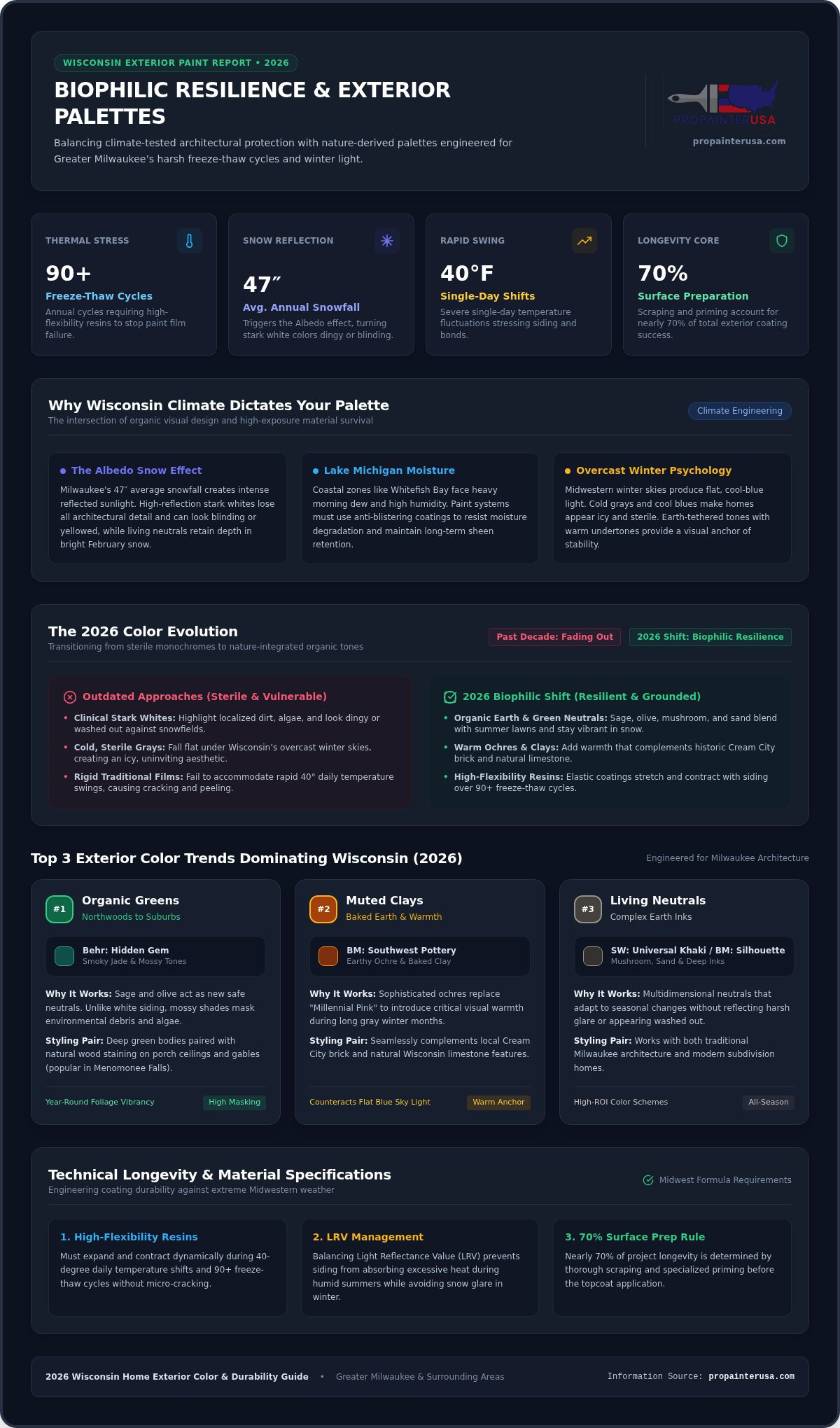
Selecting the best exterior paint colors for Wisconsin homes 2026 requires a technical understanding of how pigments interact with our environment. Our state experiences over 90 freeze-thaw cycles annually. This creates immense physical stress on your home's siding as moisture expands and contracts. While the biophilic shift favors deep, grounded tones, these darker colors absorb more solar heat than lighter shades. This heat absorption can lead to significant thermal expansion, which may cause wood siding to warp or vinyl to buckle if the wrong products are used.
Light Reflectance Value (LRV) is the metric used to measure how much light a color reflects versus how much it absorbs. On a scale of 0 to 100, black has an LRV of nearly 0, while pure white is close to 100. When you move toward the trendy "ink" and "charcoal" tones of 2026, you are choosing low-LRV colors. These require premium, high-flexibility resins, such as those found in Sherwin-Williams Emerald or Benjamin Moore Aura, to ensure the paint film can stretch without cracking during a sub-zero January night.
In the Greater Milwaukee area, the southern and western elevations of your home endure the most intense UV exposure. If you choose a dark color for these walls, the surface temperature can rise significantly higher than the ambient air temperature. Selecting a color with an appropriate LRV is vital because it directly impacts the thermal stress and eventual lifespan of exterior house painting in Milwaukee. To balance durability with design, we recommend a satin sheen for 2026. Satin provides enough luster to resist moisture and dirt while remaining flexible enough to handle Wisconsin's temperature swings.
Small paper swatches are often misleading because they don't account for the massive scale of an exterior wall. We recommend painting 2x2 foot samples directly onto your home. You must view these samples on both the North and South-facing walls to see how the light changes the color's appearance. North-facing light is typically cooler and bluer, which can make "mushroom" tones look gray. South-facing light is intense and warm, which might reveal hidden yellow or green undertones you didn't notice in the store.
Follow the 48-hour rule when observing your swatches. Look at them in full sun, under heavy overcast skies, and even during a rainstorm. You should also consider how the color looks against the "dead" tan grass of late autumn versus the lush green of a summer garden. This thorough testing ensures your chosen palette remains beautiful in every season. If you're ready to see these technical considerations in action, you can request a free estimate to begin your color consultation. Taking the time to test now prevents a costly mistake later.
Even the best exterior paint colors for Wisconsin homes 2026 will fail to impress if the application foundation is weak. In our local climate, surface preparation accounts for roughly 70% of total project labor. It is the silent, detail-oriented work that dictates whether your biophilic palette lasts eight years or fifteen. We focus on creating a resilient bond that can withstand the shear stress caused by freezing water beneath the paint film. Without this level of care, the most trend-forward pigments will succumb to the elements within just a few seasons.
Timing is equally critical in the Greater Milwaukee area. The standard painting calendar typically runs from late April or mid-May through mid-October. While early summer is a popular choice for many, local experts often consider late August to early October the prime window. During these months, humidity levels tend to stabilize and the frequency of heavy thunderstorms decreases. We carefully monitor overnight lows to ensure they stay above the 50-degree threshold, ensuring the high-flexibility resins in your 2026 palette cure exactly as intended.
A professional transformation begins with a thorough assessment of your home's structural health. This includes addressing exterior wood rot repair before the first drop of primer is applied. Applying premium pigments over compromised wood is a temporary fix that leads to premature peeling and moisture trapping. Our crews utilize professional power washing and intensive hand-scraping techniques to remove environmental debris and failing coatings. We verify that substrate moisture content is below 15% to ensure a long-lasting finish that survives the next decade of winters.
Pro Painter USA brings 30 years of industry experience to every project in Wauwatosa and the surrounding communities. We aren't just contractors; we're your neighbors who understand exactly what your siding faces during a Lake Michigan winter. Our local consultants help you navigate the biophilic shift, ensuring your color choice provides both aesthetic pride and structural protection. We believe in a methodical approach, which is why we provide a reliable house painting estimate that outlines every phase of the work. Whether you are in Oak Creek or Cedarburg, request your free exterior painting estimate today to secure your spot in our 2026 season and elevate your home's curb appeal with confidence.
Transitioning your home to a biophilic palette is more than an aesthetic choice; it is a long-term investment in your property's structural health. By selecting the best exterior paint colors for Wisconsin homes 2026, you ensure your residence remains a neighborhood landmark that can withstand our 90 plus annual freeze-thaw cycles. Whether you are modernizing a Craftsman bungalow or refreshing a mid-century ranch, the combination of organic tones and high-performance resins provides lasting peace of mind. A successful project always balances these modern trends with the technical realities of the Midwest.
Pro Painter USA is locally owned and operated in Wauwatosa, bringing 30 years of Milwaukee area experience to every residential project. We understand that a beautiful finish is only possible with comprehensive surface repair and preparation. Our team is ready to help you navigate these shifting trends while ensuring your home is protected against the elements. Schedule your free 2026 exterior color consultation with Pro Painter USA to begin your home's transformation. We look forward to partnering with you to create a resilient, modern exterior you can take pride in for years to come.
The most popular choices for the 2026 season include earthy khakis like Sherwin-Williams Universal Khaki and deep, nature-inspired tones like Benjamin Moore Silhouette. We're seeing a significant move toward biophilic shades that connect the home to the natural landscape. These include smoky jades and muted terracotta, which provide more warmth than the cool grays of the past. These palettes are among the best exterior paint colors for Wisconsin homes 2026 because they harmonize with local surroundings.
To ensure your home looks great year-round, you should choose colors with warm undertones that contrast with the bright white of Milwaukee’s 47-inch average annual snowfall. Avoid clinical whites or icy blues that can appear dingy or cold during the winter. Instead, opt for "living neutrals" like mushroom, sand, or olive. These shades maintain their richness and visual depth even when the Albedo effect reflects intense sunlight off the winter snow.
Darker exterior paints have a lower Light Reflectance Value, meaning they absorb more solar radiation and can increase surface temperatures. This extra heat causes the siding to expand and contract more significantly during a typical Wisconsin summer. While this can stress the substrate, using premium 100% acrylic paints with high-flexibility resins helps the coating move with the home. Professional application ensures these trendy dark tones don't lead to warping or premature failure.
The optimal window for exterior painting in the Greater Milwaukee area runs from late April through mid-October. Most local contractors consider late August to early October the prime time because humidity levels are more stable and thunderstorms are less frequent. It's vital to follow the 50-degree rule, where air and surface temperatures remain above 50°F for at least 48 hours to allow the paint to bond and cure properly against the elements.
In our harsh climate, homeowners typically need to repaint every 6 to 12 years for wood siding, while composite or engineered siding may last up to 15 years. Wisconsin’s 90 plus annual freeze-thaw cycles place extreme stress on paint films, making regular maintenance essential. Factors like moisture exposure near Lake Michigan and the quality of previous surface preparation will also dictate how long your finish remains vibrant before a refresh is necessary.
Choosing a nature-inspired 2026 color can significantly enhance your home's resale value by providing modern curb appeal that feels grounded and permanent. The best exterior paint colors for Wisconsin homes 2026 avoid the dated look of cold grays, which many buyers now find uninviting. Warm, biophilic tones are generally seen as sophisticated and high-ROI updates. They suggest the property has been well-maintained and thoughtfully modernized for the current market.
You can certainly apply these modern 2026 palettes to aluminum or vinyl siding, provided you use the correct primers and vinyl-safe paint formulas. These specialized coatings prevent darker colors from absorbing too much heat, which could otherwise cause vinyl siding to buckle. Proper surface preparation is the most critical step here. Our team focuses on cleaning and priming these surfaces to ensure the new biophilic tones adhere perfectly and resist the seasonal temperature swings.
The cost of a professional project in 2026 depends on several variables, including the home's square footage, the current condition of the siding, and the amount of surface preparation required. Intensive tasks like scraping, patching, and wood rot repair account for a large portion of the labor. Since every property is unique, we provide a detailed, transparent project estimate to help you plan your budget. This ensures you receive a finish that offers both beauty and protection.
You might find these helpful:
We are a team of interior and exterior painters and we are not limited to house painting only. We can paint different businesses like retail shops, commercial buildings, and apartments.
We also provide restaurant painting services. We can give you more information about these services if you give us a call.