Pro Painter USA
MILWAUKEE WI, USA,
November 3, 2026


Food-safe and hygiene-coated are not interchangeable claims. For durable paint for commercial kitchens, distinguish coatings intended for constant food contact from hygiene coatings designed to inhibit bacteria, fungi, and other contaminants. FDA regulation 21 CFR 175.300 addresses conditions for coatings that contact food; NSF/ANSI 51 and NSF/ANSI 61 are relevant references for food equipment and water-contact surfaces. The USDA no longer approves coatings, though some paints are acceptable for use in USDA-inspected plants.
A coating for a commercial kitchen may need to withstand moisture, cleaning chemicals, and abrasion. A food-related claim alone does not show how it will perform on a wall or another surface. This guide explains what food-grade claims mean, how to compare resistance and epoxy, polyurethane, and acrylic resins, and how FDA, USDA, and NSF references differ. Use these points to assess coatings against the conditions your kitchen surfaces actually face.
• Match the coating claim to the surface’s actual role, especially whether food directly contacts it or it needs a hygienic, cleanable finish.
• Compare resistance against the kitchen’s routine exposure to moisture, cleaning products, and abrasion, not just the coating label.
• Use resin type as a practical comparison point: the right choice depends on the demands placed on the coated surface.
• Read FDA, USDA, and NSF references for what each says about the intended use rather than treating them as interchangeable endorsements.
“Food-grade” describes intended use, not a universal quality label. Food-safe paint is intended for surfaces with constant food contact, including silo interiors and food-storage walls. FDA regulation 21 CFR 175.300 addresses conditions for coatings that contact food. NSF/ANSI 51 and NSF/ANSI 61 are relevant references for food equipment and water-contact surfaces. The USDA no longer approves coatings, though some paints are acceptable for use in USDA-inspected plants.
Which commercial kitchen paints are food-safe and low-VOC? Choose a coating specified for the surface and its food-contact conditions, then assess its VOC declaration separately. A “food-safe” claim alone does not establish low-VOC status or suitability for every kitchen surface.
Before painting, remove grease, dirt, loose coating, and other contaminants. Repair damaged areas and let the surface dry before applying the new system. These steps help the coating adhere and create an even finish. Preparation requirements depend on the existing surface and the coating instructions.
Many high-performance food-safe coatings require at least two coats, sometimes over a primer. Follow the product’s application directions and allow it to cure fully before returning the kitchen to use. Some coatings need several hours or even days to cure, so plan the work around the facility’s operating schedule.
How much does commercial kitchen paint cost per gallon and per square foot? The price depends on the coating system, surface area, preparation needs, and coverage. Pro Painter USA provides project pricing through a complimentary estimate.
Standard interior paint may not suit surfaces exposed to frequent washing, moisture, or strong cleaning products. If the finish cannot withstand those conditions, it may deteriorate and become harder to clean. Match the coating to the surface’s actual exposure rather than relying on a general interior-paint label.
Hygiene-coated paints are designed to inhibit bacteria, fungi, and other contaminants, and to withstand regular cleaning. For floors, high-performance hygienic coatings address wet, dirty conditions where contaminants can collect. These coatings don’t have to be HACCP-certified. Inspect surfaces for chips, peeling, or worn spots, then repair damage promptly. Some food-safe coatings may need reapplication every 3–5 years, depending on use.
Which paint resists grease, moisture, heat, and frequent cleaning? Hygiene coatings suit sanitary spaces that need regular cleaning. Epoxy resin coatings can withstand strong cleaning chemicals and pressure washing. For heat, compare the coating’s stated service conditions with exposure near ranges, ovens, or steam equipment. A resin name alone does not establish heat suitability.
Kitchen surfaces face different levels of exposure. A wall near a sink may get regular splashes, while a surface beside a fryer may collect grease and experience heat. Note each area’s contact with water, cooking residue, and cleaning products before comparing coatings. This exposure map helps match a coating’s intended use to the surface, rather than choosing one finish for every wall or work zone.
Cleaning resistance matters because repeated washing can affect a coating over time. Hygiene coatings are designed for environments that require frequent cleaning and sanitary conditions. They can be cleaned to remove stains without damaging the surface, and most are designed to withstand frequent cleaning and sanitizing. Compare these claims with the actual routine: a wall wiped regularly faces different demands from an area exposed to strong chemicals or pressure washing.
Abrasion is another practical consideration. Scrubbing, moving equipment, and repeated contact can wear a finish, especially around doorways and work areas. Look for coating information that addresses abrasion as well as cleaning. A surface may tolerate moisture but remain vulnerable to scuffing; resistance in one category does not establish resistance in another. Compare the complete coating system and its intended use, not just a broad label.
Tie inspections to visible wear and the cleaning routine. Look for peeling, blisters, exposed substrate, or worn patches near sinks and cooking equipment. Record where damage appears and whether it follows repeated washing, chemical exposure, or physical contact. Clean and repair affected areas with a compatible coating system. For commercial kitchen surfaces that need a durable finish, compare how each coating handles the moisture, cleaning, and abrasion exposures in that location.
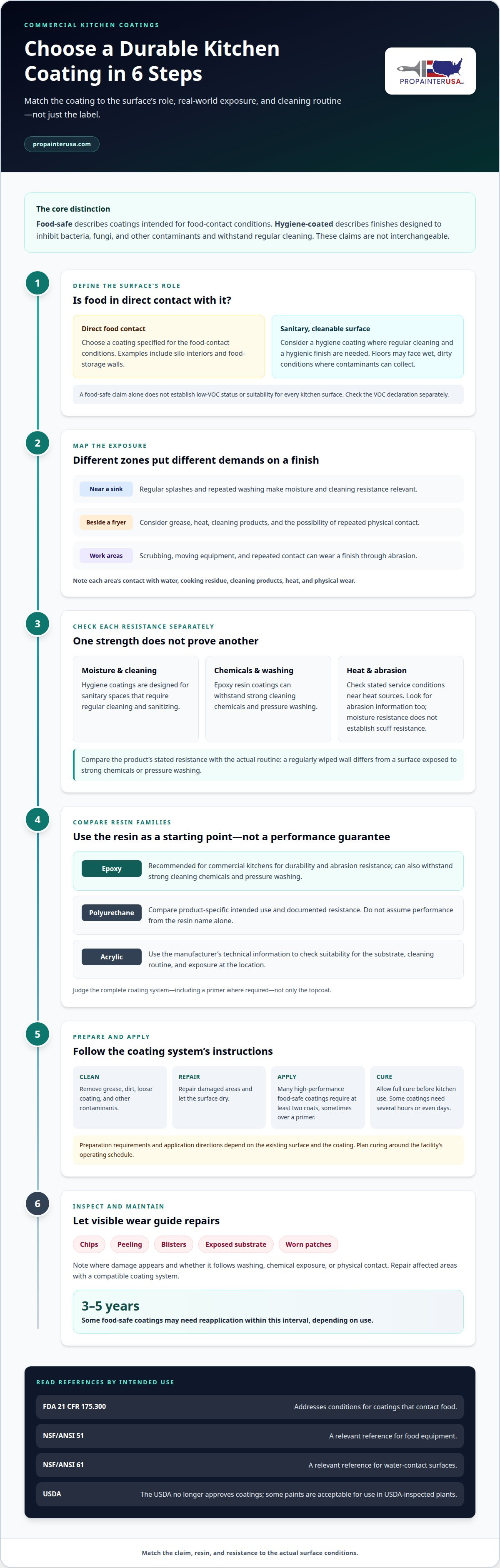
Epoxy, polyurethane, and acrylic identify resin families, not complete performance ratings. For commercial kitchens, compare each coating’s intended use with the surface and its cleaning demands. Epoxy resin coatings are recommended for commercial kitchens because of their durability and abrasion resistance. They can also withstand strong cleaning chemicals and pressure washing, making epoxy a strong candidate for surfaces exposed to heavy wear or intensive cleaning.
Polyurethane and acrylic coatings also require product-specific comparison. Do not assume either resin will handle grease, cleaning agents, moisture, or abrasion just because of its name. Start with the manufacturer’s technical information, then match stated resistance to the conditions at the location. For example, a wall near a sink may need different performance from a surface exposed to regular scrubbing.
Use the same comparison points for all three resin types. Check whether the coating is intended for the substrate, suits the cleaning routine, and has application directions that fit the project. Consider the full system, including a primer where required, rather than judging only the topcoat. If the kitchen uses strong cleaners, prioritize documented chemical resistance; for frequently scuffed areas, focus on abrasion performance.
Start the selection process with the surface. Note its material, existing finish, exposure to moisture, contact with cleaning products, and likely physical wear. Then compare epoxy, polyurethane, and acrylic product information against those conditions. No resin family is universally suitable. A product that performs well on a low-contact wall may not meet the demands of a heavily cleaned work area.
For durable paint for commercial kitchens, the resin is only part of the decision. Surface preparation, compatible primers, application directions, and full curing all affect the finished coating. Compare these requirements alongside resistance claims before choosing a system. Epoxy is a clear starting point where abrasion and strong cleaning chemicals are concerns, while polyurethane and acrylic should be assessed using their specific product guidance.
FDA, USDA, and NSF references point to different considerations, so don’t treat them as interchangeable approvals. FDA regulation 21 CFR 175.300 addresses conditions for coatings that contact food. Its relevance depends on the coating’s intended use and whether food contacts the coated surface. A kitchen wall away from food contact has a different role from a surface designed for direct contact.
NSF/ANSI 51 and NSF/ANSI 61 are standards relevant to paints used on food equipment or water-contact surfaces. Match the reference to the equipment or surface being coated. A water-contact application and a food-equipment application aren’t automatically the same use. Read the coating’s documentation alongside the applicable NSF reference, rather than relying on a broad “NSF” label alone.
The USDA no longer approves coatings, though some paints are acceptable for use in USDA-inspected plants. The distinction matters: an acceptable-use statement does not mean the USDA has approved the coating. If a facility operates under USDA inspection, compare the paint’s stated use with the specific application, such as a wall or food-processing surface.
Use a simple review process for each product. First, identify whether the coated surface contacts food, food equipment, or water. Next, compare that purpose with the coating documentation and the cited reference, such as 21 CFR 175.300 or NSF/ANSI 51. Then confirm that the intended surface and operating conditions match the product’s stated scope. This helps separate relevant references from general marketing language.
References do not replace performance comparisons. A coating may address food-contact conditions but still need to withstand the kitchen’s cleaning routine and physical wear. Consider its stated resistance, resin type, surface preparation, and curing directions alongside FDA, USDA, or NSF references. Each addresses a different part of the selection decision.
For commercial interior painting work around a kitchen, explore commercial painting services as a practical next step.
Pro Painter USA provides Commercial Interior Painting for businesses planning interior painting work. If your kitchen walls or nearby interior surfaces need refreshing, a professional painting project can improve their appearance and address their surface condition. The coating choice still needs to match each surface’s use, cleaning routine, and exposure. These comparison points can help define the project.
For commercial spaces, careful preparation and a suitable coating system matter as much as the finish. Consider a painting project when existing paint is worn, peeling, or difficult to keep clean. Pro Painter USA also offers Residential Interior Painting, Residential Exterior Painting, and Commercial Exterior Painting for other property needs.
Contact Pro Painter USA to discuss your commercial interior painting project.
Turn your coating research into a practical project plan. Identify the surfaces that need attention, note their condition, and decide how the work can fit around kitchen operations. This creates a clear starting point for discussing the project’s scope and sequence of interior painting.
For durable paint for commercial kitchens, the final choice should suit the space’s actual use, not just its appearance. A clear plan connects the surface, the intended coating system, and the preparation and finishing work required. Keep these decisions together to move the project forward with a clear understanding of the work involved.
Pro Painter USA provides commercial interior painting, alongside residential interior and exterior painting. To discuss the painting work your property needs, contact Pro Painter USA about your project. A thoughtful plan is a steady first step toward a refreshed, well-maintained space.
Food-safe coatings address a surface’s intended contact with food, while hygiene coatings are designed for cleaner, more sanitary environments. For example, a coating inside a food-storage silo serves a different purpose from one on a kitchen wall that needs regular cleaning. Match the claim to the surface’s role; one label does not automatically cover both uses.
“Food grade” describes a coating’s intended use, not a guarantee that it suits every kitchen surface. Check the stated application and whether food directly contacts the coated area. A wall beside a preparation station and an interior food-storage surface serve different roles. The coating documentation should fit the specific surface and its use.
Epoxy resin coatings are a strong option for commercial kitchen walls exposed to abrasion and intensive cleaning. The best fit still depends on the wall’s location and exposure. A wall near equipment may collect more residue and need more scrubbing than one in a low-contact area. Compare the product’s stated resistance and intended use instead of choosing by resin name alone.
Choose coatings intended for frequent cleaning, then match them to each surface. A wall near a sink may face splashes and wipe-downs, while a ceiling has different exposure. Compare the product’s cleaning guidance and suitability for each location. Do not assume a coating suited to walls will also suit ceilings or withstand the same cleaning routine.
There isn’t one repainting interval for every kitchen wall. Some food-safe coatings may require reapplication every 3–5 years, depending on use. Inspect for peeling, worn patches, or damage, especially where cleaning is frequent. The surface’s condition and exposure help determine when maintenance is needed; a coating’s stated service guidance also informs the schedule.
Relevant references depend on the surface’s use. FDA regulation 21 CFR 175.300 addresses conditions for coatings that contact food; NSF/ANSI 51 and NSF/ANSI 61 relate to food equipment and water-contact surfaces. The USDA no longer approves coatings, though some paints are acceptable in USDA-inspected plants. HACCP is a food-safety benchmark, not a requirement that hygienic floor coatings be HACCP-certified.
You might find these helpful:
We are a team of interior and exterior painters and we are not limited to house painting only. We can paint different businesses like retail shops, commercial buildings, and apartments.
We also provide restaurant painting services. We can give you more information about these services if you give us a call.