Pro Painter USA
MILWAUKEE WI, USA,
November 17, 2026


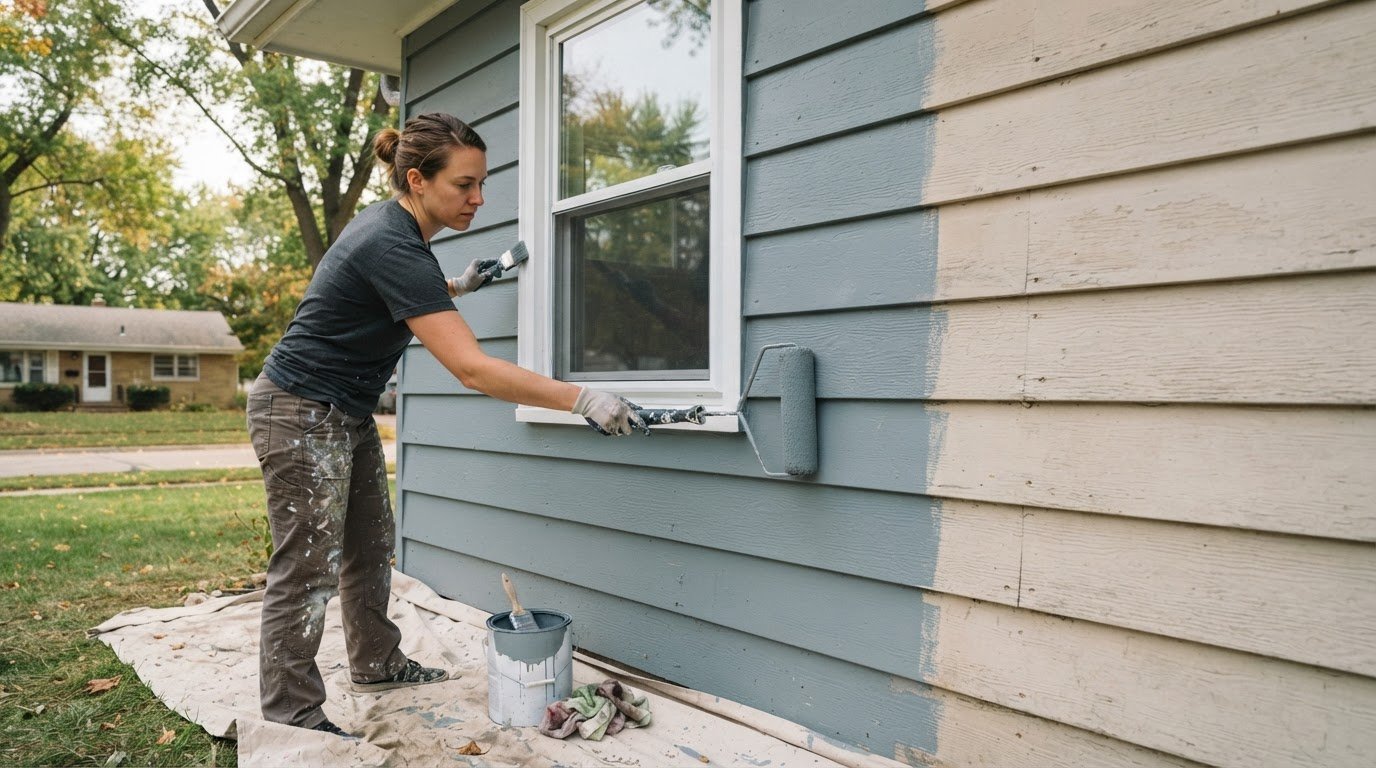
The siding material can change the repainting schedule by years. If you’re wondering how often you should repaint a house exterior in Wisconsin, a broad guide is every 5 to 10 years, but wood, stucco, aluminum, vinyl, and fiber-cement can each follow a different timeline.
Wisconsin’s changing weather can affect how quickly exterior paint fades or wears. Sun exposure, moisture, and surface condition all help determine whether the whole exterior needs attention or only certain areas.
This article explains how siding material affects repainting schedules, what Wisconsin weather can mean for exterior paint, and which signs to check during an annual review. You’ll also learn why trim and other painted surfaces may need attention on a different schedule, so you can plan maintenance around your home’s condition instead of relying on one date for every surface.
• Use siding material as a starting point: wood, stucco, aluminum, vinyl, and fiber cement can have very different repainting timelines.
• Look beyond the calendar. Peeling, fading, and worn areas can signal that a surface needs attention sooner.
• Review and photograph the exterior each year to track changes and spot which surfaces are wearing first.
• Choose painting conditions carefully: dry surfaces and suitable temperatures and humidity help support a sound finish.
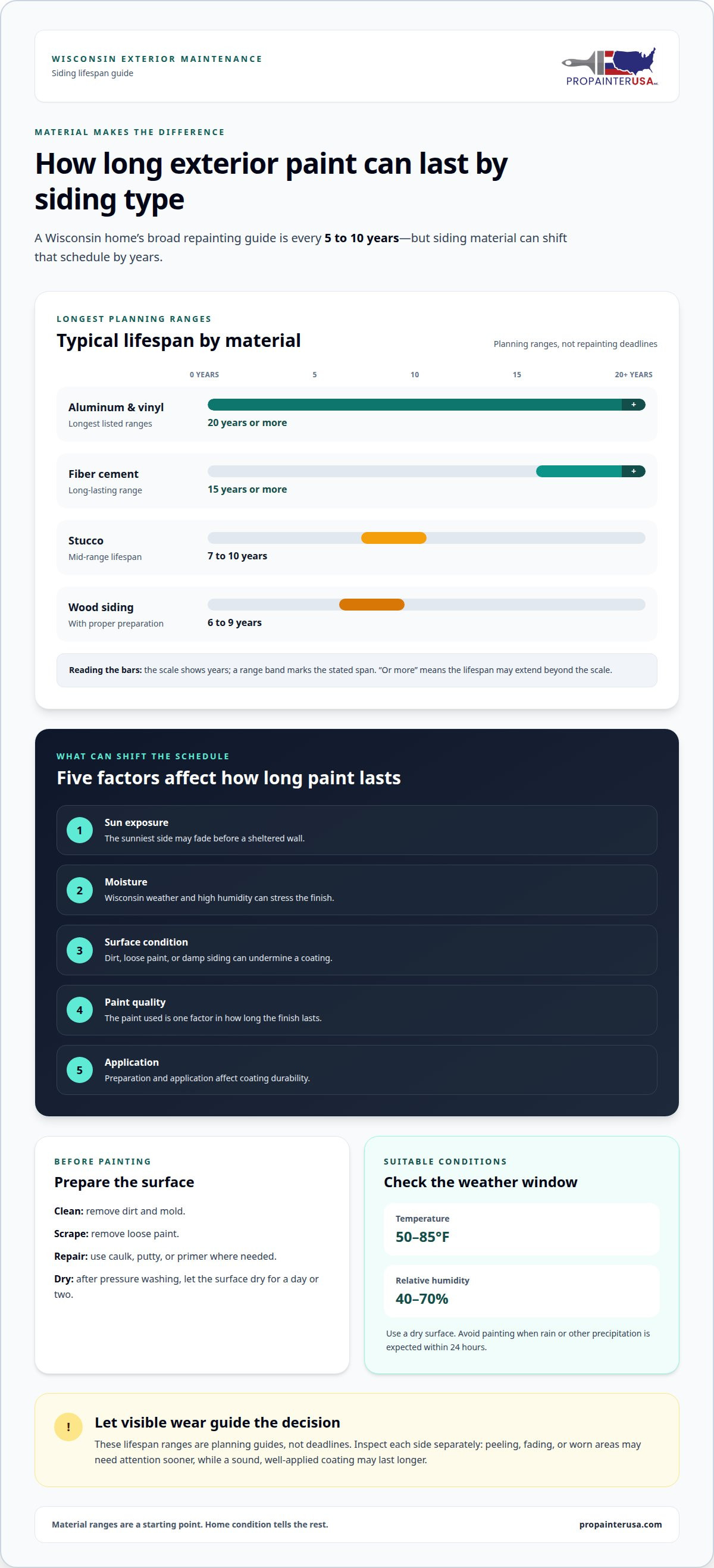
A Wisconsin home’s exterior may need repainting every 5 to 10 years, but siding material makes a substantial difference. Wood siding can hold paint for 6 to 9 years with proper preparation, while paint on stucco typically lasts 7 to 10 years. Aluminum and vinyl siding can go 20 years or more, and fiber-cement siding can last 15 years or more.
These are planning ranges, not deadlines. Sun exposure, moisture, surface condition, paint quality, and application all affect how long a finish lasts. A sunny wall, for example, may fade before a sheltered side, even if both were painted at the same time. A sound, well-applied coating can last longer than paint applied over dirt, loose flakes, or damp siding.
Preparation matters. Before painting, clean away dirt and mold, scrape off loose paint, and use caulk, putty, or primer where needed. After pressure washing, let the surface dry for a day or two; exterior paint should go on a dry surface. A warranty states what product coverage applies, while a maintenance interval estimates when the home may need attention. Read the warranty terms, but use visible wear and siding condition to guide repainting.
For Wisconsin painting conditions, aim for 50 to 85 degrees Fahrenheit and relative humidity between 40 and 70 percent. Postpone work if temperatures are expected outside that range during the day or night. High humidity can contribute to bubbling and early paint failure, so a suitable forecast is part of a durable result.
Historic-home and HOA requirements can vary by municipality, historic district, and association. Review applicable local and HOA rules before choosing colors or beginning work. For a pre-1978 home, the U.S. Environmental Protection Agency advises discussing lead-safe practices with a contractor before disturbing paint.
Wisconsin winters, humidity, and ultraviolet exposure can stress a paint finish and shorten its life. High humidity can cause bubbles and premature failure, while the sunniest side of a home may fade faster than shaded walls.
Winter conditions make exterior painting difficult because cold temperatures and precipitation can interfere with the finish. In Wisconsin, avoid painting when rain or other precipitation is expected within 24 hours. A dry surface and suitable temperatures help paint form a sound coating, rather than trapping moisture or curing unevenly. The third week in November is a general rule of thumb for the season’s end, not a fixed date for every project.
Humidity is moisture in the air, and high levels can interfere with paint as it dries. Bubbles may form, leaving the finish more vulnerable to early failure. Direct sunlight can fade paint through ultraviolet exposure, especially on the sunniest side of a Wisconsin home. That side may need attention before shaded walls, so inspect each side separately rather than assuming the whole exterior wears evenly.
Forecasts help determine whether conditions are suitable. Check the 7-day outlook before painting, and avoid periods with rain in the immediate forecast. Temperature matters overnight as well as during the day: exterior painting should be postponed if temperatures are expected to drop below 50 degrees Fahrenheit or rise above 85 degrees Fahrenheit. The preferred range is 50 to 85 degrees Fahrenheit.
Spring and fall are common painting seasons because heat and humidity tend to be lower. Late spring and early summer are also recommended, but the weather on the day still matters. If a dry, mild stretch isn’t expected, waiting can help protect the finish. During annual inspections, compare sunny and shaded walls; uneven fading can signal different maintenance needs on the same home.
Set aside time each year to assess the exterior before small paint defects spread. Walk around the home and examine each wall, trim section, and painted feature in consistent daylight. Look for changes since the previous review instead of judging each area on its own. Dated photos help distinguish gradual fading from new peeling or cracking.
Follow the same route each time, moving around the house in one direction. On each side, scan from the upper wall to the foundation, then inspect doors, window trim, and corners. Record precise locations, such as “south wall, below the upstairs window.” Clear notes make next year’s comparison more useful and help show whether wear is isolated or appearing across several surfaces.
Record where paint has lifted and whether bare siding is visible.
Photograph split paint and openings around trim, windows, or joints.
Note their location and whether the affected area has changed since earlier photos.
Compare sun-exposed walls with shaded sides to spot uneven wear.
Take photos from repeatable viewpoints, with a broad view of each side and close-ups of visible defects. Keep the camera distance and angle similar each year. Label images by house side and feature, then save them with the inspection date. This record makes it easier to see whether a small flaw has stayed stable or spread.
Use your notes to distinguish cosmetic changes from signs that the coating is failing. A faded wall may need attention before the trim, while peeling paint or exposed siding calls for closer review. If the sunny side changes faster, document it separately instead of treating every wall as equally worn. This pattern helps you decide whether to repaint one area or the entire exterior.
You don’t always need to repaint every surface at once. Siding, trim, doors, and window frames face different exposure and wear, so assess each area separately. One interval for the whole house can overlook a weathered side or lead you to repaint surfaces that are still sound.
Start with the broad siding surfaces. Compare each side for fading, peeling, and coating wear, paying particular attention to the sunniest side. In Wisconsin, it may fade faster than the rest of the exterior, so repainting only that side can make sense when the other areas remain in good condition. Use the siding material’s expected lifespan as a planning guide, then weigh the actual surface condition.
Trim and window frames have their own maintenance needs. Inspect corners, joints, and edges for cracking, peeling, or exposed material, defects that can be easy to miss from a distance. Check doors separately, too: frequent handling can wear their painted faces and edges differently from broad siding. Record each issue by location instead of assuming every surface needs the same work.
Compare walls individually for fading or coating failure.
Look closely at edges, joints, and corners.
Check faces and edges for worn or damaged paint.
Consider whether localized repainting suits the condition of the remaining exterior.
Use annual photos to compare the same surfaces over time. If one area shows new peeling while adjacent siding remains sound, plan work around the affected surface and its preparation needs. If deterioration appears across several elevations, a broader repaint may make more sense. Plan an exterior repaint around the surfaces that need attention, rather than relying on one date for the entire home.
Pro Painter USA helps Wisconsin property owners turn exterior wear into a practical repainting plan. When fading, peeling, or uneven exposure makes the timing unclear, the condition of each surface can guide whether the home needs broader attention or work focused on specific areas.
Pro Painter USA’s residential exterior painting service includes surface preparation and finishing. It can be a practical next step when annual photos show changes or paint begins to fail before the siding’s expected lifespan has passed. If your home has several painted surfaces, assessing each individually helps shape a plan around actual wear.
For a straightforward next step, contact Pro Painter USA to discuss your home’s exterior painting needs.
Let each year’s exterior review guide your next decision instead of treating repainting as a fixed calendar event. A brief record of what changed, where it appeared, and which surfaces remain sound gives you a clearer starting point for planning future work. It keeps the decision focused on your home’s needs, not just its age.
If you’re still weighing how often you should repaint your house exterior in Wisconsin, use the condition of the surfaces and the changes you’ve tracked to guide the conversation. A painting plan can then account for the scope of work and the home’s overall appearance.
Contact Pro Painter USA to discuss your exterior painting needs. With a thoughtful plan, you can move forward at a pace that suits your home and feel confident in the care it receives.
Yes. Siding material is a useful starting point when deciding how often you should repaint your house exterior in Wisconsin, because expected paint life varies by surface. Wood generally needs attention sooner than aluminum or vinyl. Then consider the coating’s visible condition and exposure. If your home has more than one siding material, each may need its own maintenance timeline.
It depends on the siding material. Typical planning ranges run from 6 to 9 years for wood to 20 years or more for aluminum and vinyl. Fiber cement can reach 15 years or more, while stucco often falls between 7 and 10 years. Treat these ranges as planning references, not deadlines; the surface’s condition helps refine the timing.
It can be a rough planning window, but it doesn’t fit every Wisconsin home. A general range is every 5 to 10 years, while some siding materials may last longer. To decide how often you should repaint your house exterior in Wisconsin, consider the material, exposure, and visible wear together instead of relying on one interval.
Compare each side of the exterior with photos from previous years, and note where changes appear or spread. Check the transitions between siding and trim, as well as the paint near windows. Dated pictures and location notes create a useful maintenance record, helping distinguish a newly developing problem from a surface that has looked unchanged over time.
Peeling, flaking, bubbling, or exposed siding can signal that a painted surface needs attention. Widespread fading may also indicate uneven coating wear. Note whether a defect is isolated or spreading, since a small patch differs from repeated failure across a wall. On older homes, consider lead-safe practices before disturbing existing paint.
Exterior walls receive different amounts of direct sunlight, so paint can fade unevenly around one home. The sunniest side may lose color faster than shaded walls. Compare each side: if one looks worn while the others remain sound, localized repainting may suit the home’s condition better than repainting every side at once.
You might find these helpful:
We are a team of interior and exterior painters and we are not limited to house painting only. We can paint different businesses like retail shops, commercial buildings, and apartments.
We also provide restaurant painting services. We can give you more information about these services if you give us a call.