MILWAUKEE WI, USA,
September 28, 2026


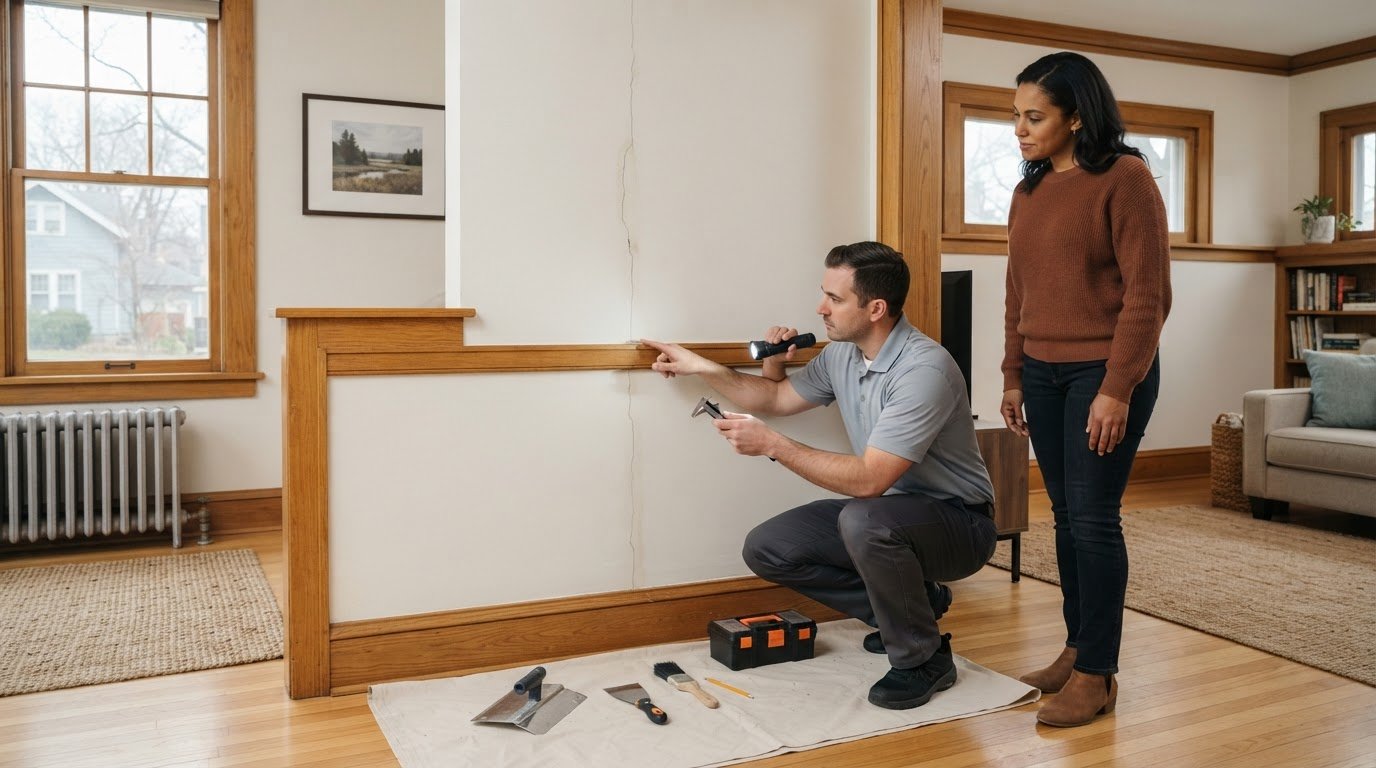
Could filling a wall crack make the problem harder to spot without solving it? A hairline mark may be cosmetic, but a crack that keeps returning, grows wider, or appears with signs of moisture deserves closer attention. Professional wall crack repair starts with understanding what you can observe and whether the surface needs more than a patch. A paint-ready finish matters, but it should not come at the expense of addressing the right repair.
It’s understandable to wonder what caused a crack and whether it will come back. This guide explains common clues to look for without asking you to diagnose a structural problem yourself. You’ll learn how repair needs can differ for drywall, plaster, and foundation walls, what patching and surface preparation may involve, and when to consult a qualified specialist about a potentially serious issue. Whether you want to repair a small cosmetic crack or prepare a damaged wall for painting, knowing the next step can help you make a more confident decision.
• Notice whether a crack is changing, recurring, or accompanied by dampness, but don’t rely on appearance alone to diagnose the cause.
• Professional wall crack repair should address the surface condition before patching and paint preparation begin.
• Small, stable blemishes may need a different next step than extensive or recurring damage. Seek an on-site assessment when you’re unsure.
• Before a repair visit, clear access, note previous patching, and share dated photos and any history of leaks or changes.
• Ask what the repair includes and whether concerns beyond cosmetic patching call for a qualified specialist.
A visible crack can be unsettling, but its appearance alone can’t tell you what caused it or whether it needs more than a surface repair. Wall surfaces can be affected by ordinary building movement, changes in indoor temperature or humidity, previous repairs, and moisture. Start by noticing what has changed and recording it, rather than assuming the crack is harmless or a sign of serious damage.
The wall material matters, too. If you’re unsure whether you’re looking at drywall or another surface, this overview of understanding drywall explains a material commonly used for interior walls. A qualified professional can assess the actual surface and its condition in person.
Fine lines across a broad, flat area may have different causes from cracks along panel joints or seams. Cracks near doors and windows are another pattern, but their location alone doesn’t confirm why they formed. Location and direction are useful clues for an assessment, not a diagnosis. A stable surface blemish may be suitable for patching and paint preparation, while a changing crack may need further evaluation first.
Rather than repeatedly filling a crack that returns, document what you observe. Note its location and direction, estimate its length, and take dated photos from a consistent distance. Record whether it reappears after a repair or changes over time. These details can help a professional understand the surface’s history.
Arrange further assessment if a crack is widening, recurring, damp, or appearing alongside other noticeable changes to the wall or surrounding area. Milwaukee-area homes experience seasonal temperature and humidity variation. Share that context, but don’t treat it as proof of what caused a particular crack. Avoid covering signs of moisture before an assessment, since the underlying condition may need attention before a cosmetic finish can last.
Use this checklist to decide when to ask for guidance:
• The crack appears to be widening or changing shape.
• It returns after a previous patch or keeps reappearing.
• The wall feels or looks damp, or you’ve noticed a leak.
• Other changes around the crack concern you.
These signs don’t establish whether a crack is structurally safe or unsafe. If you’re concerned about movement or possible structural damage, consult an appropriately qualified building professional. For damage assessed as suitable for cosmetic work, professional wall crack repair can include patching and surface preparation before painting. This helps create a clean finish without mistaking appearance for diagnosis.
A neat coat of paint can’t compensate for a weak patch. A lasting finish depends on preparing the wall so repair materials can bond properly and the repaired area can blend with the surrounding surface. The approach to professional wall crack repair depends on the wall material, the crack, and the condition of the area around it. Drywall, plaster, and concrete don’t all call for the same products or techniques.
Paint-ready repair means a stable, smooth, clean surface prepared to receive primer and finish paint. That involves more than covering a line with compound or paint. If loose material remains, the patch may not hold well. If the edges aren’t blended, the repair may show through the final coat.
A typical process begins by examining the damaged area and checking whether the surrounding surface is sound. Where appropriate, loose or unsound material is removed before patching. The repair material, and any reinforcement that may be needed, depend on the crack and wall substrate. There isn’t one compound, tape, or technique that suits every repair.
Preparation helps the patch meet the existing wall cleanly rather than forming a raised edge or hiding a surface problem. For example, a repair at a drywall joint may call for a different approach from damage in plaster. Cracks in concrete are another category altogether. This Old House outlines a durable solution for concrete cracks, illustrating why repair methods must match the material and type of damage.
Once the appropriate patch is applied, it needs to dry according to the product instructions before sanding or recoating. Rushing this stage can affect the finish. Sanding smooths the repair, while feathering the edges helps the patched area transition gradually into the wall instead of leaving a noticeable ridge.
Before priming, check the surface under suitable lighting. Low-angle light can reveal ridges or shallow depressions that may be less visible when viewed straight on. Any needed touch-ups are easier to address before primer and paint are applied. Primer helps prepare the repaired area for the finish coat, but it can’t disguise uneven patching.
Paint sheen, wall texture, and colour also affect how visible a repair remains. Even a smooth patch can stand out if its texture differs from the surrounding wall or the finish doesn’t blend. Ask how surface preparation, priming, and painting are included in the planned work. For an overview of patching and painting services, visit Pro Painter USA’s patching and painting services.
A small, stable surface blemish may be manageable as a careful DIY patch. Recurring, widespread, damp, or changing damage calls for a more cautious next step. The decision also depends on the wall’s condition, the size of the repair, and how seamlessly the finished surface needs to blend. This guide can help you choose whom to consult, but it can’t replace an on-site assessment or confirm the cause of a crack.
A DIY repair may suit limited surface damage that hasn’t changed and shows no signs of moisture or wider movement. Follow the repair product’s instructions, and prepare the surrounding surface as directed instead of applying compound over dust or loose material. Keep expectations realistic: an uneven patch can remain visible after painting, especially on a textured wall or a prominent area with strong natural or artificial light.
If a previous patch failed or the crack has returned, repeating the same surface fix may not resolve the issue. Professional wall crack repair may be a better option when the damage needs careful preparation or when a smooth, consistent finish matters.
Consider a professional for recurring cracks, extensive damage, or repairs that need to blend closely with the surrounding finish. If you suspect water intrusion or structural movement, consult an appropriately qualified building professional before treating the crack as a cosmetic issue. Moisture can affect different parts of a home. For related context, see this guide to exterior wood rot repair in Milwaukee. Wood rot and wall cracking are distinct concerns, so guidance for one shouldn’t replace an assessment of the other.
| Observable condition | Reasonable next step | When to seek further assessment |
|---|---|---|
| Small, stable surface blemish with no visible dampness | Consider a careful cosmetic patch, following product instructions | If the crack changes, returns, or the patch doesn’t hold |
| Crack reappears after patching | Pause before filling it again and record its changes | Ask a repair professional to assess the surface and repair needs |
| Widespread damage or a prominent area requiring a smooth finish | Consider professional surface repair and paint preparation | If the damage is changing or appears alongside other concerns |
| Dampness, suspected water intrusion, or signs of movement | Don’t rely on a cosmetic patch alone | Consult an appropriate qualified building professional about the cause |
Use the comparison to plan your next step, not to diagnose the building. If you’re unsure whether the wall needs patching or further evaluation, describe what you’ve observed and ask what falls within the repair professional’s scope.
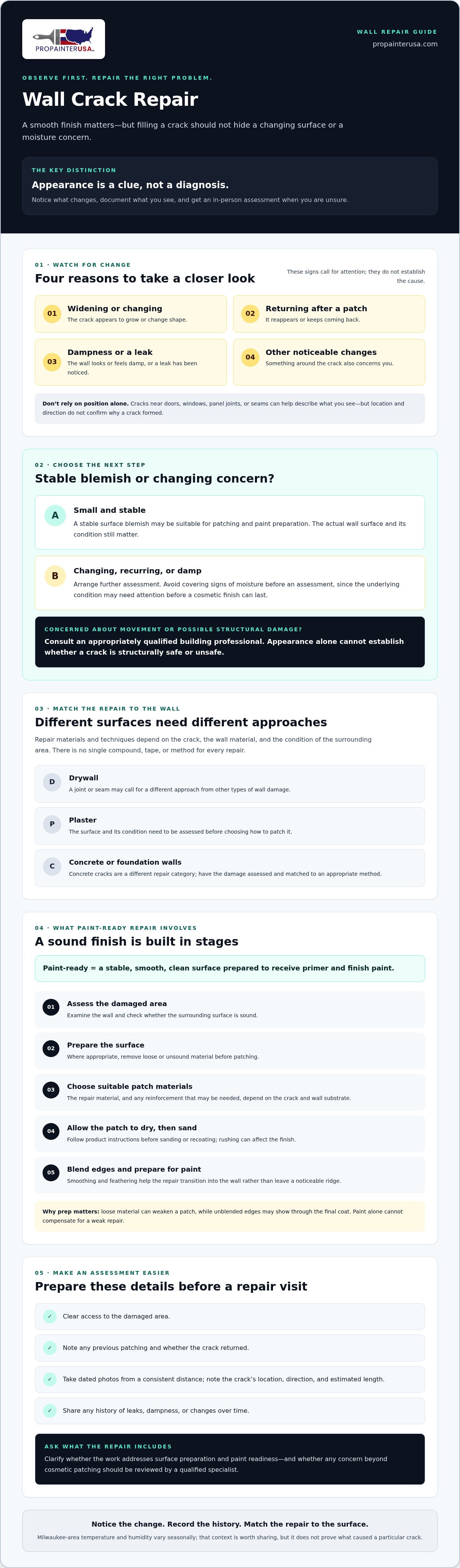
A little preparation helps a repair professional understand the wall’s history and plan the work. Before a visit, clear access to the damaged area and gather information that could explain how the crack has changed. Don’t conceal a crack, dampness, or evidence of a leak before it’s assessed. Sharing what you’ve noticed can help distinguish surface preparation needs from issues that may require another qualified professional.
Make a short record of when you first noticed the crack, whether it has changed, and whether similar cracks appear nearby. Dated photos can show how its appearance has developed. Mention previous patching, leaks, dampness, or other surface work, even if the wall has since been painted. This history can help inform the assessment and repair plan.
Before work begins, ask what the estimate includes. Clarify whether it covers patching, surface preparation, primer, painting, and cleanup, or only some of those steps. For context on how wall patching fits within a broader repair scope, see professional drywall repair in Milwaukee.
After patching, review the surface in good light. Look for raised ridges, pinholes, visible patch edges, or material that appears loose. The transition between the repair and the surrounding wall should look smooth, and the work area should be clean. If you spot an issue, ask about it before primer or paint makes the surface harder to assess.
Don’t rush the next coat. Drying times and priming requirements depend on the repair and paint products used, so follow their instructions and confirm the sequence with the person completing the work. Once the surface is ready, coordinate whether the repair will be painted as part of the job or left prepared for a separate painting project. For broader project planning, house painting estimates in Milwaukee offer a separate resource.
A thorough professional wall crack repair process should leave the surface prepared for its next step, not simply covered. If your wall needs patching and paint preparation, you can request an estimate for patching and painting from Pro Painter USA.
Choosing a contractor for professional wall crack repair starts with understanding what the proposed work covers. Cosmetic patching and paint preparation can improve a damaged wall’s appearance, but they aren’t the same as diagnosing structural movement or repairing a foundation. If you’re concerned the crack may involve either issue, consult an appropriately qualified building professional before proceeding with cosmetic work.
Ask what the contractor observed and which tasks are included in the proposed surface repair. A clear scope helps you understand whether the work covers patching, smoothing, and preparation for paint, or only part of the job. Confirm whether primer and painting are included or quoted separately, and ask what cleanup is part of the work.
If the contractor finds unexpected moisture or signs of movement, ask how that affects the plan and whether you’ll need further assessment from another qualified specialist. A painting or patching contractor should be clear about the limits of cosmetic work rather than presenting it as a structural diagnosis. For instance, when cracks stem from shifting commercial slabs or settled foundations, stabilizing the underlying structure through solutions like commercial concrete lifting Dallas must take priority before cosmetic patching can succeed.
Before requesting an estimate, gather dated photos and note the crack’s location, approximate size, and any changes you’ve observed. Include details about previous patching or signs of dampness. This information can help a contractor understand the visible surface concern and discuss an appropriate scope. It doesn’t replace an in-person assessment where one is needed.
Pro Painter USA offers patching and surface repair alongside residential and commercial painting in Milwaukee and surrounding Wisconsin communities. Its local service area includes Milwaukee, Shorewood, Whitefish Bay, Fox Bay, Glendale, Fox Point, Bayview, Grafton, Cedarburg, Port Washington, Wauwatosa, Menomonee Falls, Richfield, West Bend, Hartford, Waukesha, New Berlin, Hales Corners, Oak Creek, and Cudahy. Confirm current coverage for your location when you get in touch. For business properties, the commercial painting contractors in Wauwatosa guide offers a separate resource for considering commercial painting work.
If your concern is a paintable surface crack, you can request a free estimate online or by calling the Wauwatosa office. If you suspect structural movement or foundation damage, seek an appropriately qualified specialist for that assessment before arranging cosmetic patching.
A lasting repair begins with paying attention to what the crack is doing, not just covering the visible line. Stable surface blemishes may be suited to cosmetic patching, while recurring damage, dampness, or signs of movement call for further assessment. Once the repair is appropriate, careful preparation helps leave the wall smooth and ready for primer and paint.
For Milwaukee-area property owners, Pro Painter USA provides patching and surface repair alongside residential and commercial painting, backed by approximately 30 years of industry experience. The right scope depends on the wall’s condition. If structural movement or foundation damage may be involved, consult an appropriately qualified specialist rather than treating it as cosmetic work.
Ready to discuss a paintable crack or surface repair? Request a free estimate for professional wall crack repair and take a clear, practical next step toward a clean finish. With the right assessment and preparation, you can move forward with greater confidence.
Consider professional assessment if a crack is widening, recurring, damp, extensive, or accompanied by other noticeable changes. A fine, stable surface line may be cosmetic, but appearance alone can’t confirm its cause or rule out a larger concern. Note where the crack is, its direction and approximate length, and whether it changes over time. If you suspect structural movement or water intrusion, consult an appropriately qualified building professional.
You may be able to patch a small, stable blemish if the surrounding surface is sound and shows no signs of moisture or wider movement. Follow the repair product’s instructions, prepare the area carefully, and allow materials to dry as directed. A DIY patch may remain visible, particularly on a textured or prominent wall. If the crack returns, spreads, or the finish needs careful blending, consider professional surface repair.
Interior wall cracks can have several possible causes, including ordinary building movement, changes in indoor temperature or humidity, previous repairs, and moisture. Cracks may also appear at joints or near openings, but their location doesn’t prove what caused them. Track when you first noticed the line, whether it has changed, and whether similar cracks are nearby. Those observations can help a qualified professional assess the surface.
Pay closer attention if a drywall crack appears to widen, repeatedly returns after patching, feels damp, or appears alongside other changes to the wall or surrounding area. These clues don’t establish whether the damage is structural, so avoid making that diagnosis from appearance alone. Document the crack with dated photos and notes. If movement or water intrusion is a concern, seek assessment from an appropriately qualified building professional.
Professional wall crack repair typically starts with assessing the wall material and the condition of the damaged area. The repair approach varies, but may involve preparing the surface, removing loose material where appropriate, patching, allowing the repair to dry, smoothing edges, and preparing the area for primer or paint. Pro Painter USA offers patching and surface repair with painting services in the Milwaukee area; structural diagnosis is outside this cosmetic scope.
A repair can remain visible if the patch is uneven, its edges aren’t blended, or its texture differs from the surrounding wall. Paint colour and sheen can also affect how noticeable the area looks. Careful surface preparation, drying, sanding where appropriate, and priming help create a more consistent base, but results depend on the wall and finish. Check the repair under suitable lighting before painting to spot ridges or pinholes.
Yes, address a paintable crack before painting so the wall can be patched, smoothed, and prepared for primer and finish. Painting over a crack won’t correct an uneven or unsound surface, and the line may remain visible. First consider whether the crack is stable and suitable for cosmetic work. If it’s damp, recurring, or changing, seek further assessment before treating it as a paint-preparation issue.
You might find these helpful:
We are a team of interior and exterior painters and we are not limited to house painting only. We can paint different businesses like retail shops, commercial buildings, and apartments.
We also provide restaurant painting services. We can give you more information about these services if you give us a call.