MILWAUKEE WI, USA,
September 26, 2026


What makes a drywall repair last: covering the damage, or understanding what caused it? A crack, hole, or dent can make a room feel unfinished, and a patch that stands out after painting can be just as frustrating. Finding professional drywall repair Milwaukee homeowners can feel confident about starts with knowing what to look for and when a repair may need a closer assessment.
Some surface damage is straightforward to patch. Recurring cracks, soft spots, or signs of moisture may call for more investigation before repairs begin. Preparation and finishing matter, too. Careful patching helps create a smooth, paint-ready surface that blends more naturally with the surrounding wall.
This guide explains how to assess common drywall damage, what to expect during repair, and how to choose a Milwaukee-area professional. You’ll also learn what to share when requesting an estimate, including the damage’s size and location and whether it has returned or changed. With a clear understanding of the work involved, you can make a more informed plan for restoring a consistent finish.
• Learn which drywall issues may be manageable as small patches and which deserve a closer professional assessment.
• See how the repair method and existing wall surface affect the steps needed for a smooth, paint-ready finish.
• Compare DIY and professional repair based on damage, tools, finish expectations, and time.
• Know what to include in an estimate request so a Milwaukee-area professional can better understand the job.
• Discover how professional drywall repair Milwaukee can fit into painting and surface preparation with Pro Painter USA.
A hole from a doorknob, loose tape along a seam, or a crack that catches the light can make a cared-for room feel unfinished. Even small blemishes are frustrating when a quick cover-up leaves an uneven surface or the damage returns. The right next step depends on more than appearance. Size, location, the condition of the surrounding material, and signs of an underlying issue all help determine whether a simple patch is suitable.
Nail holes, small dents, isolated impact holes, and limited surface cracks are often patchable. Loose or peeling joint tape may also be repairable, though creating a stable finish can take more than a dab of compound. Drywall is a panel material used to form interior walls and ceilings. Readers curious about what drywall is can explore its basic composition and background.
There isn’t one repair method for every blemish. A small hole in an undamaged wall differs from a larger impact opening, a damaged corner, or a crack along a seam. The repair scope also depends on whether the material around the spot is firm and intact. A visual check helps describe what’s visible, but it can’t always reveal what’s behind the surface or identify the cause.
Paint-ready drywall is smooth, stable, and properly prepared so the repaired area can receive paint with a consistent finish. Reaching that result means addressing both the patch and the surrounding surface.
Some signs deserve investigation before anyone patches or paints over them. Watch for recurring cracks, soft or swollen areas, staining, or damage that appears to grow or change. These conditions may point to moisture or ongoing movement rather than a one-time impact. A fresh coat of paint can temporarily hide a mark without resolving its cause.
If you suspect a leak, address its source before repairing the affected drywall. Covering damp or repeatedly stained material can leave the original problem unresolved. When damage seems related to a leak or structural movement, contact an appropriate specialist to assess that concern. A drywall repair professional can patch surfaces as part of preparation, but that work should not replace a moisture or structural evaluation.
If you’re unsure where to start, describe when the damage appeared and whether it has changed. Seeking professional drywall repair Milwaukee property owners can rely on means looking beyond the visible flaw and considering whether the surrounding surface is ready for repair.
A clean repair involves a sequence of decisions, not simply a layer of compound over a flaw. First, assess where the damage sits, whether nearby drywall is firm, and how the wall is finished. A nail hole, a larger impact opening, and loose joint tape call for different approaches. Choosing a patching method suited to both the damage and the existing surface helps avoid a weak repair or an obvious change in texture.
Preparation starts with protecting the work area and clearing away loose material. Depending on the damage, the repair may involve removing unstable edges, securing or fitting a patch, and applying joint compound to cover and blend the area. No single method fits every hole or damaged section. For a general look at patching considerations, readers can also consult thisoldhouse.com.
Compound needs to dry before another coat or sanding. Rushing the drying time can leave an uneven surface or affect how the repair holds up. Several applications may be needed to fill, level, and blend the area, with drying time between coats depending on the material and conditions. If the cause of damage remains, such as moisture or movement, a patch alone may not stop the problem from returning. Address that concern before finishing the surface.
Blending matters. To avoid a raised outline, compound is feathered beyond the damaged spot and tapered gradually into the existing wall. Careful sanding smooths transitions and removes ridges. Then, dust is cleared away so it won’t interfere with primer or paint. Skipping these steps can leave edges or surface irregularities that become more noticeable under paint and changing light.
Primer helps prepare repaired drywall for paint by creating a more consistent surface between the patch and the surrounding wall. It’s an important part of finishing, not a substitute for smooth, clean preparation. For a broader look at how the finished wall fits into a room’s appearance, see this interior painting guidance.
Because patching and painting are connected steps, coordinating them can help align the repair with the final finish. If you’re weighing the work involved, explore Milwaukee patching and painting services as one option for learning about surface preparation and painting.
Not every wall blemish needs a professional. A stable nail hole may be a reasonable DIY project, but assuming every small-looking patch is easy can lead to extra sanding, mismatched texture, or a repair that stands out once painted. Consider more than the opening’s size. Think about whether the damage is stable, how visible the wall is, and how much finish work you’re prepared to do.
A small nail hole or shallow dent in firm, dry drywall may suit a capable homeowner. You’ll need suitable patching materials, a way to protect nearby surfaces, and patience to apply compound, let it dry, sand carefully, and clean up dust. The finish can take more time than expected. Wall texture and light from a window or ceiling fixture can make ridges or an uneven patch easier to notice.
| Factor | DIY may fit | Professional repair may fit |
|---|---|---|
| Damage scale | Small, stable nail holes or minor blemishes | Larger openings, damaged seams, or several repair areas |
| Tools and materials | You can gather patching supplies and protect the work area | The repair needs a method suited to the damage and surrounding wall |
| Finish expectations | A minor variation in a less visible spot is acceptable | You want the patch blended with a visible wall’s surrounding surface |
| Time investment | You can manage preparation, drying, sanding, and cleanup | You prefer help coordinating patching with paint preparation |
Consider a professional assessment for larger openings, loose or damaged seams, repeated cracking, or repairs across several areas. Recurring damage may have an underlying cause, while staining or soft drywall can suggest moisture. Investigate the cause before patching, since covering the symptom alone may leave the problem unresolved. If the concern appears moisture-related or structural, consult an appropriate specialist.
For a prominent living-room wall or a business interior, the finish matters as much as filling the damage. Coordinating patching with paint preparation can help address surface transitions before they stand out in the finished space. Businesses planning work in occupied areas can also review commercial painting contractors in Wauwatosa as they consider project needs. For another repair reference, see this drywall repair resource.
Choosing professional drywall repair Milwaukee homeowners can feel comfortable with starts by sharing what you’ve noticed, including whether the damage has changed or returned. If patching and painting are both part of your plan, you can learn about patching and painting services and consider how the work may fit together.
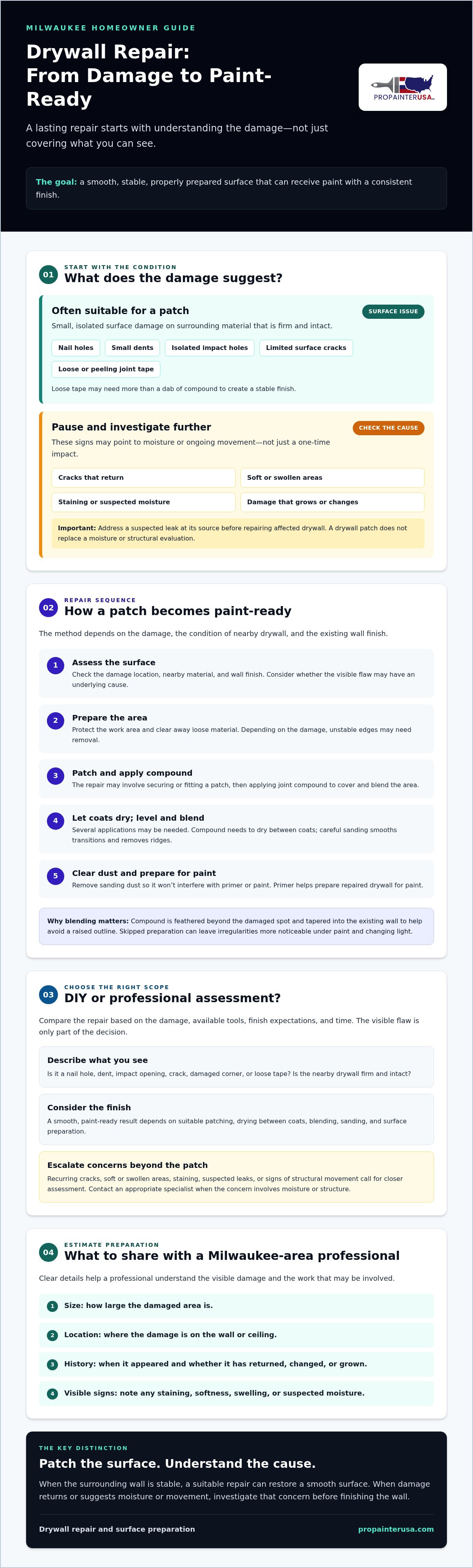
A useful estimate starts with a clear picture of the problem. Before contacting a professional, note where the damage is, what it looks like, and whether it has changed. These details help the person assessing the work understand the likely scope and identify questions that may need an in-person review. For professional drywall repair Milwaukee property owners are considering, a little preparation can make the estimate conversation more focused and clarify what the finished work includes.
Gather a few practical details before requesting an assessment. You don’t need to diagnose the cause. Share what you’ve observed, including any known leak, previous repair, or change in the damaged area. Mention it if staining or cracking has spread.
Name the room and describe where the damage is, such as a ceiling corner, wall seam, or area beside a doorway.
Approximate measurements help communicate scale. Exact measurements aren’t necessary for an initial inquiry.
Include a close view and a wider shot that shows the damage in context. Place a familiar object nearby for general scale, without covering the affected area.
Note when you first noticed the issue, whether it has returned, and any known leak or earlier patch.
Ask what the proposed scope covers instead of assuming every estimate includes the same steps. Confirm whether it includes patching, sanding, priming, painting, and cleanup. If painting isn’t included, ask what condition the surface will be left in and what preparation remains before it can be painted.
It’s also reasonable to ask how the work will proceed, whether the area needs time to dry between repair stages, and how the work area will be protected. Scheduling can depend on the extent of the damage and drying conditions, so avoid relying on a fixed timeline before the surface has been assessed.
If the damage may involve an active leak or structural concern, ask whether that issue needs a separate assessment by an appropriately qualified professional. A drywall patching estimate shouldn’t be treated as an evaluation of unrelated moisture or structural problems.
When comparing estimates, look beyond the total. Review the written scope, included preparation, cleanup, and how clearly the professional explains exclusions or next steps. Pro Painter USA offers free estimates. If you’re ready to discuss the damage, request a drywall repair estimate.
A repair isn’t complete just because a hole or crack is filled. The patched area needs to be prepared for its next finish, whether that means primer and paint or a clearly defined stopping point before painting. Working carefully through these stages helps keep a repaired wall consistent instead of drawing attention to the damaged spot.
Once patching compound has dried and the surface has been sanded and cleaned, primer may help prepare the repaired area for paint. The repair and surrounding wall can absorb paint differently, so skipping suitable preparation may leave a visible difference in color or sheen. The right products and steps depend on the surface and the work included in the project.
Matching existing paint can take more than identifying its original color. Paint may look different as it ages, and sheen or fading can make a fresh application stand out beside the surrounding wall. Before work begins, ask whether the estimate includes painting only the patch or extending paint across an adjacent section or full wall. Clarifying the scope helps set expectations about the finished appearance and work involved.
For residential and commercial projects, coordinating drywall patching with painting can connect surface preparation to the final finish. Pro Painter USA provides painting and surface repair services, including patching, in Milwaukee and surrounding Wisconsin communities. The appropriate scope depends on the damage and the requested finish. Suspected moisture or structural issues may need a separate assessment by an appropriate specialist.
A clear estimate request can start with a few useful details: which room or area is affected, approximate dimensions, photos, and a brief description of when the damage appeared or whether it has changed. If painting is part of the goal, say whether you’re hoping to refresh just the repair area or address a larger wall surface. These details help frame the conversation without requiring you to diagnose the problem yourself.
Before approving work, review what the written scope includes, such as patching, surface preparation, primer, painting, and cleanup. Ask about exclusions or concerns that may need another qualified professional. That way, the repair plan reflects both the drywall’s condition and the finish you want.
If you’re considering professional drywall repair Milwaukee homeowners and businesses can discuss as part of a painting project, Pro Painter USA offers free estimates online or by phone. Share what you’ve observed and request a free repair estimate to discuss next steps.
A lasting repair starts with understanding the damage, especially if cracks return or the drywall shows signs of moisture. For stable, minor blemishes, a careful DIY patch may be enough. Larger or repeated repairs often benefit from professional assessment and preparation. Either way, a smooth, paint-ready finish takes more than filling a hole. The repair needs to be blended and prepared for the paint that follows.
Choosing professional drywall repair Milwaukee property owners can trust also means clarifying the scope. Share where the damage is, what you’ve noticed, and whether you want painting included. Pro Painter USA provides residential and commercial patching alongside painting services, helping coordinate repair and surface preparation as appropriate to the project.
Pro Painter USA serves customers in Milwaukee and surrounding communities, including Shorewood, Whitefish Bay, Fox Bay, Glendale, Fox Point, Bayview, Grafton, Cedarburg, Port Washington, Wauwatosa, Menomonee Falls, Richfield, West Bend, Hartford, Waukesha, New Berlin, Hales Corner, Oak Creek, and Cudahy. If you’re ready to discuss the damage, request a free estimate online or by phone.
There isn’t one standard price for professional drywall repair in Milwaukee because the estimate depends on the specific work. A small patch differs from several damaged areas that need additional preparation or painting. The condition and accessibility of the surface can also affect the scope. Ask for an estimate based on your wall and confirm whether patching, sanding, priming, painting, and cleanup are included before comparing proposals.
A crack can sometimes be patched, but it may return if the cause is still active. Repeated movement, moisture, or a nearby joint issue may need further assessment before the surface is finished. Note whether the crack has widened, reappeared after an earlier repair, or appeared alongside staining or soft drywall. Share those observations with the repair professional, and seek an appropriate specialist if the cause may be structural or moisture-related.
The schedule depends on the damage, repair method, number of compound applications, and drying conditions. A repair may need time between coats before sanding, priming, or painting can proceed. Some projects may require more than one visit, especially if several stages are included. Ask what the estimate covers and how drying affects the sequence. A reliable schedule should reflect the actual repair scope rather than assume every patch follows the same timeline.
Repaired drywall commonly needs appropriate primer before painting because the patched area may absorb paint differently from the surrounding surface. Primer helps prepare the repair for a more consistent finish, but the right preparation depends on the materials and painting scope. Before work begins, ask whether priming is included and whether the plan covers only the patch or a wider wall area. That clarification helps you understand what remains before the finish coat.
A close match may be possible, but the existing wall’s age, sheen, fading, sunlight exposure, and prior touch-ups can affect how new paint looks beside it. If you have the original paint information, share it when discussing the project. Ask whether the proposed scope includes spot painting or painting a broader section. Extending paint beyond the patch may be worth discussing when a small touch-up would leave a noticeable difference.
Address the moisture source first, then have the affected drywall assessed to determine whether it’s ready for repair. Patching or painting over active moisture doesn’t resolve the underlying issue. Stains, soft areas, or damage that keeps returning are useful signs to report. Share any known leak history with the appropriate professional, and arrange a separate moisture or structural assessment if needed before planning cosmetic patching or painting.
It depends on the hole, your repair experience, and the finish you want. A small, stable hole in an otherwise sound wall may be manageable as a DIY patch if you can prepare, sand, and clean the area carefully. Professional help may make sense for a highly visible spot, textured wall, or project that also needs paint preparation. Consider how noticeable an imperfect blend would be in the room’s lighting.
For patching and painting estimates in Milwaukee and the surrounding communities listed above, request a free estimate from Pro Painter USA.
You might find these helpful:
We are a team of interior and exterior painters and we are not limited to house painting only. We can paint different businesses like retail shops, commercial buildings, and apartments.
We also provide restaurant painting services. We can give you more information about these services if you give us a call.