

MILWAUKEE WI, USA,
August 30, 2026


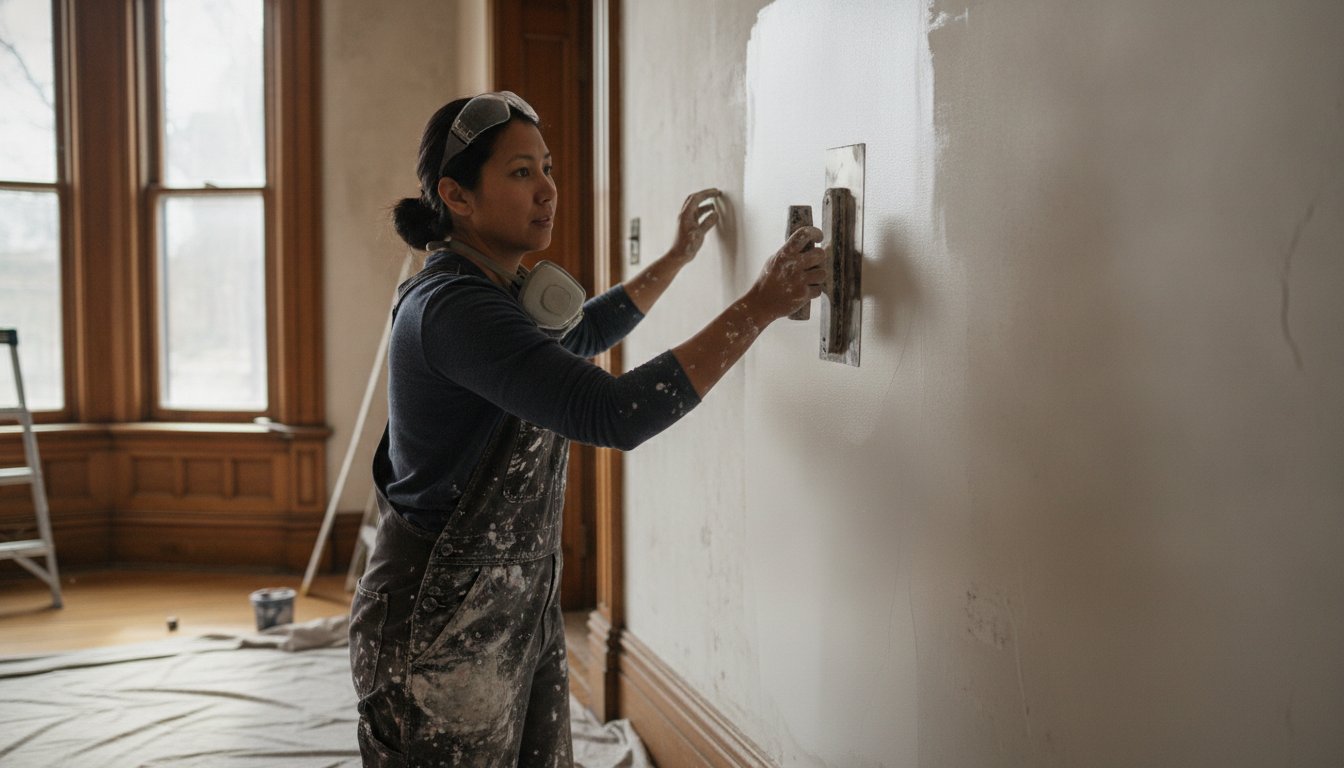
Nearly 38.6% of Milwaukee's housing was built before 1940, which means original lath and plaster is a defining feature of our local architecture. While these walls offer incredible durability and soundproofing, they often present a frustrating challenge when it's time to redecorate. If you're planning a refresh, professional plaster wall repair Milwaukee is the most critical step you can take to ensure your home's historic character remains intact.
You've likely dealt with the recurring cracks that reappear just months after a DIY patch, or perhaps you're worried about the dust and lead safety concerns inherent in older Wisconsin properties. It's frustrating to invest in premium paint only to see a hairline fracture ruin the finish a season later. We understand that you want more than a quick fix; you want a surface that honors the integrity of your property.
This guide explains why expert stabilization is the only way to achieve a seamless, lasting paint job. We'll explore the differences between traditional lath and modern drywall, the latest lead-safe standards for 2026, and how to prepare your surfaces for a finish that stays smooth for years. Whether you're in Wauwatosa or Shorewood, proper preparation is the foundation of a beautiful home.
• Understand why standard drywall compounds often peel away from older surfaces and how the mechanical "keying" process keeps historic walls intact.
• Master the "tap test" to identify hollow spots and determine if your project requires minor patching or a more comprehensive skim coat.
• Learn how Wisconsin’s seasonal temperature swings affect lath and plaster, making expert plaster wall repair Milwaukee essential for a crack-free paint job.
• Discover the professional five-step stabilization method that ensures your walls are perfectly smooth before the first drop of paint is applied.
• Find out how integrating expert surface restoration with professional painting provides the most durable and aesthetically pleasing results for your home.
Milwaukee is famous for its historic architecture. If your home was built before 1950, your walls likely consist of original plaster. Unlike modern drywall, plaster was a premium, hand-applied finish that provided superior soundproofing and fire resistance. Maintaining these surfaces requires more than a bucket of joint compound. Effective plaster wall repair Milwaukee starts with understanding that these walls are dynamic, living parts of your home's structure. They aren't just covers; they're layers of history that react to the world around them.
Our local weather puts immense stress on historic interiors. During a harsh Milwaukee winter, your furnace runs constantly. This strips moisture from the air and causes the underlying wood lath to shrink and become brittle. When summer arrives, Lake Michigan's humidity returns. Those same materials then swell. This constant cycle of expansion and contraction is why standard DIY spackle often fails. It lacks the flexibility to move with the house. This leads to repairs that pop out or recrack within a single season. In some cases, extreme humidity can even lead to efflorescence. This is where minerals leach through the surface and create unsightly bubbles under your paint. For homeowners looking to mitigate these moisture and temperature issues at the source, you can check out Third Coast Spray Foam to learn about advanced insulation methods that protect your interior walls.
Foundation settling is another factor. In neighborhoods like Shorewood and Wauwatosa, the ground shifts enough to create tension in rigid plaster. You might notice small hairline cracks near door frames or windows. While these are often cosmetic, they can signal deeper issues. Distinguishing between a surface blemish and a structural failure is the key to a lasting restoration.
Not all plaster is created equal. Most homes in our area utilize Lath and plaster construction, but the specific materials vary by decade. Identifying these systems is the first step in a professional wall crack repair. You need to know exactly what's behind the paint before you begin. Common systems include:
Found in our oldest homes, these are thin strips of wood that create "keys" to hold the plaster in place.
Often used in the 1930s and 40s, providing a more rigid but rust-prone base.
An early precursor to drywall that still uses a traditional plaster topcoat.
Understanding the underlying structure is critical for plaster wall repair Milwaukee. If the "keys" have broken off behind the wall, the plaster will feel hollow or bouncy when pressed. This is known as delamination. Preserving the architectural integrity of an older Milwaukee residence requires a level of expertise that respects these original building methods. By using the right bonding agents and techniques, we can ensure your walls look new without losing their historic soul.
Many homeowners assume that a hole in a wall is simply a hole, regardless of the material. However, the chemical and physical makeup of plaster is vastly different from modern gypsum drywall. While drywall is porous and accepts standard joint compound easily, old plaster is dense and often finished with a lime-based topcoat. This density means that many modern "all-purpose" compounds simply sit on the surface without forming a bond. Without proper intervention, these patches eventually peel away, especially in the high-vibration environments of urban Milwaukee homes. Professional paint prep and repair services are essential because they address these chemical differences before the first drop of paint is applied.
The strength of a plaster wall relies on "keying." This is the process where wet plaster was squeezed through the gaps in wood lath, creating a mechanical hook as it hardened. When these keys break due to age or house settling, the plaster loses its connection to the structure. Effective plaster wall repair Milwaukee requires more than just filling a gap; it requires re-establishing that structural bond. High-quality primers also play a vital role here. They seal the "thirsty" old plaster, preventing it from sucking the moisture out of your new paint, which would otherwise lead to a chalky, uneven finish.
Lightweight spackle is often the first tool a DIYer reaches for, but it's chemically incompatible with traditional lime plaster. Spackle is too soft and brittle to handle the movement of a lath system. Additionally, if moisture is trapped behind a quick patch, it will eventually cause the paint to bubble and peel. Calcimine paint is a common chalky, water-based finish found in Milwaukee plaster prep that requires specialized removal or specific oil-based primers to prevent total finish failure. If you aren't sure whether your walls are ready for a new coat, you can request a professional assessment to identify these hidden bonding issues.
A lasting repair begins by removing loose material and "digging out" existing cracks. This creates a V-shaped groove that allows the new bonding agent to sit deeply within the wall. This is a critical step in repairing cracks in plaster walls because it provides the surface area needed for a permanent fix. We often use fiberglass mesh for structural reinforcement, followed by multiple thin layers of specialized setting-type compound. This skim coating technique ensures the repaired area is perfectly level with the surrounding wall, creating a seamless transition that is invisible once painted. By taking the time to build a stable base, we ensure your walls look as good as the day they were first troweled.
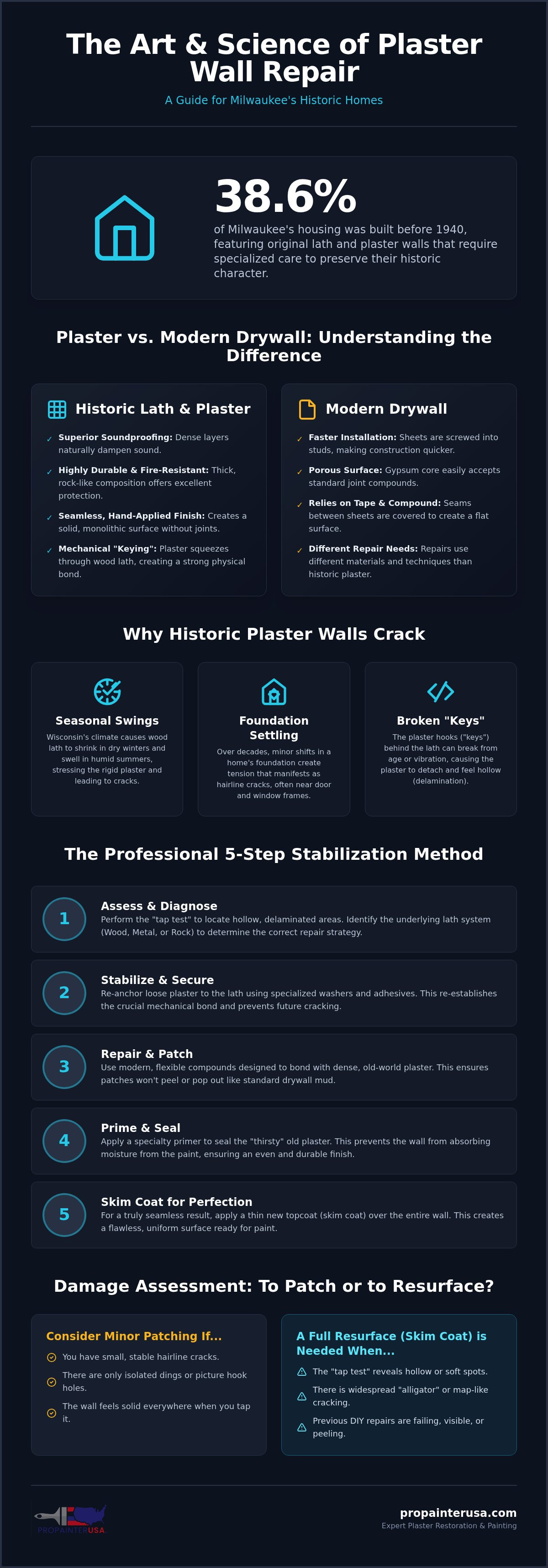
Before you pick up a paintbrush, you must determine if your walls are structurally sound or simply showing their age. A simple "tap test" is the most effective diagnostic tool for any homeowner. Gently rap your knuckles against the wall in several different areas. A solid, sharp sound indicates the plaster is still firmly attached to the lath. However, a hollow, dull thud suggests delamination. This means the plaster has detached from the underlying wood structure. If you find multiple hollow spots, localized patching may not be enough. In these cases, plaster wall repair Milwaukee often requires a full-room skim coat to ensure the surface doesn't sag or crumble under the weight of new paint.
Choosing between a quick fix and a full resurface depends on your long-term goals and the current state of the substrate. Localized patching is cost-effective for isolated dings, but it can occasionally leave "flashing" where the new texture doesn't quite match the original hand-troweled finish. Conversely, skim coating provides a perfectly uniform canvas. If your interior damage is located near a window or an outer wall, it is worth checking for external issues. Water intrusion often travels along studs and manifests as interior bubbling. If you suspect the root cause is outside, consult our exterior wood rot repair Milwaukee guide to ensure your interior fixes aren't immediately ruined by the next heavy rainstorm.
Hairline cracks are usually cosmetic. They result from the seasonal expansion cycles common in our Great Lakes climate. These are easily managed during standard paint prep with a high-quality flexible filler. However, gaps wider than a quarter-inch are serious warning signs. These larger structural gaps often indicate significant foundation movement or total lath failure. A professional assessment saves you money by identifying which cracks are stable and which require deep-seated reinforcement. It's better to address the root cause now than to waste time filling a gap that will only reopen during the next winter freeze.
Water is the natural enemy of plaster wall repair Milwaukee. Identifying the "brown ring" of a leak is crucial for a lasting repair. Plaster is highly porous; it absorbs moisture and quickly loses its structural bond. Before any prep begins, the area must be completely dry. We also check for mold, which can thrive in the dark, damp space between the lath and the plaster. Any "blown out" or soft plaster must be removed entirely. Patching over wet or crumbling material is a guaranteed recipe for paint failure. To ensure the best results, restoration professionals like DK Production advise that all moisture sources must be fully mitigated before applying a single layer of finish.
Achieving a seamless finish on old plaster requires more than just a putty knife and a tub of mud. Professional plaster wall repair Milwaukee relies on a disciplined five-step restoration cycle to ensure the results last for decades. We begin by stabilizing any loose material to provide a firm foundation. Next, we clean the area thoroughly to remove fine dust that would otherwise prevent proper adhesion. We then apply a specialized bonding agent, followed by multiple thin coats of compound, and finish with a precision sand. This methodical progression ensures that the repair integrates perfectly with the existing wall structure rather than sitting precariously on the surface.
To hide the transition between old and new surfaces, experienced interior painters Milwaukee use a technique known as feathering. By extending each layer of compound several inches beyond the previous one and thinning the edges to a microscopic level, we eliminate the hard lines that often plague DIY projects. This creates a gradual slope that is invisible to the naked eye once the final finish is applied.
Milwaukee’s homes feature a diverse range of interior finishes, from the glass-smooth walls of the early 1900s to the textured knockdown styles of later decades. Matching these patterns is a specialized skill that requires both the right tools and years of experience. Whether we are replicating a subtle orange peel or a heavy hand-troweled finish, the goal is total invisibility. A "perfectly smooth" finish is actually the most challenging to achieve because it leaves no room for error. Light reflection reveals poor texture matching once the final paint coat is applied, creating distracting shadows on your walls if the repair isn't handled with precision.
We understand that the biggest deterrent to plaster wall repair Milwaukee is the fear of a mess. Our team prioritizes home protection by using heavy-duty plastic sheeting and HEPA filtration units to capture airborne particles. We also utilize wet sanding techniques when appropriate to minimize dust entirely. This level of care ensures your furniture, flooring, and air quality remain protected throughout the process. A professional cleanup is a hallmark of a high-quality painting contractor; we take pride in leaving your home as clean as we found it. If you're ready for a stress-free restoration, request your free professional assessment to get started.
Choosing a single-source contractor for both your restoration and finishing needs is the most effective way to ensure a high-quality result. Many national advice sites suggest hiring separate professionals for plastering and painting, but this often leads to accountability issues. If the final finish looks uneven, the painter might blame the plasterer's prep work, while the plasterer blames the painter's technique. By partnering with a team that handles both, you get a unified standard of excellence. We take full responsibility for the entire surface, ensuring that the plaster wall repair Milwaukee homeowners receive is perfectly optimized for the specific paint products we apply.
A unified approach also simplifies your project management. Instead of coordinating multiple schedules and dealing with overlapping timelines, you have one point of contact. This streamlined process is especially beneficial when you're managing a comprehensive home refresh that includes Milwaukee painting and staining services. Whether we're working on your interior parlor or your exterior trim, our goal is to provide a cohesive, durable finish that stands up to our local climate.
Pro Painter USA brings 30 years of industry experience to every Milwaukee doorstep. We've spent three decades refining our techniques in the city's most iconic neighborhoods, from the historic bungalows of Wauwatosa to the established properties in Shorewood and South Milwaukee. Our team combines traditional craftsmanship with modern, durable materials to ensure your walls remain crack-free for years. We believe that surface preparation is the most critical step in any project. We don't just cover up problems; we solve them at the substrate level to protect the long-term value of your property.
Your restoration journey begins with a professional assessment of your home's unique needs. During a walkthrough, we do more than just measure square footage; we perform a detailed inspection to identify hidden plaster issues like delamination or moisture traps. This transparency ensures that your quote is accurate and includes both expert labor and premium materials. We provide clear, fixed-price estimates so you can plan your home improvement project with total peace of mind. If you're ready to restore the beauty of your historic interior, Contact Pro Painter USA for your free Milwaukee plaster repair and painting estimate.
Your Milwaukee home's historic plaster walls are more than just a surface; they're a testament to quality craftsmanship that deserves expert care. We've explored how the Wisconsin climate stresses these materials and why professional stabilization is the only way to prevent recurring cracks. By choosing a single-source partner for your plaster wall repair Milwaukee and interior painting, you ensure that every layer of your project is handled with precision.
Pro Painter USA is locally owned and operated right here in Wauwatosa. With 30 years of Milwaukee painting experience, we specialize in the expert texture matching and surface prep required to make old walls look new again. We take pride in our diligent approach and our commitment to leaving your home clean and beautiful.
If you're ready to achieve a seamless finish that lasts for years, we're here to help. Request Your Free Estimate for Milwaukee Plaster Repair & Painting and let our seasoned experts guide you through the restoration process. Your home's legacy is worth the investment in quality workmanship.
Repairing original plaster is often the superior choice for historic Milwaukee homes. Plaster provides better sound insulation and fire resistance than modern drywall. While replacement might seem easier, it involves a messy demolition that can disturb lead paint in homes built before 1978. Professional restoration preserves the character and value of your property. We focus on stabilizing existing surfaces to create a smooth, durable base that lasts for decades.
The cost for plaster wall repair Milwaukee varies based on the severity of the damage and the age of the home. Factors such as the presence of lead-based paint, the height of the ceilings, and the total square footage of the repair area all influence the final investment. Small patches are less intensive than full-room skim coating. We recommend requesting a free professional assessment to receive an accurate, transparent quote tailored to your specific project needs.
You shouldn't paint over fresh plaster immediately. The repair material must fully cure, which can take anywhere from 24 hours to several days depending on the thickness and humidity. Once dry, the surface is highly absorbent and requires a specialized primer to seal it. Skipping the priming step often results in a chalky finish or peeling paint. Our team ensures every repair is properly cured and primed before the final topcoat is applied.
Serious cracks are typically wider than a quarter inch or show signs of displacement where one side of the crack is higher than the other. If you notice a "stair-step" pattern in your plaster, it may indicate foundation settling. You can also check for softness or a hollow sound when you gently press on the wall. These signs suggest the plaster has detached from the lath and requires structural stabilization rather than a simple cosmetic patch.
Recurring cracks often happen because the underlying cause wasn't addressed during the initial fix. This could be due to seasonal shifts in the Wisconsin climate or ongoing structural movement. Many DIY repairs fail because they use rigid spackle that can't handle the natural flexibility of a lath system. We use fiberglass mesh and specialized bonding agents to bridge these gaps, providing the structural reinforcement needed to keep the crack from reappearing after the next season.
Plaster work can generate fine dust, but professional containment methods keep your home protected. We use heavy-duty plastic sheeting to seal off the work area and employ HEPA filtration units to capture airborne particles. By utilizing wet sanding techniques when possible, we significantly reduce the amount of dust that enters your living space. Our goal is to leave your home as clean as we found it, ensuring a stress-free experience for your family.
Yes, Pro Painter USA offers free, no-obligation estimates for all our services, including plaster wall repair Milwaukee. During the walkthrough, we'll inspect the integrity of your walls and identify any hidden issues like delamination or moisture damage. This allows us to provide a transparent, fixed-price quote that covers both labor and premium materials. You can request your estimate online or by calling our office in Wauwatosa to schedule a convenient time for an assessment.
Most residential projects take between three to five days, though the timeline depends on the extent of the repairs and the drying time required for each coat. Large-scale skim coating or extensive water damage restoration will naturally take longer than minor patching. We prioritize a methodical flow to ensure each layer is fully cured before moving to the next step. We'll provide a clear schedule during your initial consultation so you know exactly what to expect from start to finish.
You might find these helpful:
We are a team of interior and exterior painters and we are not limited to house painting only. We can paint different businesses like retail shops, commercial buildings, and apartments.
We also provide restaurant painting services. We can give you more information about these services if you give us a call.


