Roi Carlo Maasin
MILWAUKEE WI, USA,
June 16, 2026


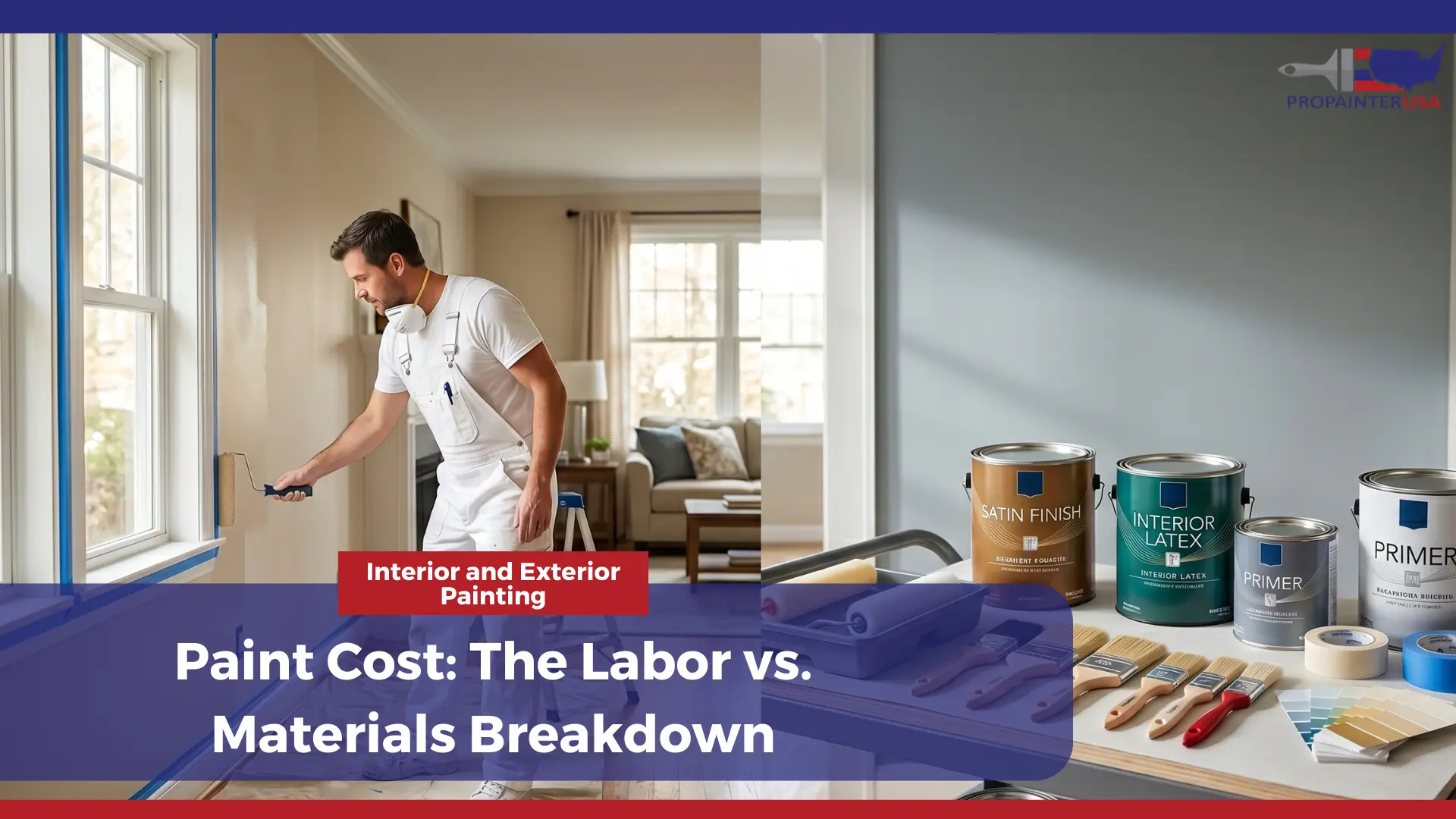
You've finally decided to make improvements to your home. You look for a nearby house painter, get a quote, and then blink twice when you see the final price. For both homeowners and business owners, this is a totally normal response.
When you invest in interior house painting or exterior house painting, you aren't just buying liquid in a bucket. You’re paying for a complete asset transformation. But how exactly do professionals calculate these numbers, and where does your hard-earned money actually go?
Let's pull back the curtain on the painting cost breakdown so you know exactly what you are paying for.

To put it simply: the vast majority of your professional painting estimate pays for labor, not the paint itself.
On average, labor accounts for 70% to 85% of the total cost of a professional painting project. The remaining 15% to 30% goes toward materials and supplies, which includes premium paint, primer, masking tape, caulk, and protective plastic sheeting.
The labor/material split is quite the same all throughout, however the actual day-to-day work varies quite a bit depending on where the crew is working.
Here is a brief look at the difference:
You might find these helpful:
When budgeting for a project, it's easy to make a few common mistakes:
If you have been searching for interior house painting near me or exterior house painting near me, these local baseline figures can help you plan your upcoming property improvements accurately.
Receiving a clear, itemized quote from a professional painter offers several key advantages:
Painting takes a lot of time and requires skill. It takes hours of moving furniture, masking off areas, preparing surfaces, sanding, and hand-applying multiple coats to get a perfect finish. When you pay for skilled physical labor, you get something that will last.
No. Professional painting companies have established commercial relationships with top manufacturers, allowing them to get contractor discounts on premium paint. If you buy it at retail, you will likely pay more for the exact same gallon.
An average 1,500 to 2,000 square foot home interior typically requires anywhere from 12 to 20 gallons of paint for a standard two-coat application, depending heavily on layout, texture, and dramatic color changes.
Because of our intense seasonal weather shifts, exterior paint in South-Eastern Wisconsin typically lasts between 5 to 7 years, especially dependent on who painted before. Interior paint can last 10+ years, though high-traffic areas like kitchens and hallways may need a refresh sooner.
Yes. Vaulted or high ceilings require using ladders or lifts, scaffolding, and extra masking to keep the rest of your space clean. This increases the total hours on the job, which raises the labor cost. More surface area = higher cost.
We are a team of interior and exterior painters and we are not limited to house painting only. We can paint different businesses like retail shops, commercial buildings, and apartments.
We also provide restaurant painting services. We can give you more information about these services if you give us a call.