

MILWAUKEE WI, USA,
August 27, 2026


What if the standard three-year repainting cycle for your facility isn't an unavoidable cost of doing business but a symptom of the wrong protective strategy? For many local property owners, seeing a fresh coat of paint flake away after just a few winters is a source of constant frustration. You take pride in your business's reputation, yet the relentless humidity and freeze-thaw cycles near the lakefront often lead to visible degradation and expensive substrate repairs. When you invest in commercial exterior painting, Wisconsin's challenging climate shouldn't be the deciding factor in how long your finish lasts.
We understand that you're looking for peace of mind and a solution that actually sticks. Whether you manage a large industrial warehouse or a local retail space, this guide explores how specialized industrial coatings act as a breathable shield. These systems protect your assets from the elements while significantly reducing your long-term maintenance costs. We'll provide a clear look at the latest coating technologies and surface preparation techniques, ensuring your building remains a professional landmark in the community for years to come.
• Understand how the unique freeze-thaw cycles near the lakefront impact your property and why specialized commercial exterior painting South Milwaukee solutions are necessary for long-term protection.
• Discover the specific benefits of elastomeric and polyurethane chemistries for bridging masonry cracks and providing superior UV resistance for office and retail exteriors.
• Learn to evaluate the life cycle cost of industrial coatings by understanding dry film thickness and how a higher upfront investment saves thousands over a decade.
• Identify the subtle signs of building degradation, like chalking and efflorescence, to catch coating failures before moisture causes expensive structural repairs.
• See why thorough surface preparation-including professional power washing and priming-is the most critical step in ensuring your industrial coating lasts for years.
When you manage commercial exterior painting South Milwaukee properties, you aren't just choosing a color; you're selecting a defense system. Wisconsin’s freeze-thaw cycle is a relentless physical force. Water molecules penetrate porous masonry or settle into micro-cracks in metal substrates during autumn rains. When that water freezes, it expands by approximately 9%, exerting immense internal pressure. Standard latex paints often lack the necessary elongation-the ability to stretch and contract significantly-to survive these shifts. Instead of moving with the building, the brittle paint film snaps, allowing even more moisture to enter and accelerating substrate failure.
UV degradation also plays a critical role during our intense summer months. High-energy solar radiation breaks down the chemical binders in standard commercial paints. This leads to "chalking," where the finish turns into a powdery residue that washes away, leaving the underlying structure vulnerable. Perhaps most damaging is the issue of moisture vapor transmission. If a coating doesn't allow trapped moisture to escape from the substrate, that water vapor will eventually push the paint away from the surface. This is the primary cause of the large-scale peeling many local business owners see every spring.
Proximity to Lake Michigan introduces unique variables like constant high humidity and salt-laden air. These conditions accelerate metal oxidation and create a damp environment where traditional coatings struggle to bond correctly. For properties in South Milwaukee and Cudahy, choosing a "breathable" coating is a non-negotiable requirement. These specialized systems are engineered to allow water vapor to pass through the film without letting liquid water in, effectively preventing the blistering and bubbling that often plagues coastal commercial buildings.
In dense industrial zones, the concentration of concrete and asphalt creates urban heat islands that stay significantly hotter than the surrounding landscape. This heat causes metal siding and roofing to expand rapidly during the day and contract sharply at night. While some original equipment might use Powder coating for its initial durable finish, field-applied industrial coatings must serve as a flexible thermal barrier. These high-performance systems are designed to manage the constant mechanical stress of expansion, ensuring the protective layer doesn't shear off the surface under thermal pressure.
Selecting the right material for commercial exterior painting South Milwaukee projects requires more than just picking a color. It's about matching the chemical properties of a coating to the specific needs of your building's substrate. While standard latex paint might look good initially, it often fails to provide the specialized defense required for industrial environments. Whether you're protecting a retail storefront or a manufacturing plant, the chemistry of the coating determines how well it will resist Wisconsin’s harsh elements.
Aging brick and stucco buildings are particularly vulnerable to moisture infiltration. An elastomeric coating is a thick, rubber-like membrane that stretches to bridge hairline fractures. This flexibility is vital because it allows the coating to move as the building settles or expands without cracking. For property managers overseeing apartment complex painting Oak Creek projects, these coatings are the primary defense against water damage. By creating a waterproof seal that remains breathable, elastomeric systems prevent the structural decay often seen in older masonry facilities.
Metal surfaces face a different set of challenges, primarily oxidation and chemical exposure. High-performance polyurethanes are the gold standard for UV resistance, ensuring that retail and office exteriors maintain their professional gloss for over a decade. For more rugged applications, industrial epoxies provide heavy-duty protection for metal accents and high-traffic areas. These systems are essential for warehouse painting contractors Milwaukee businesses trust to combat rust. Utilizing advanced protective coatings for corrosion control ensures that even facilities near heavy manufacturing zones remain structurally sound. These chemistries resist chemical runoff and salt spray, which are common issues in South Milwaukee's industrial corridors.
Modern commercial siding often benefits from acrylic high-build systems. These offer a versatile balance of durability and aesthetic appeal, providing a thicker dry film than standard house paint. For many businesses, the success of a commercial exterior painting South Milwaukee project depends on this technical expertise. If you aren't sure which chemistry fits your facility, you can consult with a local expert to evaluate your building's specific needs and prevent the need for a total redo in just a few years.
Choosing between standard latex paint and high-performance industrial coatings often comes down to how you view your facility’s budget. While standard paint offers a lower upfront cost, its life cycle is significantly shorter in the Wisconsin climate. When you invest in commercial exterior painting South Milwaukee business owners often find that a premium coating system pays for itself within a single decade. By extending the time between repaints from five years to twelve or fifteen, you eliminate the labor costs and logistical headaches of an entire project cycle.
A key technical difference lies in the measurement of "mils," which refers to a thousandth of an inch of dry film thickness. Standard commercial paint typically dries to a thickness of 1.5 to 2 mils per coat. In contrast, industrial high-build systems or elastomeric coatings can reach 10 to 20 mils. This isn't just about color; it’s about moving from a cosmetic layer to a structural waterproofing barrier. This extra thickness provides the physical strength needed to resist impact and prevent the micro-cracking that leads to substrate failure. To see how these same principles of durability apply to your vehicle, find out more about Automotive Restyling and Protection Services for professional customization and security enhancements.
For those managing multiple sites, the goal is to minimize disruption and maximize asset value. High-performance coatings simplify facility management by reducing the need for constant touch-ups and repairs. Working with commercial painters Menomonee Falls retail managers trust allows for the application of "cool" reflective coatings. These products can lower the surface temperature of a building by reflecting solar radiation, which directly reduces cooling costs during the humid summer months. This preservation of the building's exterior also helps maintain or increase property appraisal values through documented preservation.
High-performance coatings aren't always the necessary solution for every project. If you're operating under a short-term commercial lease or managing a temporary structure, a standard high-quality paint might be the more practical budget choice. Similarly, for interior retail spaces where weather isn't a factor, aesthetic-only updates focus more on color trends than structural defense. It's helpful to identify your specific goals before committing to a heavy-duty system. If the building's substrate is in excellent condition and isn't exposed to coastal humidity, a traditional professional paint job can still provide several years of reliable service.
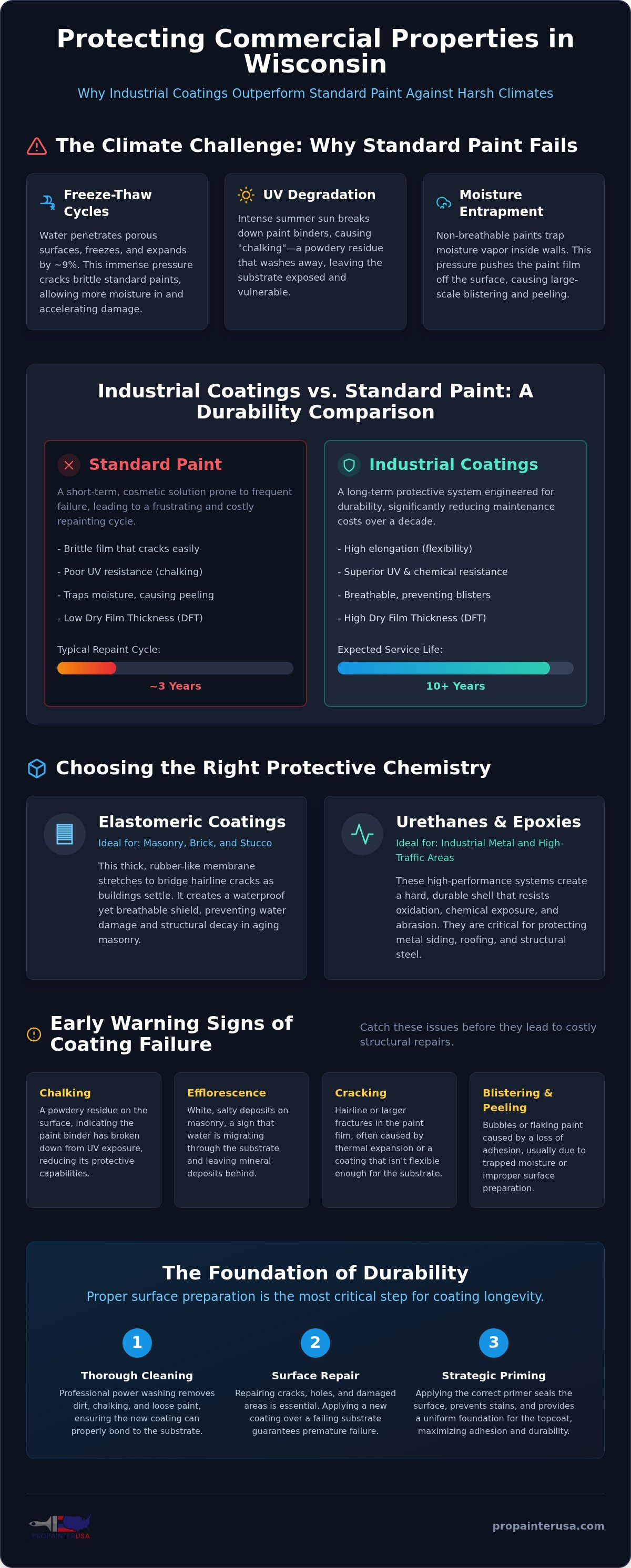
Catching a coating failure in its early stages is the most effective way to prevent the high costs associated with substrate restoration. When you monitor the status of your commercial exterior painting South Milwaukee investment, you're looking for more than just faded color. Early detection allows for targeted maintenance rather than a full-scale emergency renovation. By performing a regular diagnostic check, you can determine whether your building requires a simple touch-up or a more robust protective system.
One of the most common signs of binder breakdown is "chalking." If you rub your hand across the surface and a powdery residue remains on your skin, the paint's resins have been degraded by UV exposure. You should also watch for efflorescence, which appears as white, crusty salt deposits on masonry. This is a warning sign that water is moving through your brickwork and carrying minerals to the surface. Another critical failure is "alligatoring." This occurs when the top coat loses its elasticity and cracks into a pattern resembling reptile skin, indicating that the paint film can no longer handle Wisconsin's temperature swings.
A thorough inspection doesn't have to be time-consuming if you know where to look. Focus your attention on north-facing walls, which remain damp longer and are prone to algae growth. Inspect roofline transitions and ground-level contact points where moisture wicking is most likely to occur. Look closely at metal fasteners; if you see rust bleeds, the protective layer has failed and the structural integrity of the panel may soon be compromised. In some cases, exterior moisture penetration becomes visible inside your building. If you notice bubbling or staining on interior walls, you may eventually need professional drywall repair Milwaukee services to fix the secondary damage caused by the exterior failure.
It's important to distinguish between minor settling cracks and major coating delamination. Small, vertical hairline cracks are often a natural result of a building settling, but peeling in large sheets indicates a total loss of adhesion. Ignoring these small openings allows water to reach the substrate, leading to rot in wood or spalling in masonry. Properly diagnosing these issues is the first step toward a successful commercial exterior painting South Milwaukee project. Professional surface preparation, including power washing and scraping, is the only way to stop this cycle of decay and ensure a new coating bonds permanently.
If you have spotted any of these warning signs on your facility, don't wait for the next storm to cause deeper damage. You can request a professional site assessment to identify the root cause of the failure and receive a clear plan for restoration.
Choosing a partner for your facility’s maintenance is a decision that impacts your bottom line for years. Whether you manage a retail center or a heavy industrial plant, the success of your project hinges on the contractor's understanding of local environmental stressors. It is often beneficial to hire a commercial painting contractor in Wauwatosa with deep regional experience. A local expert understands how Lake Michigan’s humidity affects curing times and which specific primers will bond best to weathered Wisconsin masonry. This regional knowledge prevents the common mistakes that lead to premature coating failure.
Quality results don't happen by accident. In the world of industrial coatings, professional surface preparation is roughly 90% of the job. A reputable contractor won't just spray over existing problems. They will perform a methodical series of steps, including high-pressure power washing, mechanical scraping, and strategic priming to ensure the new system has a sound foundation. When you interview potential partners, ask about their safety protocols and insurance coverage. You should also verify the specific material warranties provided by the coating manufacturers to ensure your investment is fully protected.
Pro Painter USA brings three decades of professional experience to every commercial exterior painting South Milwaukee project. We've spent 30 years refining a methodical approach that prioritizes longevity and structural integrity. Our team understands that a painting project can be disruptive to your daily operations. Because of this, we emphasize grounded, reassuring communication from the initial estimate through the final walkthrough. We also leverage our specialized experience in high-traffic sectors, such as restaurant painting services Wauwatosa, to ensure your exterior remains durable and visually appealing under heavy use.
A professional on-site assessment is the first step toward a lasting finish. During this walkthrough, we examine your building’s specific exposure to wind, moisture, and UV light. We don't believe in one-size-fits-all solutions. Instead, we tailor our coating recommendations to the unique needs of your substrate and your long-term maintenance goals. This detailed evaluation ensures that the system we apply today will continue to protect your property well into the next decade. Contact Pro Painter USA for a free commercial exterior assessment today.
Securing your facility against Wisconsin’s coastal elements is a strategic investment in your business’s future. By moving beyond standard paint and embracing high-performance industrial coatings, you've taken the first step toward lower maintenance costs and structural longevity. We've explored how specialized chemistries like elastomerics bridge masonry cracks and why thick, high-build systems outlast traditional alternatives. Whether you're dealing with Lake Michigan's humidity or urban heat island effects, your choice of material and contractor determines how well your property holds up over time.
When you're ready for commercial exterior painting South Milwaukee businesses trust, Pro Painter USA is here to help. We bring 30 years of local Wisconsin painting experience to every project, specializing in the unique demands of our coastal climate. Our A+ rated surface preparation and application techniques ensure that your building doesn't just look professional, but stays protected for the long haul. Don't let the next freeze-thaw cycle compromise your investment. You can take the next step today with confidence.
Request a Free Commercial Exterior Estimate today and partner with a local expert committed to your property’s success.
The primary difference lies in dry film thickness and chemical composition. While standard exterior paint is designed mostly for aesthetics and typically dries to 2 mils, industrial coatings often reach 10 to 20 mils. These high-build systems provide a structural barrier that resists impact and chemical exposure. Instead of just adding color, industrial coatings offer functional protection against the intense moisture and temperature swings common in Wisconsin.
In Wisconsin’s harsh climate, a professionally applied industrial coating typically lasts 10 to 15 years. This is a significant improvement over standard commercial paint, which often begins to fail after just three to five seasons. The advanced elasticity of these coatings allows them to survive the rapid expansion and contraction caused by local freeze-thaw cycles. This durability ensures your property remains protected without the need for frequent, budget-draining repainting projects.
Industrial coatings are highly versatile and can be applied to almost any commercial substrate, including brick, stucco, aluminum, and steel. The key is matching the coating chemistry to the material. For example, elastomeric coatings are ideal for bridging cracks in aging brick masonry. High-performance polyurethanes work best for maintaining the color and gloss of metal siding. Proper surface preparation ensures these specialized systems bond permanently to your building’s specific exterior.
Professional teams minimize disruption by utilizing phased scheduling and clear communication throughout the project. When performing commercial exterior painting South Milwaukee projects, work can often be completed in sections to keep entryways and loading docks accessible. We coordinate closely with facility managers to ensure our presence doesn't interfere with your daily operations. This methodical approach allows your business to continue serving customers while the protective upgrades are being installed.
While the upfront investment for industrial coatings is higher than traditional paint, the long-term cost is significantly lower. You're paying for a more durable material and more intensive surface preparation, but you'll reap the rewards through a longer life cycle. By doubling or tripling the time between repaints, you save thousands in labor and material costs over a decade. It's a strategic move that shifts your budget from constant repairs to long-term preservation.
The ideal window for scheduling industrial painting in Wisconsin is from late spring through early autumn. Coatings require specific temperature and humidity ranges to cure correctly, making the months of May through September the most reliable. We monitor local weather patterns closely to ensure every application happens during optimal conditions. Scheduling during these months prevents issues with moisture entrapment and ensures the protective film reaches its full intended strength.
Yes, certain industrial coatings can improve your building's energy efficiency by reflecting solar radiation. These "cool" coatings reduce the amount of heat absorbed through the walls and roof, which directly lowers the load on your HVAC system during the summer. By keeping the building’s substrate cooler, you reduce thermal expansion stress and lower your monthly cooling costs. This makes the coating a functional tool for both structural protection and operational savings.
The choice depends largely on your building’s substrate and its primary vulnerabilities. If your facility has masonry or stucco with hairline cracks, an elastomeric coating is the best choice for its superior waterproofing and flexibility. If you're protecting metal siding and want to maintain a high-gloss, professional appearance, a polyurethane finish offers better UV resistance and color retention. A professional site assessment will identify the specific needs of your building’s exterior.
You might find these helpful:
We are a team of interior and exterior painters and we are not limited to house painting only. We can paint different businesses like retail shops, commercial buildings, and apartments.
We also provide restaurant painting services. We can give you more information about these services if you give us a call.


