MILWAUKEE WI, USA,
October 6, 2026


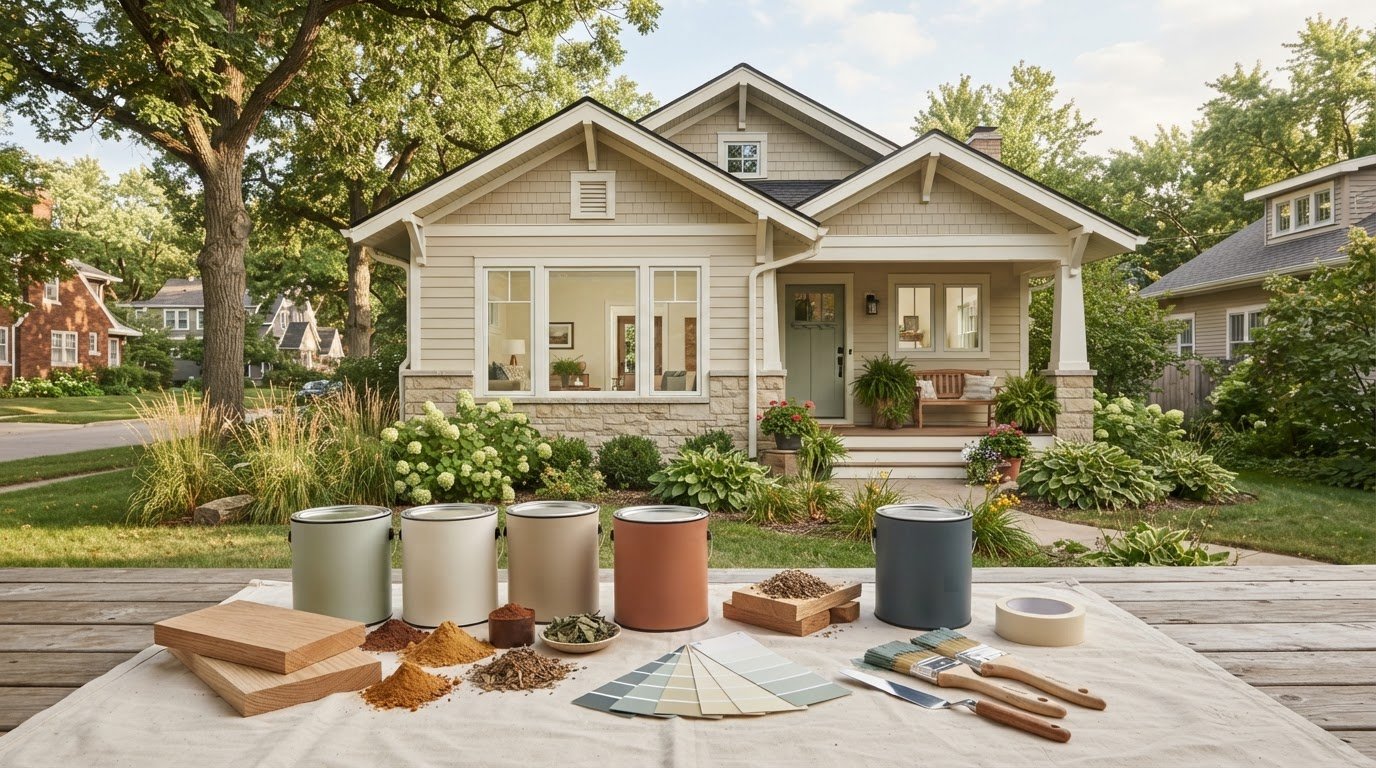
The color that looks perfect on a sample card can feel different on your home. Outdoor light shifts, and siding, trim, architecture, and nearby houses all affect how an exterior palette comes together. If you’re comparing exterior painters Milwaukee, choosing colors that suit both your home and its surroundings is an important first step.
It’s understandable to wonder whether a shade will look too bright in daylight, clash with existing details, or stand out on the block. Make a confident choice by viewing colors in context and considering how the home’s surfaces need to be prepared. This guide covers how to build a coordinated palette, what to consider before requesting an estimate, and how color choices connect with the work needed for a finished exterior.
You’ll find practical guidance for evaluating colors in changing light, pairing siding and trim, and taking Milwaukee’s neighborhood character into account. Pro Painter USA’s residential exterior painting, surface repairs, and project-based estimates can help bring your plans together.
• Decide whether you want to refresh your home’s current look or make a more noticeable change, then account for fixed exterior features.
• Test color choices in different light and on a larger area, since a small sample may not reflect how a full wall appears.
• Compare light, medium, and dark palettes by their visual effect and coordination needs to find a direction that suits your home.
• Review peeling paint, cracks, and damaged wood before requesting an estimate, since surface repairs can affect project scope.
• Exterior painters Milwaukee homeowners work with can turn a considered color plan into a coordinated painting and surface repair project.
Are you hoping to refresh your home’s current look or make a more noticeable change? Either approach can work, but a coordinated palette starts with the exterior features that aren’t changing. Siding, masonry, shingles, trim, doors, and other fixed details all affect which paint colors will complement the home rather than compete with one another.
Take an inventory before browsing samples. Note which surfaces will be painted and which will remain as they are. Roofing and masonry are useful palette anchors because changing them is a larger undertaking than repainting trim or a door. For example, warm-toned brick may coordinate more naturally with warm neutrals than with a cool gray. Architectural details matter, too: trim can highlight features, while an accent color can draw attention to an entry or shutters.
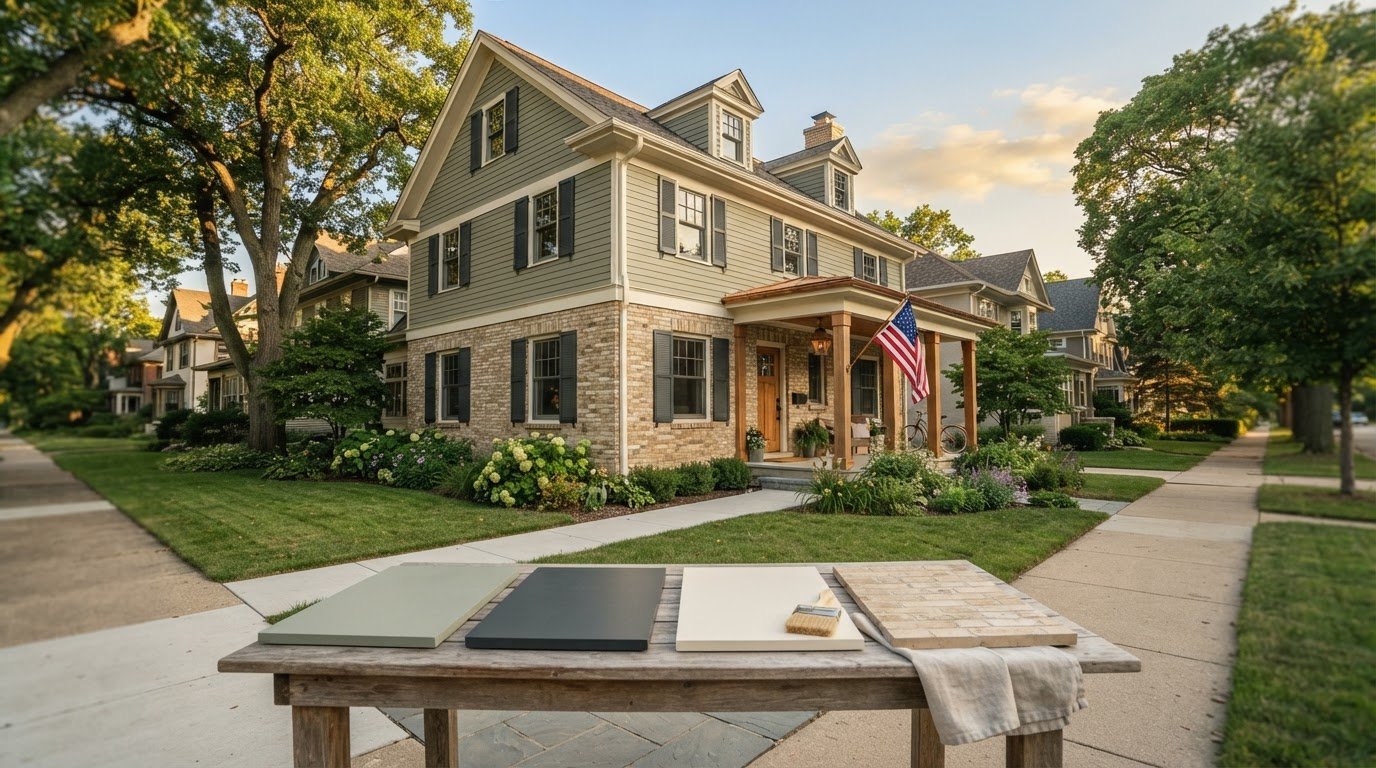
Milwaukee’s streetscapes offer context without requiring you to copy a neighbor’s choices. A palette can feel at home among the varied houses in Shorewood or Bay View while still reflecting your preferences. Consider nearby colors and materials as part of the setting, then choose a combination that complements them without blending in entirely.
Start with a checklist: siding or masonry, roof shingles, trim, doors, shutters, and other permanent details. Compare paint ideas against those features rather than viewing samples in isolation. Basic color theory principles can help explain how combinations and contrast influence the overall impression, but the home’s actual materials should guide the final balance. Use the surrounding streetscape as context, not a template.
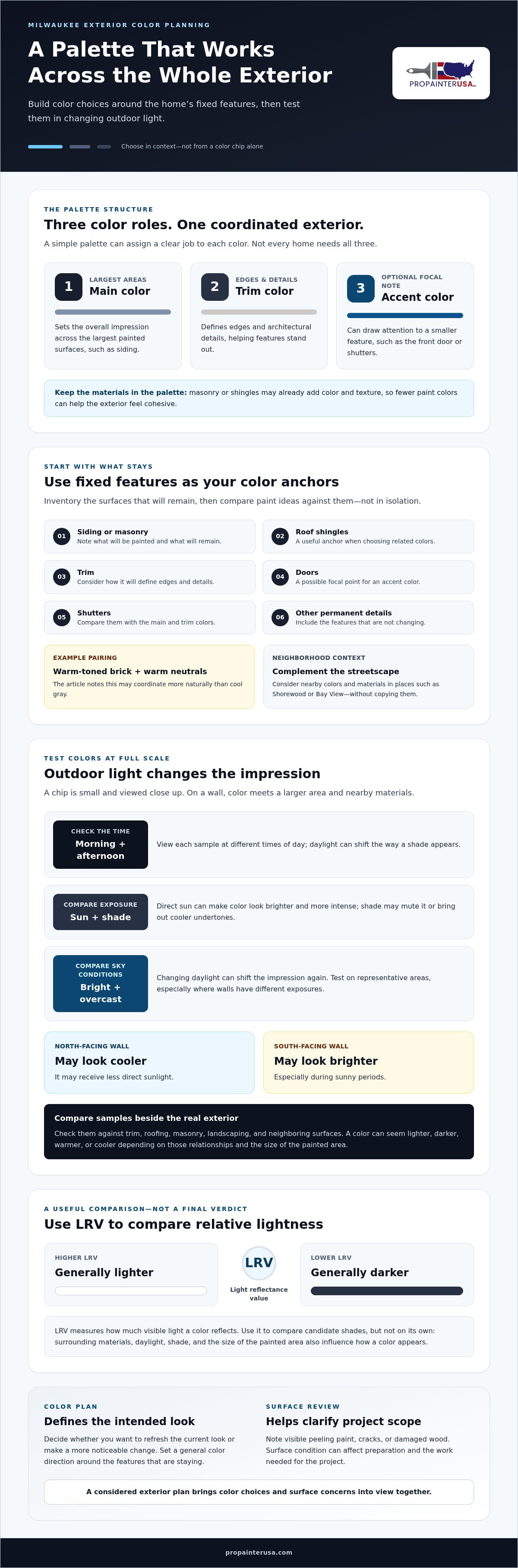
A simple palette often has three roles: a main color for the largest painted areas, a trim color to define edges and architectural details, and an optional accent for a smaller feature. Not every home needs all three. Limiting the number of colors can help the exterior feel cohesive, especially when masonry or shingles already add color and texture. For a stronger note, reserve an accent for a focal detail such as the front door or shutters.
Color planning and assessing surface condition are related, but they’re separate decisions. A palette defines the intended look; an exterior review can identify peeling paint, cracks, or damaged wood that may affect preparation and project scope. Before requesting an estimate, settle on a general color direction and make a note of visible surface concerns. This gives the project a clearer starting point for both appearance and painting work.
For homeowners searching “exterior painters Milwaukee,” this distinction helps define the project: color expresses the desired result, while surface condition helps identify the work needed to achieve it.
A color chip is a useful starting point, but it can’t show exactly how a shade will look across a large exterior wall. A small sample is surrounded by the card’s white border and viewed close up. On a full wall, the color covers a much larger area and sits beside roofing, trim, landscaping, and neighboring surfaces. Those relationships can make a shade seem lighter, darker, warmer, or cooler than expected.
Outdoor light changes throughout the day. Direct sun can make a color look brighter and more intense, while shade may mute it or bring out cooler undertones. Wall direction matters, too: a north-facing wall in Milwaukee may receive less direct sunlight and appear cooler, while a south-facing one may look brighter during sunny periods. Clouds and changing daylight can shift the impression again. Outdoor paint samples matter because a color must work across the changing light and full scale of your home, not just on a chip.
When practical, apply candidate colors to more than one representative area, especially if the home has walls with different exposures. View each sample in morning and afternoon light, in sun and shade, and on bright and overcast days. Compare it with nearby trim, roofing, masonry, and other fixed materials. This gives you a better sense of how the shade behaves in context before you settle on a palette.
For a consistent way to think about how colors function together, the U.S. Web Design System offers color design guidance. It’s a reference, not a substitute for seeing paint samples on your actual exterior.
Light reflectance value, or LRV, measures how much visible light a color reflects. It can help you compare the relative lightness of candidate shades: a higher LRV generally indicates a lighter color, while a lower one indicates a darker color. This makes LRV a useful comparison when narrowing options, especially if shades look similar on a screen or card.
Still, LRV can’t predict every detail of how a color will appear on your home. Surrounding materials, daylight, shade, and the size of the painted area all influence the result. Use LRV alongside real samples and your full exterior rather than choosing by the number alone. Homeowners considering exterior painters Milwaukee can bring a preferred color direction and surface questions to an estimate. Learn about exterior painting as you plan the project.
Light, medium, and dark palettes can each suit a Milwaukee home. The right direction depends on the architecture, fixed materials, and the look you want, not on a single rule about what works best. Use this comparison to narrow your options, then consider how each palette relates to your specific exterior.
| Palette direction | Visual effect | Coordination needs and trade-offs |
|---|---|---|
| Light | Creates a brighter overall impression and can make trim and architectural details stand out. | Check how the shade relates to the roof, masonry, and other pale features so the exterior doesn’t feel stark or visually disconnected. |
| Medium | Offers a balanced appearance that can feel grounded without dominating the home. | Often gives you room to coordinate with varied fixed materials, but undertones still matter. Compare samples beside the surfaces that will remain visible. |
| Dark | Makes a more deliberate, dramatic statement and can emphasize the home’s overall shape. | Plan trim and accent colors carefully. Strong contrast may highlight details, while close tones can create a quieter, unified look. |
Light colors can draw attention to window surrounds, eaves, and other architectural details, especially when paired with contrasting trim. Medium tones can connect painted areas with existing roofing or masonry. Dark colors make a confident statement, but benefit from a considered relationship between siding, trim, doors, and shutters. None is a universal winner. View each direction in context with your home’s materials and the overall effect you want.
Neighborhood character can help guide the balance. In Wauwatosa or Whitefish Bay, look at the variety of nearby homes, roof colors, and streetscape details. A fitting palette doesn’t have to copy the house next door. Use the local setting as a reference for choosing colors that feel at home while retaining a distinct character.
Separate surfaces you plan to paint from those whose color will stay visible. Existing brick or stone, for example, can act as a fixed part of the palette, while painted wood or aluminum siding may offer more flexibility. Surface type also affects the work: wood, aluminum, and masonry can require different preparation, and visible damage should be assessed before finalizing the painting plan. For related guidance on damaged exterior wood, see this guide to exterior wood rot repair in Milwaukee.
A clear project plan starts with the exterior itself. Peeling paint, cracks, and damaged wood can affect what needs attention before painting, so review surface condition before settling on final colors. This connects the look you want with the preparation and painting work your home needs.
Use this sequence to organize your plans:
List the siding, masonry, trim, doors, and window details you want painted, and note which materials will remain unchanged.
Make a note of peeling or loose paint, cracks, damaged wood, and other areas that may need surface repair. Photos can help you keep track of each location.
Identify areas that may need special attention, including doors, windows, trim, and hard-to-reach sections of the exterior.
Gather sample ideas and note the palette you’re considering, keeping fixed features such as roofing and masonry in view.
Share your surface notes, access concerns, and color direction so the project can be considered as a whole. For more planning context, read this guide to Milwaukee house painting estimates.
An estimate helps you plan around the project’s scope, including the surfaces and preparation involved. A preferred palette is useful, but the exterior’s condition matters, too. If repairs are needed, that work may affect how the project is organized before the finish coats are applied.
Preparation helps create a suitable surface for paint. Depending on the material and its condition, the work may involve cleaning, addressing damaged areas, and priming before painting. Wood, masonry, and other exterior surfaces have different needs, so the appropriate preparation depends on the material and its condition. Finish work then brings the planned color across the prepared surfaces and details.
A consistent painted finish begins with careful attention to the surface beneath it. Identifying concerns before requesting an estimate gives the project a more useful starting point than choosing a color alone. If you’re ready to plan your home’s exterior painting, request a free exterior painting estimate from Pro Painter USA.
A well-planned exterior painting project brings together the look you want and the condition of the surfaces being painted. Pro Painter USA provides residential exterior painting, surface repairs, and door and window painting for homeowners across Milwaukee and nearby Wisconsin communities. With approximately 30 years of industry experience, the locally owned team can plan the project around your home’s surfaces, visible repair needs, and preferred color direction.
Project planning begins with the areas you want painted. Sharing whether the work includes siding, trim, doors, windows, or several exterior surfaces helps establish a clear scope. Surface condition matters, too. Peeling paint, cracks, or damaged wood may need attention before painting and can affect the work included in the estimate.
The project can then be planned around the preparation and painting the surfaces require. Depending on the material and its condition, cleaning, repairs, and priming may be part of preparing an exterior for paint. Painting brings the chosen direction to the specified surfaces and details. The estimate defines what the project includes, giving you a practical basis for planning around the work.
Having a color direction ready is helpful, even if you’re still weighing a few options. Note the main color you’re considering, any trim or accent ideas, and which permanent materials will remain visible. These details support a focused discussion of the painting work and the overall look you want to achieve.
To prepare for an estimate, share your property’s location, the surfaces you want painted, any visible wear or repair concerns, and your preferred palette. You can request a free estimate online or by phone. Whether you’re refreshing the current appearance or planning a more noticeable change, these details help define the project and its scope.
Homeowners comparing exterior painters Milwaukee can take the next step with Pro Painter USA by sharing their project goals and exterior details. Request a free exterior painting estimate and start planning a project that brings your color direction and surface needs together.
A confident exterior palette starts with the home itself. Consider how siding, roofing, masonry, and trim work together, then view sample colors in changing outdoor light before settling on a direction. Review the surfaces as well: peeling paint, cracks, or damaged wood may affect the preparation and repair work included in the project.
With approximately 30 years of industry experience, locally owned Pro Painter USA helps homeowners plan exterior painting, surface repairs, and door and window painting. A project-based estimate helps define the scope so you can plan around the work your home needs. If you’re comparing exterior painters Milwaukee homeowners can turn to, local experience and attention to surface condition matter alongside color choices.
Pro Painter USA serves homeowners in Milwaukee, Shorewood, Whitefish Bay, Fox Bay, Glendale, Fox Point, Bay View, Grafton, Cedarburg, Port Washington, Wauwatosa, Menomonee Falls, Richfield, West Bend, Hartford, Waukesha, New Berlin, Hales Corner, Oak Creek, and Cudahy. Share your property details, the areas you want painted, and the palette you’re considering. Request a free exterior painting estimate online or by phone to take the next step toward a refreshed home exterior.
Choose colors by considering your home’s fixed materials, architecture, outdoor light, and surrounding streetscape together. Note the colors of your roof, masonry, and other features that won’t be painted, then compare candidate shades against them. Test samples on representative exterior areas and view them in sun and shade before deciding. Homeowners comparing exterior painters Milwaukee can also prepare a color direction and a list of surfaces to discuss when planning the project.
Colors that complement the brick or stone’s existing undertones are a useful starting point, but the right pairing depends on the specific material. Warm-toned masonry may coordinate naturally with warm neutrals, while cooler stone can work with different shades. Compare samples directly beside the masonry and consider how trim and roofing affect the overall palette. If the brick or stone will remain unpainted, treat its color and texture as permanent parts of the exterior scheme.
Yes. Test samples in both direct sun and shade, and look at them at different times of day. Strong sunlight can make a shade appear brighter, while a shaded wall may look cooler or more muted. When practical, apply samples to representative exterior areas and compare them with nearby trim, roofing, or masonry. A small color chip can’t show how the shade will look across a large wall in Milwaukee’s changing outdoor light.
Many homes can be planned around a main color, a trim color, and an optional accent. The main color covers the largest painted areas, trim defines architectural details, and an accent can draw attention to a smaller feature such as a front door or shutters. You may not need all three, especially if existing masonry or roofing already adds color. Keeping the palette focused can help the exterior feel cohesive.
Yes. Pro Painter USA provides surface repairs alongside residential exterior painting, helping address paint-ready surface needs as part of project planning. Peeling paint, cracks, or damaged wood may affect preparation and project scope, so note visible concerns before requesting an estimate. The condition and material of each surface guide the preparation it needs. Door and window painting can also be included when those details are part of your project.
Late spring through early fall, generally May through September, is commonly considered the best window for exterior painting in Milwaukee. September and early October can also bring stable, cooler weather, but conditions vary. Temperature, humidity, rain, and the surface itself all matter for paint application. Discussing the project with your painting team helps account for the home’s surfaces and current conditions when planning the work.
Request a free estimate from Pro Painter USA online or by phone. Share your property location, the surfaces you want painted, visible repair concerns, and your preferred color direction so the project scope can be planned. Pro Painter USA serves Milwaukee and nearby communities, including Shorewood, Whitefish Bay, Bay View, Glendale, Fox Point, Wauwatosa, Menomonee Falls, Grafton, Cedarburg, Port Washington, Richfield, West Bend, Hartford, Waukesha, New Berlin, Hales Corners, Oak Creek, and Cudahy.
You might find these helpful:
We are a team of interior and exterior painters and we are not limited to house painting only. We can paint different businesses like retail shops, commercial buildings, and apartments.
We also provide restaurant painting services. We can give you more information about these services if you give us a call.